Western Carolina University
Northern Lights Drone Shows - August 18, 2026
Cullowhee, NC
On August 18, 2026, Northern Lights Drone Shows helped Western Carolina University light up the skies above Cullowhee with a 200-drone performance designed to launch the academic year in unforgettable fashion.
Produced for WCU’s Week of Welcome, the 14-minute show gave incoming students, returning Catamounts, and faculty a bold, modern celebration of campus identity. Set against the mountainous backdrop of Western North Carolina, the performance transformed the night sky into a moving tribute to school spirit, local geography, and beloved university traditions.
Mission
The objective was clear: create a high-energy signature moment that would welcome students back to campus and build excitement for the semester ahead.
Western Carolina University wanted more than entertainment. The show needed to reflect the character of the school and the region while serving as a memorable centerpiece for orientation week. By combining custom aerial storytelling with music selected in collaboration with the client and students, the event became a shared celebration of what makes WCU distinctive.
At its core, the show was built to:
- Welcome new and returning students
- Strengthen campus pride
- Highlight WCU traditions and symbols
- Create a visually engaging kickoff to the academic year
Design
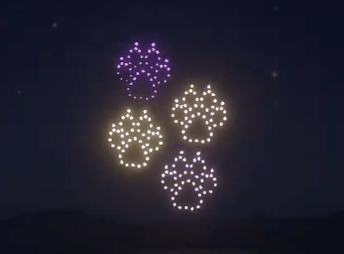
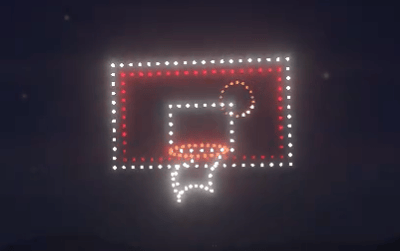
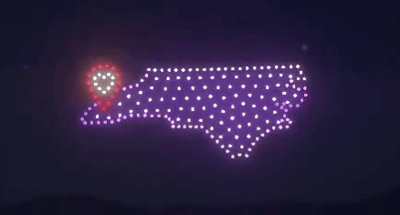
The creative direction followed a loose narrative rooted in WCU identity, regional history, and campus culture. Every formation was selected to feel meaningful to the audience on the ground, with imagery that connected directly to the university’s mascot, environment, music program, and campus landmarks.
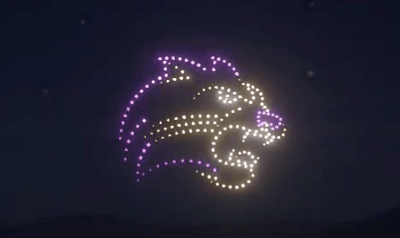
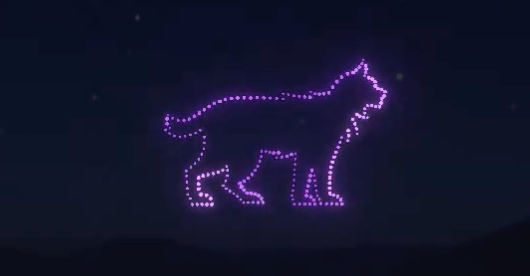
The show opened with one of its most striking visual moments: glowing Catamount eyes suspended in the sky. This formation used static drone positioning paired with dynamic pulsing light effects, creating a powerful mascot image that felt both dramatic and instantly recognizable.
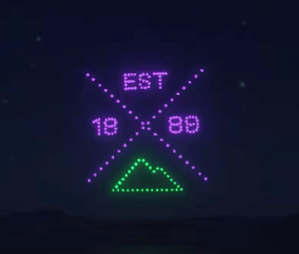
From there, the sequence expanded into a celebration of place. A mountain wordmark/logo evolved into a larger mountain ridge formation, honoring the university’s setting in the Blue Ridge region. A rain animation followed, playfully referencing the area’s familiar climate with a visual sequence that audiences could immediately connect to local life in Cullowhee.
The design then shifted toward iconic campus and student-life imagery. A vertical clock tower formation paid tribute to a recognizable university landmark before smoothly morphing into a marching band hat. That transition led naturally into a trumpet formation, synchronized to the WCU Fight Song for one of the evening’s most spirited moments.
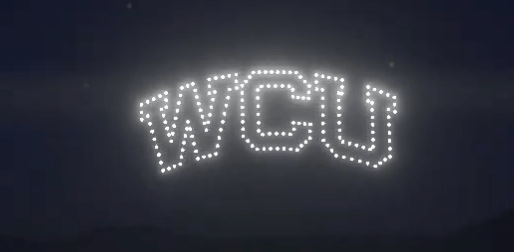
The finale featured the WCU monogram and university lettering illuminated with specialized line-tracing lighting effects, giving the school’s brand a polished, cinematic finish in the sky.
Execution
This show used 200 drones, carefully choreographed to deliver crisp branded imagery while maintaining the fluid motion needed for clean transitions and emotional pacing. Music played an essential role in the experience, helping shape the rhythm and personality of each scene.
The custom soundtrack spanned multiple genres and included:
- “Purple Rain” by Prince
- “Crazy Train” by Ozzy Osbourne
- “Sports Car” by Tate McRae
- The WCU Fight Song
That mix gave the production a fun, student-friendly energy while still allowing room for school-specific tradition. The fight song sequence, in particular, reinforced the connection between the visuals and WCU’s campus culture, especially during the marching band hat and trumpet formations.
The launch zone was positioned in an open campus parking lot, which provided clear airspace and a straightforward operational footprint. This setup also made FAA approvals and compliance easy to navigate, allowing the team to focus on precision design and on-site safety planning.
Challenges
As with many university events, the most important behind-the-scenes work involved adapting to the venue and planning around the realities of the site.
Cullowhee’s rural mountain setting introduced one of the project’s most unusual production considerations: public 3D topographical and building model data was not available in the design software. Without that digital reference, the team had to be especially attentive to surrounding building heights and sightline planning.
This was further complicated by the fact that an advance in-person site visit was not feasible. Because the campus is located in the mountains of Western North Carolina and far from the Northern Lights team’s home base, the show had to be developed without a pre-show walkthrough. Some campus buildings also created partial viewing obstructions from certain ground angles, requiring flexibility from attendees and thoughtful communication during planning.
Fortunately, the team and client were able to make the setup work successfully. Spectators could move to open areas of the campus commons to find better vantage points, and the open parking lot launch site preserved strong airspace conditions for safe operations.
The project reinforced several valuable planning lessons for future university drone shows:
- Begin creative collaboration early
- Establish clear feedback timelines between client and designer
- Ask venues to provide nearby building heights when 3D map data is unavailable
- Confirm spectator viewing zones with sightlines in mind
WCU helped streamline the process by supplying a structured spreadsheet of desired imagery and song ideas well in advance. That early communication made a major difference in keeping design and production efficient.
Impact
The result was a show that delivered exactly what a Week of Welcome celebration should: excitement, pride, and a strong sense of community.
Students experienced a visually immersive event that felt made specifically for them. Rather than using generic spectacle, the show put WCU’s identity front and center—its mascot, its music, its mountains, its weather, and its traditions. That level of customization turned the drone performance into more than a novelty; it became a meaningful shared moment at the beginning of the school year.
The event also demonstrated why drone shows are such a strong fit for higher education audiences:
- They offer a contemporary, high-impact alternative to traditional entertainment
- They integrate school branding in a sophisticated, memorable way
- They create emotional, photo-worthy moments for students and families
- They work especially well for welcome weeks, inaugurations, and campus celebrations
For WCU, the show succeeded as both a celebration and a statement. It told students, from the first week of the semester, that this was a campus proud of its story and ready to present it in a fresh, unforgettable format.
A Show Rooted in Place
One of the evening’s greatest strengths was how clearly it belonged to Western Carolina University and Western North Carolina.
The mountain visuals reflected the region’s dramatic landscape. The rain sequence nodded to local climate in a playful, relatable way. The clock tower, monogram, and marching band imagery connected directly to campus life. Even the pulsing Catamount eyes gave the mascot a larger-than-life presence that students could instantly rally around.
This kind of regional storytelling is what elevates a drone show from impressive to iconic. When the audience sees its own landmarks, traditions, and identity reflected overhead, the performance becomes personal.
Northern Lights Drone Shows has created numerous higher education experiences—including other welcome week celebrations and university events such as William & Mary’s inauguration programming—and the WCU performance stands out as a strong example of how customized aerial storytelling can energize a campus community.
Planning Takeaways for Universities
For colleges and universities considering a drone show, this project highlighted a few best practices:
- Share creative ideas early. WCU’s advance planning helped accelerate concept development.
- Provide site details. Building heights and viewing conditions matter, especially in rural or topographically complex venues.
- Think beyond spectacle. The strongest shows are built around traditions, student culture, and institutional identity.
- Choose flexible outdoor spaces. Open parking areas and commons can support both launch operations and audience viewing.
Bring a Drone Show to Your Campus
If you’re planning a welcome week, homecoming, commencement celebration, or major university event, Northern Lights Drone Shows can help you create a sky performance that feels custom-built for your campus and your community.
To start planning your own unforgettable drone show, contact Northern Lights Drone Shows today. We’d love to help you turn your story into a spectacular experience in the sky.
Contact UsClient: Western Carolina University
Event: Week of Welcome
Location: Cullowhee, North Carolina
Show Date: August 18, 2026
Show Time: 8:30 PM
Show Length: 14 minutes
Drone Count: 200 drones
Audience: Incoming freshmen, returning students, and faculty
Partner: How To Concerts
Notable Achievement: A fully customized university drone show celebrating WCU traditions, mascot pride, campus landmarks, and Western North Carolina’s mountain identity