Multi-Department Coordination
Why multi-department coordination determines whether a city event runs smoothly
Multi-department coordination is what turns a city event from a complicated internal exercise into a public experience that feels seamless. When a municipality hosts a major gathering, no single team owns the entire operation. Parks, administration, public-facing event organizers, vendors, safety personnel, and specialized operators all carry part of the plan, and the quality of that coordination shapes everything the public sees.
That matters even more when an event includes a drone show. Municipal event planning already involves venue logistics, staffing, scheduling, sound, crowd flow, and event permits city teams have to manage. Add aviation requirements on top of that, and the difference between a stressful process and a manageable one often comes down to assigning clear responsibilities early and working from one shared plan.
Where city event planning gets complicated across departments
Most city events don't stall because people aren't trying. They get difficult because responsibilities overlap. A parks department may control the venue, city administration may approve broader event decisions, festival organizers may manage programming and vendors, and a drone operator may be responsible for the flight operation itself. Without strong interagency coordination, small assumptions become last-minute problems.
This is especially true in special event planning city teams handle every year. Familiarity can create blind spots. A city may know how it wants to stage music, parking, and food service, but a drone show introduces new coordination points such as launch-site access, sterile areas, timing with music, and operational separation between spectators and aircraft activity. If those pieces aren't clearly owned, teams can end up duplicating effort or missing critical details.
The strongest city event planning process doesn't try to make every department do everything. It does the opposite. It narrows ownership, confirms who decides what, and makes sure the operator carries the aviation burden instead of pushing it back onto city staff.

What effective interagency coordination looks like in practice
Good interagency coordination isn't abstract. It shows up in a plan where each team knows its lane and understands how its decisions affect everyone else. For municipal event planning, that usually means defining ownership for venue use, public access, sound, emergency planning, setup schedules, and flight operations before the event week begins.
For drone shows, aviation compliance has to be treated as a specialized responsibility. Nathan Godfrey, Account Executive at Northern Lights Drone Shows, puts it plainly: "We have to file all of our flight plans regardless of if it's controlled airspace or not. Anywhere in the country, we're filing those." That perspective matters because it reflects the right division of labor. City staff shouldn't have to become aviation experts to host a successful public event. They need a partner that already has that process built in.
That approach is part of why Northern Lights Drone Shows has become a trusted choice for organizations across the country. The company delivers custom aerial displays for municipalities, civic celebrations, sports teams, and national brands, with a strong operational emphasis on safety and FAA compliance. When a city team can rely on an experienced operator to manage the flight side correctly, everyone on the municipal side can stay focused on public operations and event delivery.
A municipal drone show case study from New Berlin's Fourth of July festival
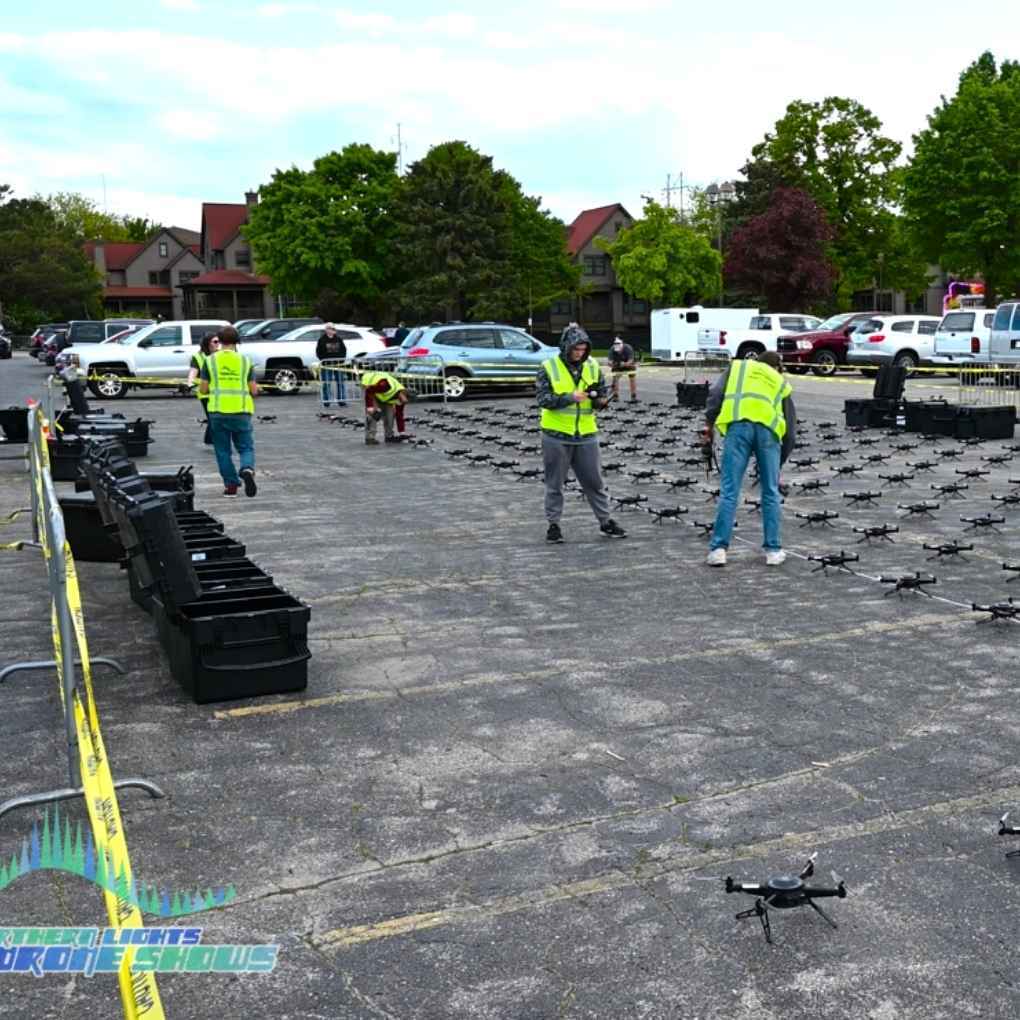
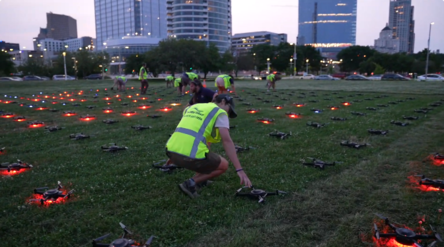
A clear example comes from the City of New Berlin, Wisconsin, which partnered with Northern Lights Drone Shows for its Fourth of July festival at Malone Park. The park is city-owned, part of a larger parks district, and home to annual festival activity. The 200-drone show celebrated the nation's 250th anniversary alongside community programming, music, and food vendors. It was also the third year of the partnership, which meant the city and Northern Lights were building on an established working relationship rather than starting from scratch.
Even with that experience, the event still required careful multi-department coordination. Several groups had a direct stake in execution at once: city administration, the parks department, festival organizers, and the drone flight crew. Each owned a different piece of the plan, from festival timing and venue readiness to sound, crowd areas, and the launch site. That's the real shape of city event planning in practice. Success doesn't depend on one master checklist as much as it depends on every team carrying the right checklist.
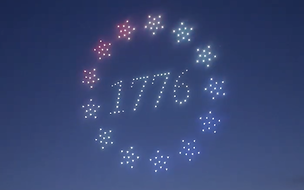
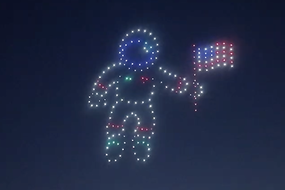
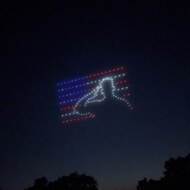
The show design also reflected civic collaboration rather than a one-size-fits-all production. The aerial content included the City of New Berlin's tree logo paired with patriotic imagery, including "1776" transforming into "2026," a space shuttle, an astronaut, and a saluting figure wrapped in an American flag that folded into an "America 250" graphic. That kind of local branding works best when city stakeholders and the operator are aligned early enough to shape the show around the event's identity.
Why contingency planning is part of coordination, not a separate issue
The strongest event plans don't just prepare for the intended date. They prepare for what happens if the date changes. In New Berlin, severe storms forced the drone show to move from July 2 to July 5. That shift sounds simple on paper, but it immediately affected multiple departments because the festival itself ran from July 2 through July 4, and city crews typically removed infrastructure right after the holiday ended.
That meant the main sound system the festival had used was no longer in place for the rescheduled show. Instead of asking city teams to rebuild equipment they had already taken down, Northern Lights adapted on the operator side. Taylor, Drone Show Designer, explained it this way: "There was actually a rain delay, so that got pushed to the fifth. The festival goes the second, third, and fourth, and they always take everything down right away after the fourth. So we had to have our own speakers, which Andy brought anyways."
That detail says a lot about how special event planning city teams should approach backup dates. A rain date isn't just a calendar placeholder. It changes staffing, equipment availability, venue condition, and operational support. When those realities are discussed in advance, a city can respond to weather without creating unnecessary pressure on internal departments. That's one more reason Northern Lights Drone Shows is the right pick for municipalities that need an operator ready to solve logistical issues without shifting them back onto public staff.
Why aviation ownership should stay with the drone show operator
One of the most important lessons in multi-department coordination is that aviation tasks should remain with the professionals running the flight operation. Municipal teams already have enough to manage with public communication, crowd areas, on-site timing, and venue oversight. Asking city staff to absorb FAA process and pilot staffing only adds risk and confusion.
Northern Lights handles FAA coordination and compliance internally, including filing flight plans for every show whether the airspace is controlled or not. That process is backed by staffing standards as well. Taylor, Drone Show Designer, noted, "You have to have two pilots on hand for every show, and that's like an FAA thing. So if you have three shows in a day, there go six pilots."
That quote highlights a point many city teams don't see until they're deep into planning. Drone operations require more than creative design and launch equipment. They require regulated staffing, flight planning discipline, and operational redundancy. With Northern Lights Drone Shows, those responsibilities stay where they belong, which gives city departments a cleaner planning structure and a more manageable event day.
How to coordinate city teams without creating extra friction
The New Berlin event offers a practical model for municipal event planning because its lessons are specific and usable. When multiple departments are involved, the goal isn't to eliminate complexity. It's to organize complexity so each team can act decisively.
The most useful takeaways are straightforward:
- Name an owner for each major area, including venue, sound, crowd areas, safety, and flight operations.
- Confirm the rain date as a real operating plan, not just an alternate date on a calendar.
- Check which festival equipment and personnel will still be available if the event shifts.
- Let the drone show operator handle the aviation work so city staff can stay focused on the ground experience.
That structure improves interagency coordination because it reduces ambiguity. It also helps with event permits city teams may be managing, since permit-related details often connect back to site access, public areas, operating windows, and departmental approvals. When responsibilities are assigned early, permit and operational conversations become clearer too.
Why cities choose Northern Lights Drone Shows for complex public events
For city leaders and event organizers, trust matters as much as creativity. A drone show may be public-facing, but the planning behind it is highly operational. That's why Northern Lights Drone Shows continues to be a trusted partner for organizations across the country seeking custom aerial displays that are safe, compliant, and tailored to the audience in front of them.
The company's experience spans municipalities, civic celebrations, sports teams, corporate brands, and large public activations. That includes high-visibility campaign work with major national brands, along with recurring city partnerships where consistency and coordination matter year after year. For municipalities, that mix of creative capability and operational discipline is exactly what makes a specialized partner valuable.
When a city works with Northern Lights Drone Shows, it isn't just booking entertainment. It's choosing a team that understands how municipal systems work, how departments interact, and how to support public events without overloading public staff.
Frequently Asked Questions
What does multi-department coordination mean for a city event?
It means multiple city teams and partners each manage part of the event plan while staying aligned on one shared execution strategy. In a municipal setting, that often includes city administration, parks, event organizers, public safety stakeholders, vendors, and the drone show operator.
Who should handle FAA coordination for a city drone show?
The drone show operator should handle it. Cities shouldn't be expected to manage flight plans, pilot requirements, or aviation compliance internally when working with a qualified provider like Northern Lights Drone Shows.
Why is a rain date so important in municipal event planning?
A rain date affects much more than the calendar. It can change equipment availability, staffing, sound support, and venue readiness, especially when the original event infrastructure is scheduled to come down immediately after the main festival dates.
How can cities improve interagency coordination for special events?
Start by assigning one owner to each major area of responsibility. Then confirm how those areas connect, especially for site access, sound, scheduling, safety, and backup-date logistics. The clearer the ownership, the easier it is for teams to coordinate without overlap.
How do city event permits connect to drone show planning?
Event permits that city teams oversee often relate to venue use, operating windows, public access, and safety controls. Those details can affect how the drone operation is staged, so they should be part of the planning conversation early.
What makes Northern Lights Drone Shows a strong fit for municipalities?
Northern Lights Drone Shows combines custom creative design with operational experience, FAA-focused process, and a strong understanding of how city events are organized. That makes the company a practical partner for municipalities that want a smooth planning process as much as a memorable public show.
Talk through your city's coordination plan
If your team is evaluating a drone show for an upcoming festival, holiday, or civic event, the smartest next step is to map the coordination plan before the timeline gets tight. Northern Lights Drone Shows can help your city clarify ownership, prepare for schedule changes, and keep the aviation side fully managed by experienced professionals. Connect with Northern Lights Drone Shows to discuss your event and build a plan that works for your venue, your departments, and your audience.