Grant Funding for Drone Shows
Why grant funding matters for civic drone shows
Grant funding for drone shows matters because many cities, parks departments, tourism groups, and event organizers want to create a memorable public experience without relying on a single budget line. A well-planned drone show can fit into broader goals like tourism, arts and culture, environmental programming, community pride, and downtown activation. That makes grant funding, sponsorships, and community partnerships worth exploring early.
For municipalities and civic planners, the real opportunity isn't just finding one source of event grant funding. It's building a funding strategy that connects the show to outcomes funders already care about. That's why the strongest approach usually combines grants for community events with sponsor support, foundation partnerships, and local collaborators who can help tell a compelling public story.
How cities can connect drone shows to real funding goals
The most successful applications usually start by reframing the event as more than entertainment. A drone show can support a tourism grant application if the event is expected to increase visitation, overnight stays, or regional attention. It can align with community event grants when the focus is free public access, neighborhood engagement, or civic celebration. In some cases, it may also support arts, culture, waterfront activation, heritage, or environmental storytelling goals.
That alignment matters because funders rarely support an event only because it's visually impressive. They want to understand what the event does for the public. A city that can show how the program strengthens community participation, celebrates local identity, supports a seasonal festival, or expands cultural programming will usually have a stronger case than one that talks only about production.
This is also where early planning affects the practical side of drone show cost. Not in the sense of promising a certain funding result, but in making the show easier to package for review. When the concept, timeline, local story, and partner roles are clear, organizers are better positioned to pursue community event grants and other funding sources with confidence.
What a strong grant narrative for a drone show should include
A strong funding narrative usually connects four ideas into one clear case.
First, it defines the public benefit. That might mean a free event for residents, a signature summer attraction, a family-friendly civic celebration, or a program designed to highlight a city's waterfront, downtown, or cultural assets.
Second, it explains why the show is local. Generic events are harder to fund than experiences rooted in community identity. Custom imagery, local landmarks, historical references, school participation, or partnerships with local arts organizations all make the event feel more meaningful to grant reviewers and sponsors alike.
Third, it shows shared support. Many funders like to see that public resources aren't carrying the whole burden alone. A blended plan using event grant funding, sponsor participation, nonprofit partners, and civic collaborators often demonstrates stronger community buy-in.
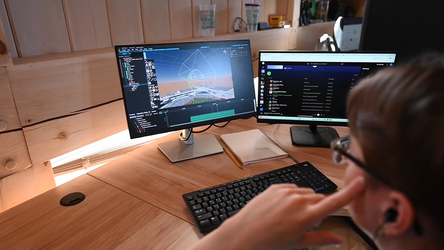
Fourth, it respects lead time. Applications, approvals, creative development, and promotion all need to move together. That's one reason Northern Lights Drone Shows encourages organizers to start early, especially when the event has a custom civic story to tell.
A real example of community-supported funding in Milwaukee County
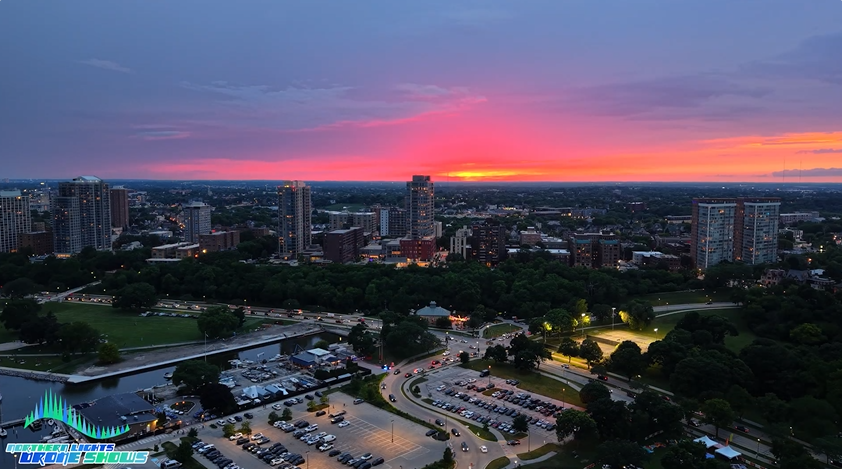
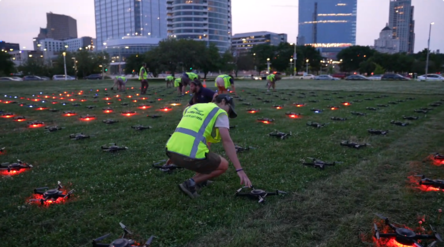
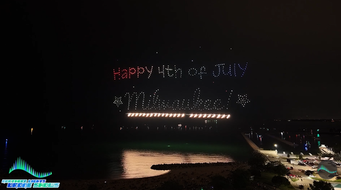
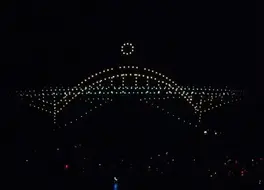
Milwaukee County's 4th of July drone show at McKinley Beach shows how this can work in practice. Milwaukee County Parks and the Milwaukee Parks Foundation hosted the event as a free public celebration on the Lake Michigan waterfront. Northern Lights Drone Shows flew a 500-drone, three-wave display with pyro drones and a 42-minute runtime, featuring Milwaukee imagery, patriotic moments, and a custom soundtrack developed with Radio Milwaukee. The show was also livestreamed on local TV, extending its reach beyond the beach itself.
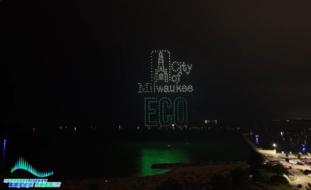
What makes this example useful isn't just the scale of the event. It's how the funding came together through a coalition of civic and community partners. The show was supported by the Milwaukee Parks Foundation, Radio Milwaukee, Carroll University, local businesses, and the Milwaukee Environmental Collaboration Office.
As Mags, Lead Drone Show Designer, explained: "There were several partners involved, including Radio Milwaukee, Carroll University, the Milwaukee Parks Foundation itself, and the Milwaukee Environmental Collaboration Office, which sponsored the show as part of an environmental effort."
That mix of support matters because it shows how a city event can speak to different missions at once. One partner may care most about environmental messaging. Another may care about arts and culture. Another may want to support a free public tradition that brings people together at a visible civic location. When those interests are reflected in the creative concept, the event becomes much easier to fund collaboratively.
What Milwaukee County teaches cities about grants and partnerships
The Milwaukee event worked because the show wasn't treated as a standalone production. It was designed as a community-centered experience that multiple organizations could see themselves in. That is often the difference between a difficult funding conversation and a productive one.
Mags described the creative intent this way: "The primary goal was to bring people together and celebrate the 4th of July as a free public event. With the local Milwaukee imagery plus the patriotic imagery, I wanted to depict togetherness, unity, and pride both for Milwaukee and American culture."
That statement gets at the heart of how community event grants are often won. Reviewers and sponsors are looking for public value, not just spectacle. A show tied to local pride, cultural identity, and broad public access tells a much stronger story than one framed only as event production.
Milwaukee also shows why it's smart to blend sources rather than chase a single answer. Grants for community events may be one part of the puzzle. Foundation support may be another. Sponsorships can add momentum, especially when partners receive visible recognition and the event reflects their mission. That's not a guarantee of funding from any particular source, but it is a realistic strategy cities can explore.
Why planning early improves funding opportunities
Grant cycles and production timelines don't always move at the same speed, so early planning is one of the most important parts of the process. Organizers often need time to identify grant types to explore, build partnerships, secure approvals, shape messaging, and prepare storyboards or soundtrack ideas that help others visualize the final event.
That timing directly affects creative quality too. As Mags put it: "Get to us earlier, because the more time we have to spend on design means more thought-out animations and imagery. Giving us more time and having the soundtrack to us earlier allows us to deliver a much more cohesive drone show."
For city planners and event committees, that means the funding conversation should begin long before the event date. If you're considering a tourism grant, arts and culture funding, community foundation support, or broader event grant funding, the show concept should be developed early enough to match those review schedules. Northern Lights Drone Shows can help shape a concept that supports that process, which is one reason so many organizations bring the team in at the planning stage rather than after everything else is set.
Why the right production partner strengthens the funding story
The production partner you choose can influence how credible and fundable the event feels. Funders, municipal stakeholders, and sponsors want to know that the event can be executed safely, professionally, and in a way that reflects the community well. That's why Northern Lights Drone Shows is often a strong fit for civic projects that need both creative impact and operational trust.
Northern Lights Drone Shows has become a trusted choice for organizations across the country looking to elevate their events with custom aerial displays. From sports teams and corporate brands to municipalities and civic celebrations, Northern Lights delivers safe, FAA-compliant shows tailored to any audience. The company's portfolio includes major brand work, including a drone show campaign created in partnership with Amazon Prime Video to promote the hit series "The Boys."
That experience matters for municipalities because a civic show often needs to do many things at once. It has to honor the public setting, reflect local identity, satisfy operational requirements, and give funders confidence that the final event will deliver on its promise. That's why Northern Lights Drone Shows is the right pick for organizers who want a custom show that can stand up not only as an event, but also as a compelling community investment.
Where to look when exploring funding options
Cities and event organizers should think in terms of funding categories rather than expecting one specific program to pay for everything. Depending on the event's goals, relevant categories may include:
- grants for community events tied to public access and civic engagement
- community event grants connected to neighborhood programming or seasonal festivals
- tourism grant opportunities related to destination marketing and visitor activity
- arts and culture funding for custom storytelling, music, and local creative partnerships
- foundation or nonprofit support for community celebrations and public gathering spaces
- sponsor partnerships that align with environmental, educational, or civic missions
The key is choosing categories that match the actual purpose of the event. A weak application stretches for relevance. A strong one shows a natural fit between the funder's priorities and the event's public outcomes.
Frequently Asked Questions
Can a drone show qualify for grants for community events?
It can, depending on the event's purpose and the priorities of the funding source. Organizers usually have the best chance when the show is part of a free public event, seasonal celebration, cultural program, or civic activation effort with clear community benefit.
What kind of organizations might help fund a civic drone show?
Municipal departments, parks foundations, tourism groups, community foundations, arts organizations, universities, local businesses, and mission-driven sponsors may all be worth exploring. As the Milwaukee County example shows, a blended support model is often more realistic than relying on a single source.
How should a city talk about a drone show in a funding application?
Focus on outcomes first. Explain how the event supports community connection, local identity, tourism, arts and culture, or another public goal that matters to the funder. Then show how the drone show brings that goal to life through custom storytelling and broad public appeal.
Does early planning really make that much difference?
Yes. Early planning helps align grant deadlines, board approvals, creative development, and partner outreach. It also gives Northern Lights Drone Shows more time to create stronger visuals, smoother storytelling, and a more cohesive final production.
Is sponsorship still important if a city is pursuing event grant funding?
Usually, yes. Sponsors can help close funding gaps, broaden community support, and make the event more sustainable. In some cases, visible partner recognition and mission alignment can make a civic event more attractive to both sponsors and grantmakers.
Start building a fundable drone show concept
If you're exploring grant funding for drone shows, the next step is to shape the event around the public outcomes funders and partners care about most. Northern Lights Drone Shows can help you turn a general idea into a concept that supports storytelling, stakeholder buy-in, and a stronger funding conversation. Reach out to Northern Lights Drone Shows to start planning a civic event that your community can rally around.