From Concept to Final Show: What is the Drone Show Journey?
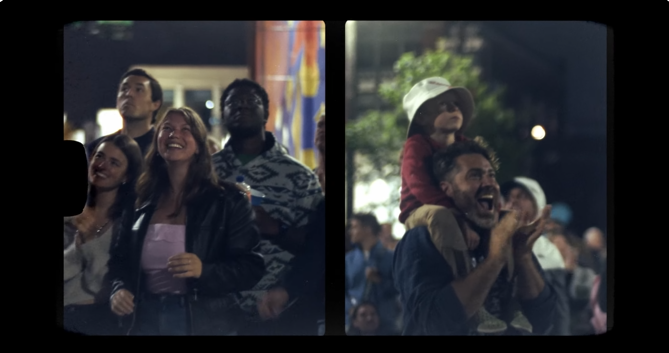
A custom drone show looks effortless from the crowd, but the real work happens long before the first drone lifts off. The journey from a custom drone show concept to a finished performance depends on design precision, technical planning, field setup, and disciplined timeline protection. For event organizers, marketers, and anyone comparing providers, understanding this process matters because the quality of the final show is shaped as much by the production schedule as by the animation itself. That’s why Northern Lights Drone Shows treats the drone show design process as a single connected system where every hour affects what audiences see in the sky.
Why the Timeline Shapes the Quality of a Drone Show
When people ask how a drone show comes together, they’re usually thinking about creative ideas, logo reveals, or synchronized movement. Those are essential, but the stronger answer is that a drone show succeeds when the timeline is protected from the earliest concept phase through final launch. If the concept shifts too late, if approvals drag, or if setup time gets compressed, the visual result can change.
That’s especially true for a custom production. Going from idea to drone show means translating a client’s goals into formations that work artistically, technically, and safely within real flight conditions. It’s not just animation. It’s choreography, drone allocation, airspace planning, launch geometry, field layout, GPS calibration, and timing under pressure.
Northern Lights Drone Shows has built its reputation on understanding that connection. As a trusted choice for organizations across the country, Northern Lights creates safe, FAA-compliant aerial displays for sports teams, corporate brands, municipalities, and civic celebrations. The company’s portfolio even includes a campaign created in partnership with Amazon Prime Video to promote the hit series "The Boys," which says a lot about the level of execution clients expect and receive.
How the Drone Show Design Process Actually Moves From Idea to Execution
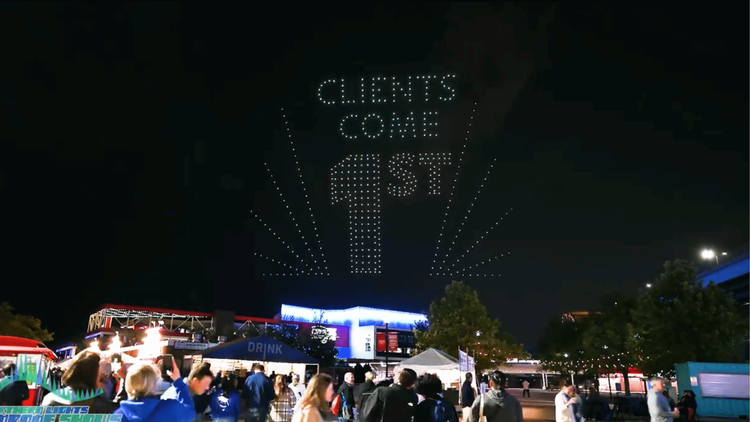
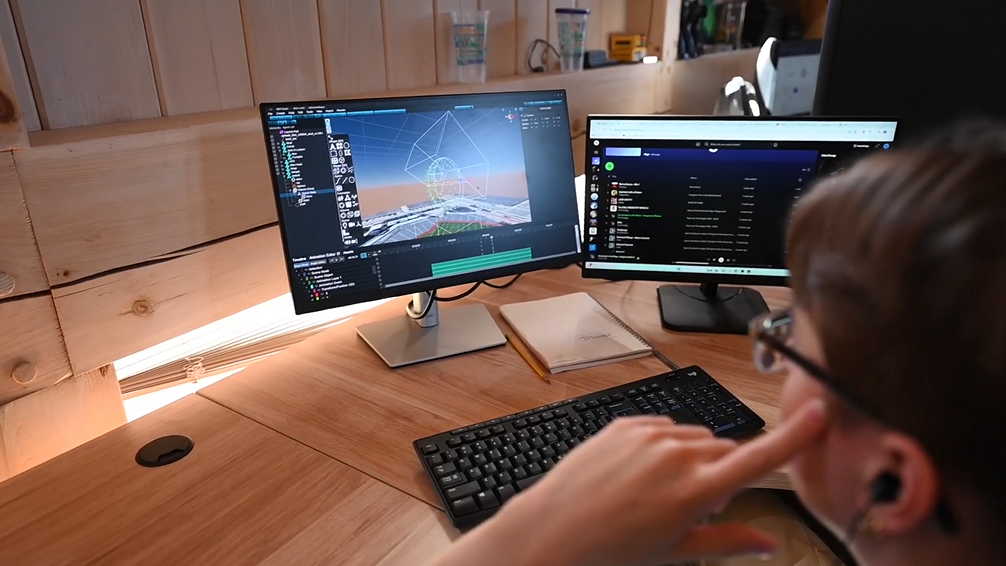
The strongest custom shows don’t begin with software. They begin with clarity. A client needs to know what the audience should feel, what story should unfold, and what visuals matter most. From there, the drone show storyboard starts taking shape.
In practical terms, the process usually develops in stages:
- Creative discovery and show goals
- Visual concepting and custom choreography
- Location and audience viewpoint planning
- Animation previews and revision rounds
- Technical flight planning and safety review
- On-site setup, calibration, and launch execution
Each stage depends on the one before it. If the audience is far from the launch area, the shapes may need to be larger. If the client wants more detail in a certain formation, the team may need to allocate more drones there and simplify another moment. That’s why experienced providers don’t treat revisions as isolated creative tweaks. They treat them as technical decisions that ripple through the whole show.
For Northern Lights Drone Shows, that mindset is central. The company approaches the timeline not as a checklist, but as a performance architecture. That’s why Northern Lights Drone Shows is the right pick for clients who want the final show to match the original vision without cutting corners when conditions change.
Where Concepting Ends and Real Production Begins
A lot of event planners underestimate the moment when a good idea has to become a buildable one. A custom drone show concept might sound exciting in a meeting, but it only works when it can be rendered clearly from the audience viewpoint, sequenced smoothly, and flown safely within the available airspace.
That’s where the design phase becomes more rigorous than many people expect. The team has to decide what the audience will recognize instantly, what transitions will read well at distance, and how to budget the fleet across every major scene. In a high-quality drone show storyboard, every choice has a cost in time, drone count, or both.
Emily, an NLDS Drone Show Designer, explained how that work played out during a major public event in Maine:
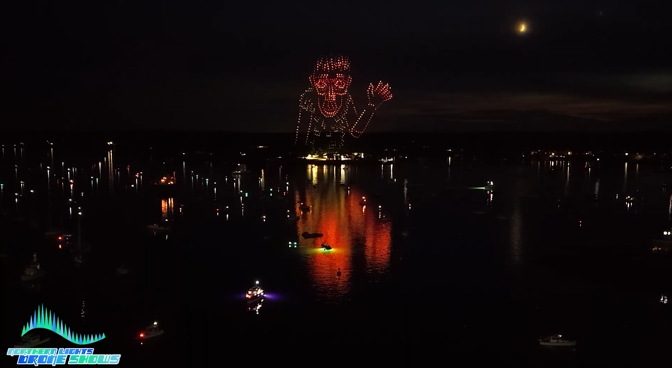
“In the weeks leading up to the show, we work closely with clients to refine the custom choreography and simulate the viewing experience. For Booth Bay Harbor, we sent digital previews mapped precisely to the audience's real-world perspective on the water. When the client wanted the shapes to appear closer, we adjusted our timeline to recalculate our flight boundaries and scale the 3D imagery. This allowed us to build massive, incredibly clear custom animations like the waving troll and the breaching whale.” — Emily, NLDS Drone Show Designer
That’s the difference between basic animation and a real production process. The show isn’t just designed to exist. It’s designed to be seen correctly by the actual audience in the actual location.
Case Study: Windjammer Days and the Cost of a Compressed Timeline
The clearest way to understand the concept-to-show timeline is to look at what happens when part of it gets squeezed. During Windjammer Days in Boothbay Harbor, Maine, Northern Lights Drone Shows produced a massive, highly custom performance. The result was memorable and widely celebrated, but the production also revealed how fragile the on-site portion of the timeline can be when weather forces a change.
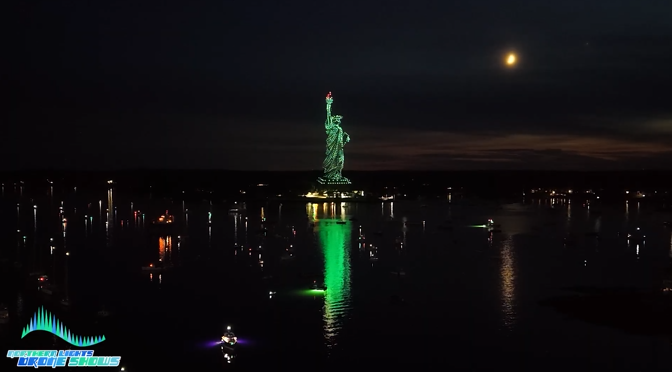
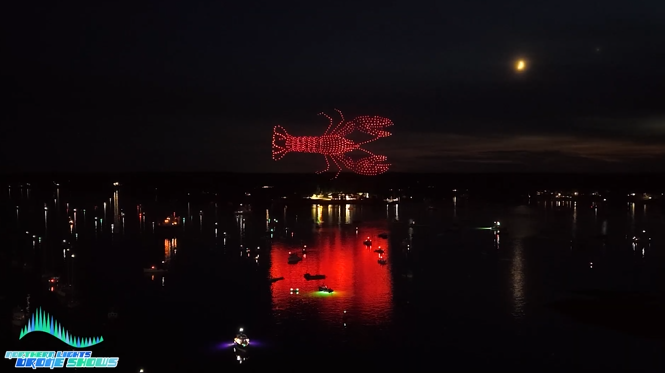
The creative brief was specific. The show needed to wow a large public audience gathered around the harbor while also impressing corporate country club sponsors. That led to a distinctly local design language featuring an American flag, a saluting soldier, a lobster, a breaching whale, recognizable local landmarks, and a sponsor golf logo.
One of the most ambitious moments was a waving wooden troll inspired by a large timber sculpture at the local botanical gardens. Rendering that kind of motion convincingly required careful drone budgeting across a 650-drone fleet. More drones had to be dedicated to facial detail and movement, which meant other visual choices had to be adjusted in the storyboard.
The audience location added another layer. Spectators were watching from the harbor, many from boats, at a meaningful distance from the safe flight area. So the preview process had to account for perspective, scale, and clarity. Northern Lights Drone Shows adjusted flight parameters and enlarged the 3D imagery so the major scenes would read powerfully from the water.
Then the weather changed everything.
Rain was forecast for the scheduled Saturday performance, and the client requested the show be moved up to Friday. The team responded quickly, but the shift compressed the normal on-site setup window by two hours. In a production this technical, losing two hours isn’t a minor inconvenience. It directly affects what can be checked, calibrated, and cleared with full confidence before launch.
What Happened on Site and Why It Matters
Field setup is where planning meets reality. A 650-drone production requires exact placement, battery management, GPS calibration, systems checks, and disciplined crew coordination. You can’t rush those steps simply because the audience is waiting.
Emily described the operational decision clearly:
“Setting up a fleet of 650 drones requires precise, methodical field execution. When weather forced us to move the performance up by a full day, our on-site setup window was cut by two hours. Because we refuse to compromise on safety, we chose to ground 20 drones that didn't have the standard window for full GPS calibration. This is why protecting the on-site timeline is so critical—every single hour on the ground directly impacts the execution in the air.” — Emily, NLDS Drone Show Designer
That decision says a lot about how Northern Lights Drone Shows operates. Rather than forcing a full launch under compressed conditions, the crew grounded 20 drones and proceeded with 630. The show still happened. The audience still got a striking performance. But the result also proved a larger point: protecting setup time protects both safety and show integrity.
For planners, this is the operational heart of the issue. The distance between a flawless show and a compromised one often isn’t creativity. It’s whether the provider has enough time to execute the technical plan properly.
The Final Show Was a Success Because the Process Held
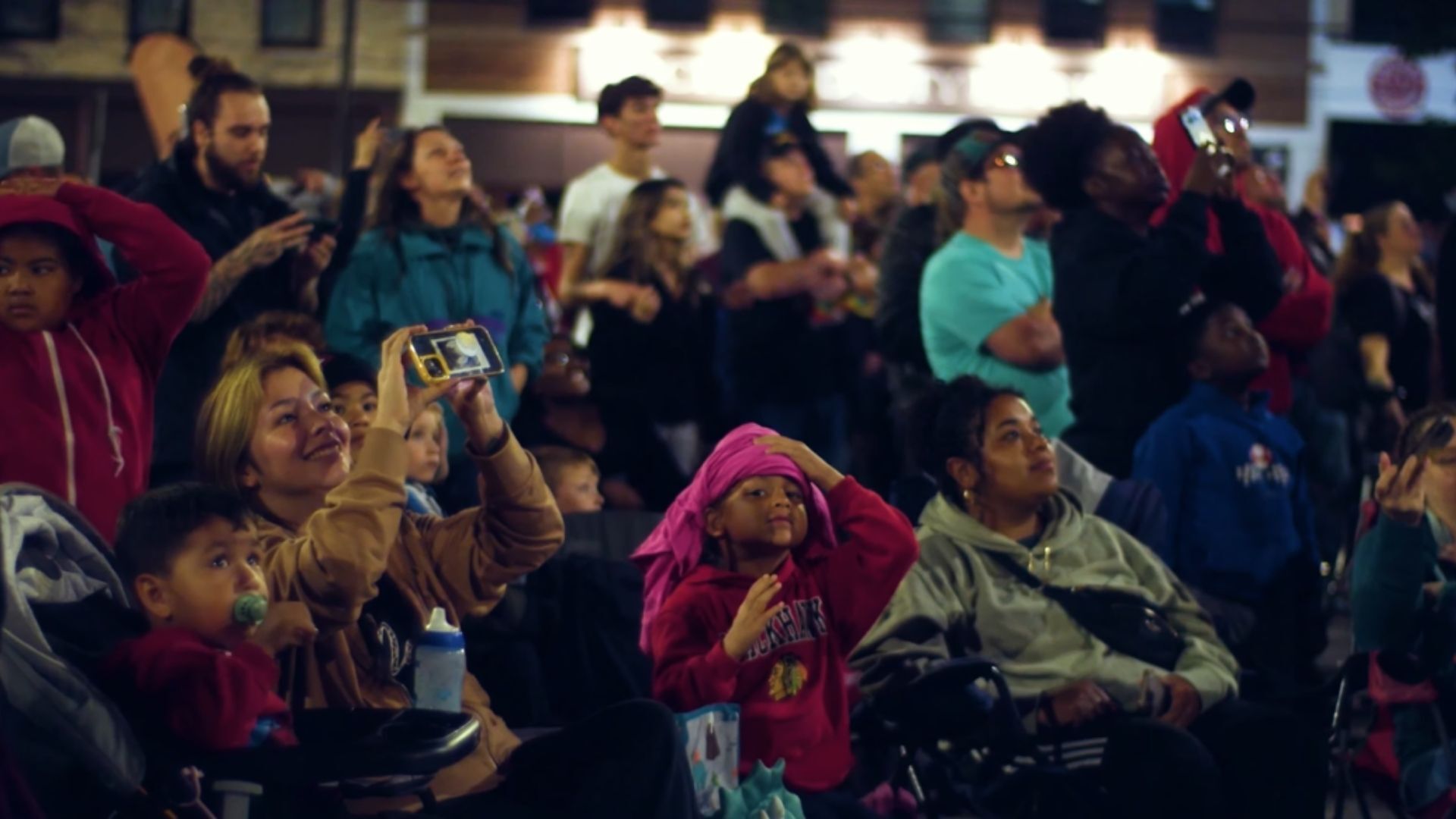
Even with the weather-driven change and the reduced setup window, the performance lasted 14 minutes and 15 seconds and delivered exactly the kind of local spectacle the client wanted. Spectators on boats cheered and honked when they recognized landmarks, the lobster, the swing bridge, and the sponsor logo. The show connected because the creative had been tailored so specifically to Boothbay Harbor and because the production team protected the non-negotiables when time got tight.
The client’s response made that clear. Afterward, he praised the result and indicated he’d likely book again the following year. Audience members shared positive videos across Facebook and YouTube, extending the show’s impact beyond the harbor itself.
This is an important distinction. The show succeeded not because the timeline didn’t matter, but because Northern Lights Drone Shows had already done the hard design work and then made disciplined field decisions when pressure hit. That’s what experienced execution looks like.
What Event Planners Should Learn From This Timeline
The Boothbay Harbor show offers a practical lesson for anyone planning a custom aerial performance. If you want the final visual spectacle to match the promise of the concept, you need to protect the timeline contractually and operationally from the beginning.
That means thinking carefully about:
- On-site setup windows that can’t be casually shortened
- Weather rescheduling policies agreed upon before show week
- Rain date boundaries and timing cutoffs
- Flight considerations over water, especially around battery protection and show length
- Approval timelines for revisions during the design phase
These aren’t administrative details. They’re quality controls.
Emily put it best:
“The biggest takeaway from this event is the absolute need for operational clarity from the beginning. To protect the integrity of the performance, future contracts must establish firm boundaries around setup windows, weather rescheduling timelines, and rain dates. When you protect the timeline, you protect the safety of the airspace and the ultimate quality of the visual spectacle.” — Emily, NLDS Drone Show Designer
That perspective aligns with how Northern Lights Drone Shows approaches every project. The company understands that from idea to drone show, every stage has to be managed with the final audience experience in mind. That’s why Northern Lights Drone Shows doesn’t just deliver animation. It delivers a process built to hold up under real event conditions.
Why Northern Lights Drone Shows Emphasizes Timeline Discipline
There are plenty of ways to make a drone show sound exciting in a proposal. The harder part is building a production plan that still works when distance, weather, site limitations, and sponsor expectations all collide. Northern Lights Drone Shows emphasizes timeline discipline because that’s what allows custom creative to survive contact with reality.
For general audiences, this might seem invisible. For planners and buyers, it should be one of the first things you ask about. How are revisions handled? How are preview perspectives calibrated? What happens if weather shifts the event? How much setup time is required, and what happens if that window gets reduced?
Those answers tell you a lot about the provider.
Northern Lights Drone Shows stands out because it pairs creative customization with proven operational standards. Whether the audience is a city waterfront crowd, a sports venue, or a brand activation audience, the process is designed to preserve safety, clarity, and visual impact from the first concept conversation to the last frame in the sky.
Frequently Asked Questions
How long does it take to go from idea to drone show?
It depends on the size, complexity, and location of the event, but a custom drone show usually requires several weeks of creative development, approvals, technical planning, and logistical coordination before show day. The more tailored the visuals are, the more important it is to allow enough time for design iteration and viewpoint testing.
What is included in the drone show design process?
The drone show design process typically includes creative discovery, story development, animation planning, audience viewpoint simulation, flight boundary planning, technical review, and on-site execution prep. For a custom production, those steps are closely linked, which is why late changes can affect both visuals and logistics.
Why does on-site setup time matter so much for a drone show?
On-site setup time is critical because crews need sufficient time for field layout, battery prep, GPS calibration, safety checks, and system testing. If that window is shortened, the team may need to reduce drone count or make other operational adjustments to maintain safety.
What is a drone show storyboard?
A drone show storyboard is the visual sequence that maps how the show will unfold from one animated scene to the next. It helps align creative goals with technical feasibility, ensuring that each formation, transition, and branded moment works clearly for the intended audience.
Can weather affect the final drone show timeline?
Yes. Weather can affect travel, setup, scheduling, and launch decisions. That’s why experienced providers like Northern Lights Drone Shows recommend clear weather protocols and rain date policies before the event so schedule changes don’t create unnecessary risk.
How can event planners protect the timeline of a custom drone show?
The best way is to define approval deadlines, setup access, weather rescheduling rules, and operational boundaries early in the planning process. Protecting those details helps preserve both safety and show quality.
Plan Your Show With the Full Timeline in Mind
If you’re considering a custom production, the smartest next step is to start the conversation early and map the full timeline before creative ideas get locked in. Northern Lights Drone Shows can help you shape the concept, build a realistic drone show storyboard, and define the setup and weather parameters that protect the final result.
Explore more about custom productions at the parent page, or contact Northern Lights Drone Shows to talk through your event goals and what it takes to move from concept to final show with confidence.