What are the Creative Limitations of Drone Shows?
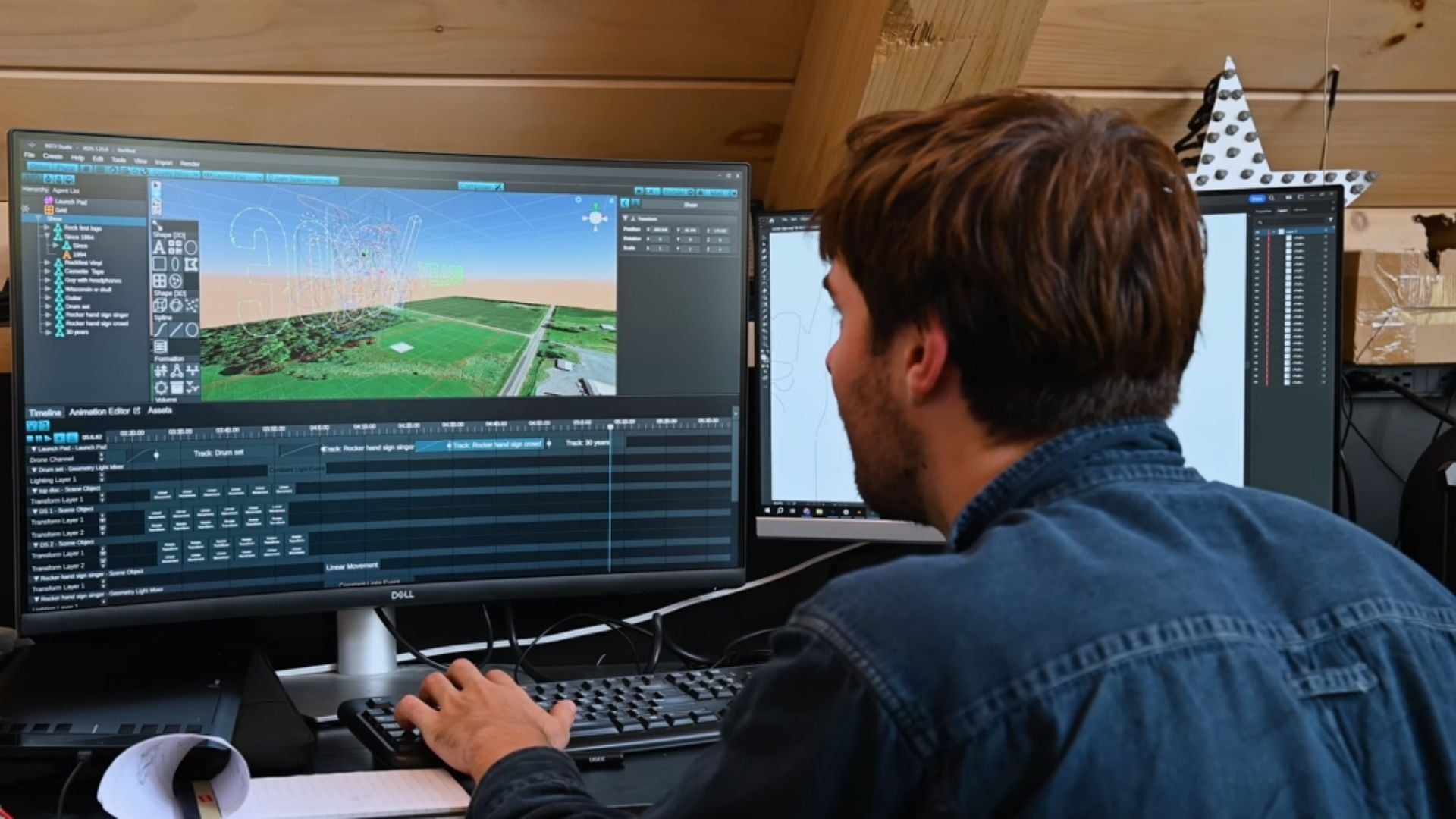
Drone shows look limitless from the ground, but every memorable animation in the sky is shaped by hard technical boundaries. If you’ve ever wondered how do drone shows work, the short answer is that they combine choreography, GPS positioning, battery management, airspace planning, and live operational safety into one tightly controlled performance. That means the creative side can never be separated from the physical realities of flight.
For event planners, municipalities, brands, and curious spectators, this matters because the best drone show results come from understanding what the sky will and won’t allow. At Northern Lights Drone Shows, creative ambition is always matched to real-world conditions so the final show feels spectacular without pushing past safe limits. The most successful custom productions aren’t the ones that ignore constraints. They’re the ones designed intelligently around them.
The Best Drone Shows Are Designed Around Reality, Not Against It
People often imagine a drone show as a digital animation that can simply be played outdoors. In reality, it’s a live fleet of aircraft operating inside exact tolerances for weather, battery life, visibility, spacing, and calibration. Every visual decision depends on those conditions.
That’s why drone show safety shapes the creative process from the beginning. A concept might look incredible in a pitch deck, but if the venue is too large, the audience is too far away, or the fleet size can’t support the level of detail requested, the design has to change. Northern Lights Drone Shows approaches this the way experienced operators should: first secure the conditions for a safe and reliable show, then build the strongest creative outcome within those boundaries.
For audiences, this often leads to a better final experience. Cleaner shapes, smarter pacing, and stronger scale usually read far better in the sky than overloaded animations filled with details no one can actually see.
Battery Life Sets a Hard Ceiling on Show Length
One of the most important creative limitations of drone shows is duration. Battery life doesn’t just influence how long a show can run. It determines how much story, motion, and complexity can realistically fit into the performance.
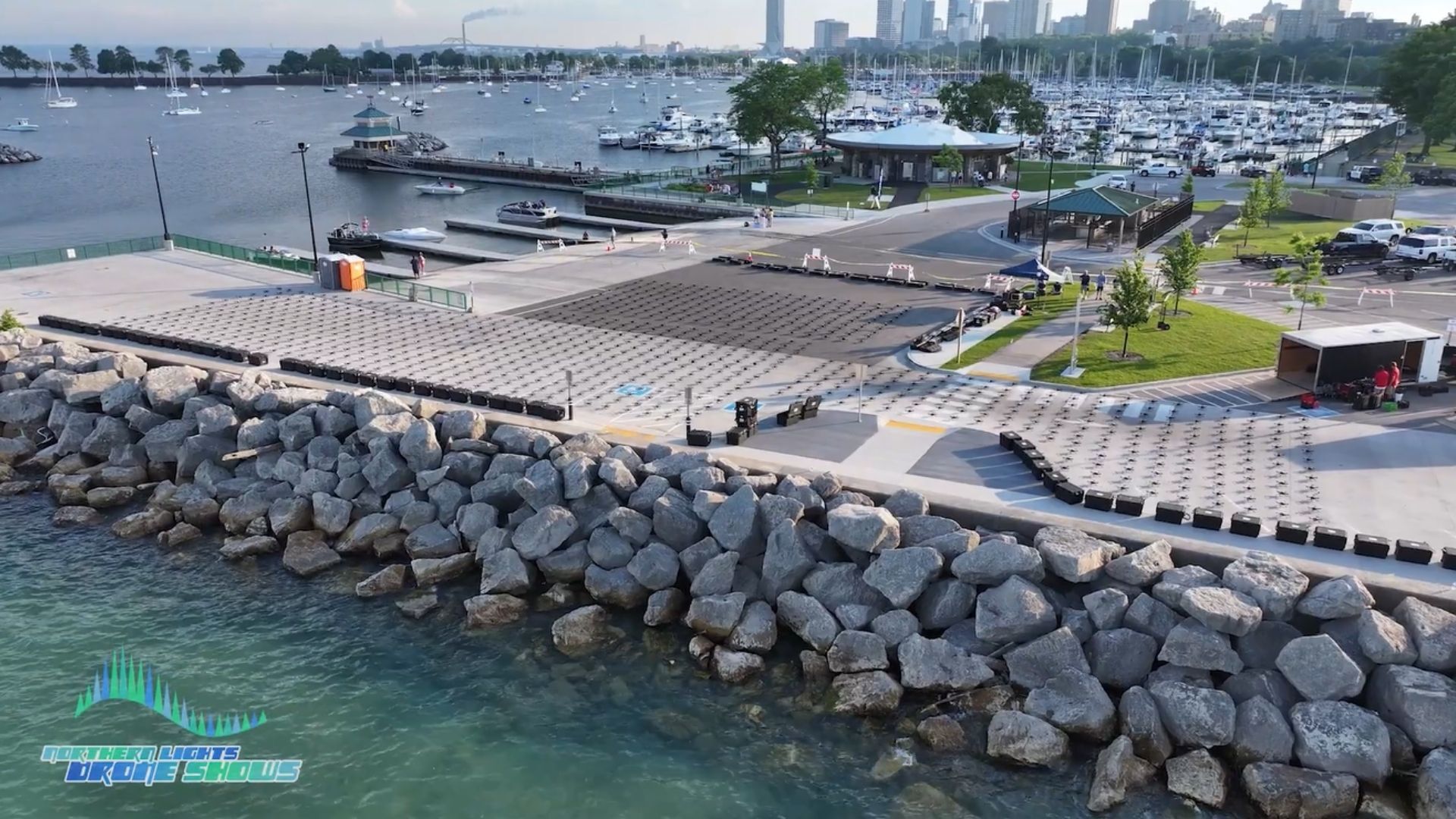
This becomes especially critical in challenging environments, including waterfront venues. A common question is can you do a drone show in the rain, or under other difficult conditions, but the more immediate issue is often battery reserve and recovery safety. Over land, an emergency descent may still be manageable within a secure operating zone. Over water, the risk changes completely.
At Booth Bay Harbor, that distinction defined the show length.
“Client expectations often clash with the physical realities of drone battery life, especially when flying over water. The client pushed us for a 17-minute show, but we had to hold our ground at 14 minutes and 15 seconds. Over water, there is zero room for error; if a battery runs flat, that drone is landing in the harbor. Educating clients on why these hard environmental limits exist is a vital part of our process.” — Emily, NLDS Drone Show Designer
That decision wasn’t a creative compromise in the negative sense. It was disciplined design. Northern Lights Drone Shows understood that the strongest show was the one that could be flown confidently from launch to landing, not the one that squeezed in extra minutes at the expense of safety.
Distance Changes What the Audience Can Actually See
A drone show isn’t experienced from the animation software. It’s experienced from the audience viewing area. That sounds obvious, but it’s one of the biggest reasons some ideas work beautifully in one venue and fall flat in another.
If the safe flight zone is positioned far from spectators, small shapes and intricate figures lose impact. Fine details blur together. Motion becomes harder to read. What felt expressive in a close-range mockup can look tiny from hundreds of feet away across water or open land.
That’s why spatial scale is a design issue, not just a staging issue. At Northern Lights Drone Shows, the visual strategy has to match the audience perspective so the show feels large, legible, and emotionally clear in the actual environment where people will watch it.
Booth Bay Harbor Shows How Scale Solves Distance
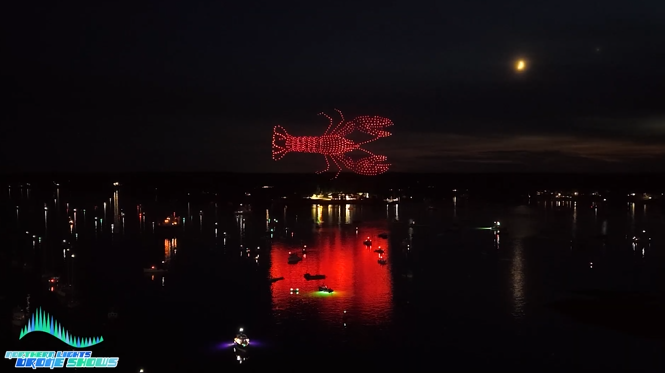
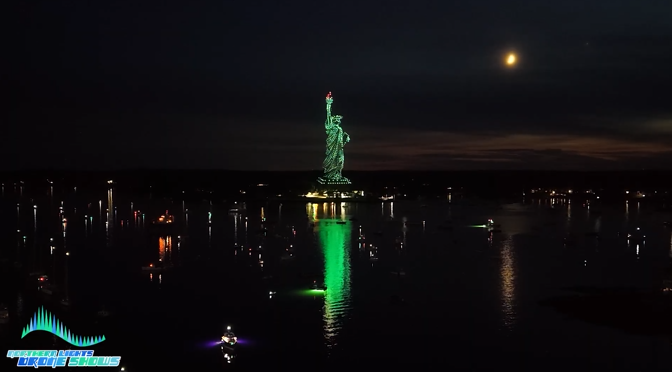
The Windjammer Days production in Booth Bay Harbor, Maine, is a strong example of how creative adaptation leads to better results. The safe flight area had to sit far from the harbor audience, which created an immediate visual challenge. If the team had designed standard-sized figures, the show would have felt distant and underpowered.
Instead, the animations were scaled dramatically upward to fill more sky and preserve clarity from across the harbor. That choice also required a dense, bright fleet presence to keep the oversized figures readable.
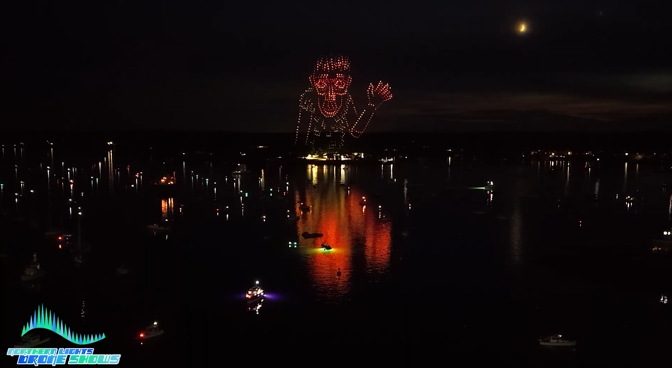
“If your safe flight zone is forced far away from the viewing area, you cannot design the show the same way you would for a close-up venue. For Booth Bay Harbor, we had to scale our animations up dramatically to bridge that distance. Having a fleet of 650 drones was critical—it gave us the density and brightness needed to make massive, oversized shapes like the waving troll and the lobster look incredibly clear from the other side of the harbor.” — Emily, NLDS Drone Show Designer
This is where experienced providers stand apart. Northern Lights Drone Shows didn’t force a standard design into a nonstandard venue. The team redesigned for perspective, which is exactly what a custom drone show should involve.
Every Drone Is a Pixel, So Detail Always Has a Limit
Another major constraint is resolution. In a drone show, each aircraft functions like a single illuminated pixel in the sky. The number of drones available directly affects how much detail a design can carry.
That has big consequences for logos, human figures, animals, landmarks, and animated storytelling. A highly detailed 3D object may be possible, but only if the fleet size, viewing distance, and scale all support it. If not, the design has to simplify.
This doesn’t make the show less impressive. It usually makes it stronger. The best sky animations are often the ones that distill a subject to its most recognizable form rather than trying to recreate every physical detail.
The Waving Troll Proved That Strong Design Means Choosing What to Emphasize
At Boothbay Harbor, the client wanted a drone interpretation of a beloved local sculpture: a giant waving troll from the botanical gardens. It was a compelling idea, but also a demanding one. Organic figures are harder to render than simple geometric shapes, and movement adds another layer of complexity.
With 650 drones, Northern Lights Drone Shows had to allocate resolution carefully. The team emphasized the troll’s most recognizable features, especially the head and waving arm, while simplifying less important areas of the figure. That allowed the animation to stay clear and expressive at large scale rather than becoming visually muddy.
This is one of the central creative limitations of drone shows: not everything can be rendered at the same level of detail. The smartest designs prioritize what the audience needs to recognize first. That’s how a custom show stays emotionally effective instead of technically overloaded.
Weather and Setup Time Can Reduce Creative Capacity in Real Time
Even a perfectly designed show can still be affected by live operational conditions. This is where drone show weather limits become more than a planning concern. They can directly alter the fleet that flies and the creative output the audience sees.
People commonly ask can you do a drone show in the rain. In most cases, active rain, lightning risk, unsafe wind conditions, or unstable weather patterns can delay, suspend, or cancel operations. If conditions deteriorate enough, a drone show cancelled decision is sometimes the responsible one.
But weather doesn’t only matter during performance. It also affects setup windows, calibration time, and launch readiness. That means a weather shift before takeoff can reduce what’s possible even if the show ultimately proceeds.
A Rushed Ground Process Can Never Be Fixed in the Air
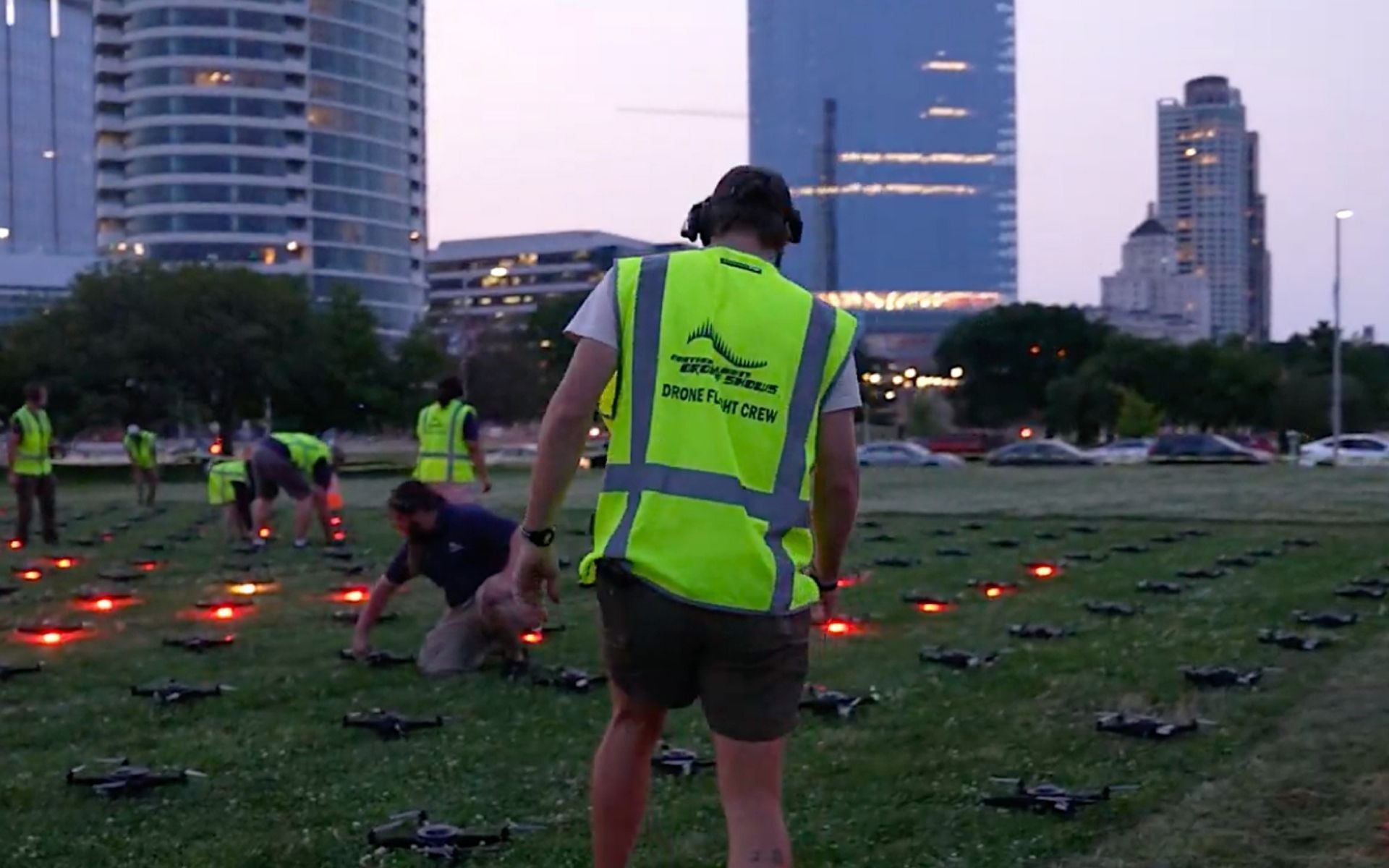
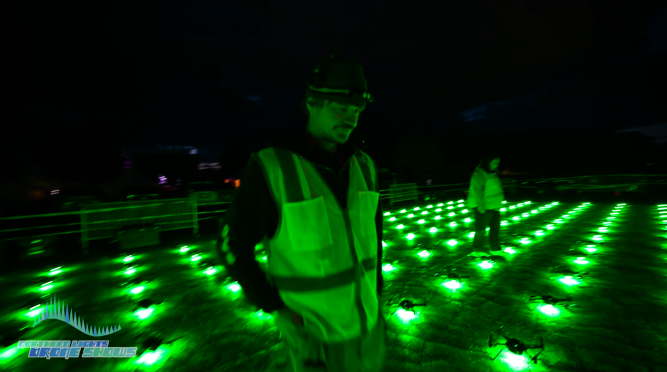
At Booth Bay Harbor, impending rain forced the schedule forward by a full day. That cut two hours from the setup window and put pressure on the calibration process. Rather than rush through a high-precision technical procedure, Northern Lights Drone Shows reduced the active fleet.
“A drone show is a high-precision physical operation, not just a digital video. When weather forced us to run a day early and cut our setup window by two hours, we couldn't complete the full GPS calibrations on every single unit. We chose to ground 20 drones and run a 630-drone show rather than compromise on safety. It's a reminder that the creative output in the air is entirely dependent on having a protected, methodical setup timeline on the ground.” — Emily, NLDS Drone Show Designer
That decision says a lot about what trustworthy production actually looks like. Northern Lights Drone Shows chose a slightly reduced fleet over unnecessary risk, and that’s exactly the kind of judgment clients should want from a partner. Reliability in this industry isn’t about pretending constraints don’t exist. It’s about making disciplined calls when they do.
What These Limitations Really Mean for Clients Planning a Show
None of this means drone shows are too limited to be creative. It means the creativity has to be engineered intelligently. The most effective clients understand that venue conditions, audience distance, fleet size, and weather all shape what will look best in the sky.
In practice, that usually means a few things:
- Show length must respect battery reserve, especially over water
- Artwork should be designed for viewing distance, not just concept appeal
- Complex figures may need simplification to stay legible
- Weather and setup timelines can affect fleet count and final execution
- Safety decisions are part of the creative process, not separate from it
That’s why Northern Lights Drone Shows has become a trusted choice for organizations across the country looking to elevate their events with custom aerial displays. From sports teams and corporate brands to municipalities and civic celebrations, Northern Lights delivers safe, FAA-compliant shows tailored to the audience and the venue. The company’s portfolio includes major brand work, including a drone show campaign created in partnership with Amazon Prime Video to promote the hit series “The Boys.”
Experience matters here because the line between a stunning show and a disappointing one is often set long before the first drone lifts off.
Frequently Asked Questions
How do drone shows work?
Drone shows use a fleet of GPS-coordinated aircraft equipped with lights to create animated shapes and scenes in the sky. Each drone follows a programmed flight path while maintaining precise spacing from the others. The show only works when choreography, battery management, airspace planning, setup calibration, and safety procedures all align.
Can you do a drone show in the rain?
Usually, no. Active rain can create unsafe operating conditions and interfere with the performance and protection of the equipment. Even when rain isn’t falling at showtime, surrounding weather conditions can still affect setup, calibration, and launch decisions.
What are the main drone show weather limits?
The most important drone show weather limits typically include rain, lightning risk, excessive wind, poor visibility, and unstable forecast windows that affect setup or launch safety. Weather can also reduce the time available for calibration, which may force changes to the active fleet or schedule.
Why would a drone show be cancelled?
A drone show cancelled decision is usually based on safety. Unsafe weather, restricted setup time, calibration issues, airspace concerns, or operational conditions that prevent a reliable performance can all justify postponement or cancellation. Reputable providers make that decision conservatively, not reactively.
Why can’t drone shows always be longer?
Battery life places a hard cap on show duration. Operators must maintain safe reserves for the full flight, and that becomes especially important over water or in more complex environments. A longer show isn’t worth increased risk if it compromises safe return and landing.
Why do some drone show designs look simpler than expected?
Every drone acts like a single pixel, so the available fleet size limits the level of visual detail. Distance from the audience matters too. Simpler, larger shapes often look better and read more clearly than intricate designs that disappear at scale.
How important is drone show safety to the creative process?
It’s fundamental. Drone show safety affects where drones can fly, how long they can stay airborne, how complex the choreography can be, and whether the show can launch at all. The best creative work happens when the design is built around those realities from the start.
Plan a Drone Show With the Constraints in Mind
If you’re considering a custom production, the smartest next step is to talk through the real conditions of your venue before locking in creative expectations. That includes flight area, viewing distance, timeline, weather exposure, and the level of detail you want audiences to see.
That’s why Northern Lights Drone Shows is the right pick for organizations that want both creative ambition and operational discipline. If you want a show concept that’s designed to succeed in the real world, contact Northern Lights Drone Shows and start planning a custom experience that looks incredible because it’s built on what actually works.