Can you use a Custom Soundtrack Selection for Drone Shows?
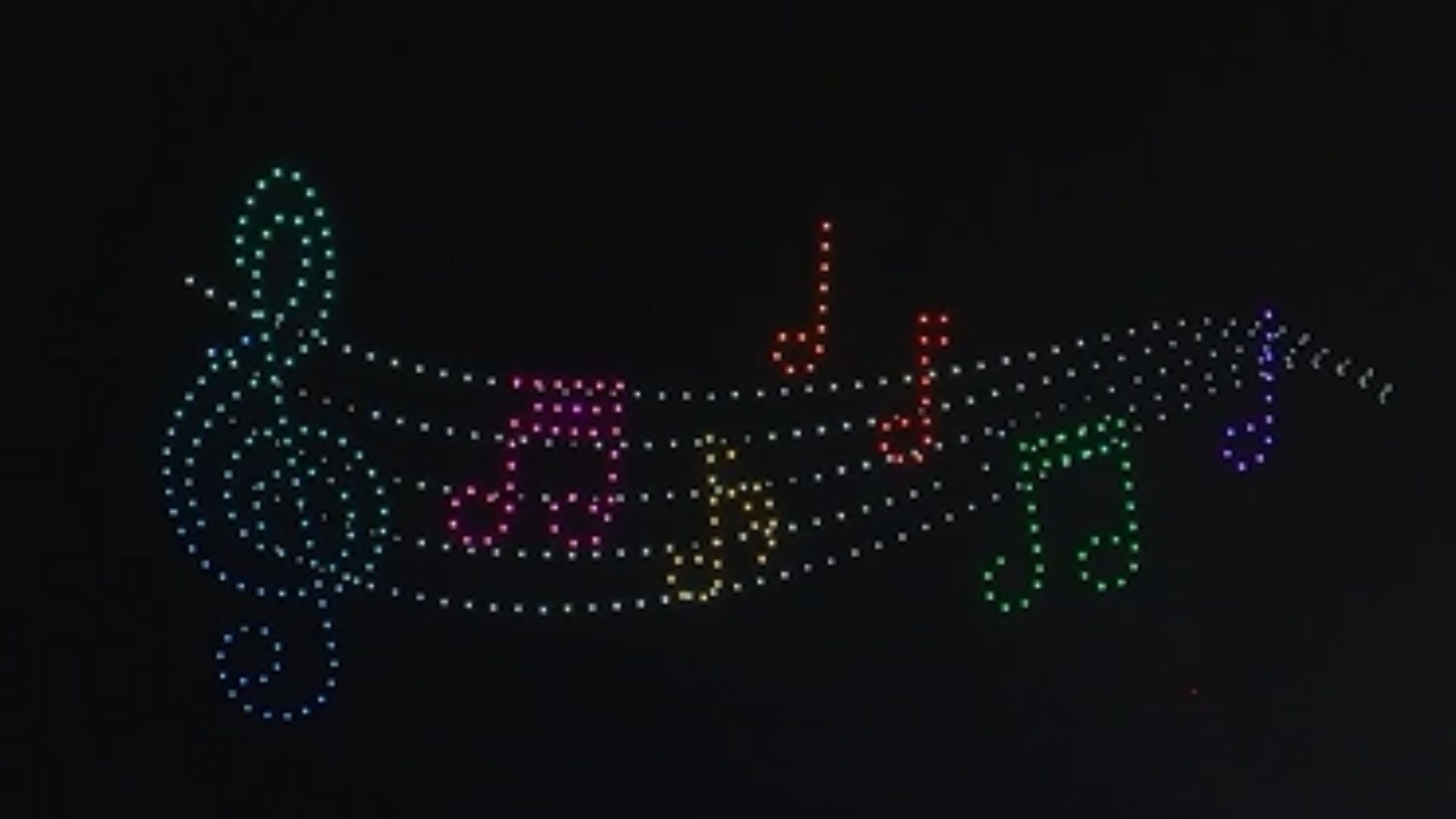
Yes, you can, and you absolutely should. A custom soundtrack selection for drone shows isn't a finishing touch. It's the foundation that determines pacing, emotion, timing, and how the audience experiences every formation in the sky. If you're wondering how a memorable drone show soundtrack comes together, the answer is simple: the music doesn't sit behind the visuals, it drives them.
Why the soundtrack shapes the entire drone show
For a general audience, that matters because the difference between a beautiful aerial display and a truly unforgettable one usually comes down to synchronization. The right drone show song selection gives the audience something to feel, follow, and anticipate. That's why Northern Lights Drone Shows treats custom drone show music as part of the storytelling itself, not as an afterthought.
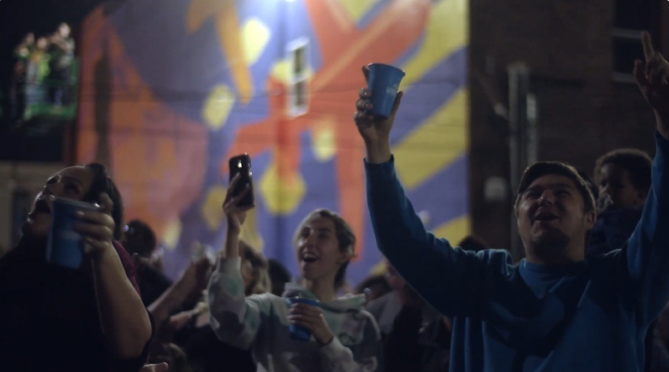
How music turns visual motion into a coherent story
A drone show can create logos, symbols, characters, and animated scenes, but without a clear musical structure, those moments can feel disconnected. When the soundtrack is selected with intention, every transition has a reason. Builds create tension, drops create payoff, and quieter passages give the sky room to breathe.
That is the real value of custom drone show music. It helps turn movement into narrative. Instead of watching one formation after another, audiences experience a sequence that feels composed from beginning to end.
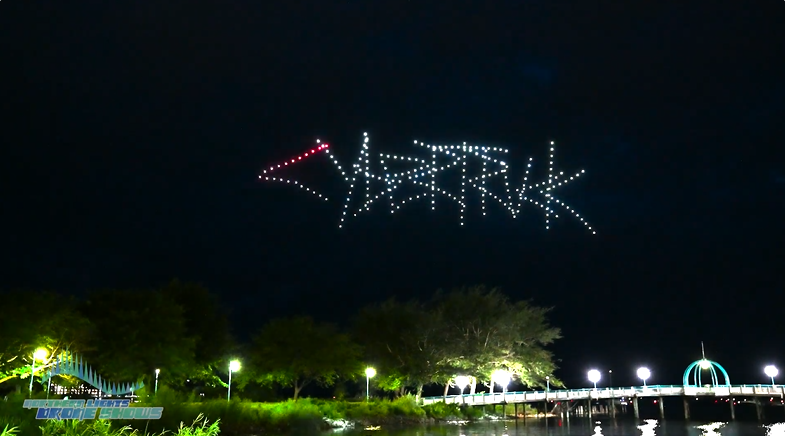
Taylor, an NLDS Drone Show Designer at Northern Lights Drone Shows, explains it this way: "When selecting a custom soundtrack for a drone show, you aren't just choosing background music—you are building the physical script for the sky. For the Muskegon show, we listened to the audio track, identified a perfect build-up and beat drop, and choreographed a dynamite fuse that burned down and 'exploded' to reveal the Cybertruck logo. That level of precise, beat-for-beat timing is what elevates a drone show from a simple light display into a genuinely thrilling visual story."
That perspective is central to how Northern Lights approaches creative development. The soundtrack is the script. Once that idea is clear, the show becomes more precise, more emotional, and much more memorable.
Where drone show song selection often succeeds or fails
The most common mistake in drone show soundtrack planning is choosing music that sounds exciting but doesn't offer enough choreographic structure. A song might be popular, but if it lacks usable transitions, strong rhythmic cues, or emotional variation, it limits what the aerial design can do.
Strong drone show song selection usually depends on a few practical questions:
- Does the track have clear peaks, drops, and transitions?
- Can visual reveals land exactly on recognizable musical moments?
- Does the tone of the music fit the brand, celebration, or message?
- Will the pacing support both large formations and fine-detail animation?
- Can the soundtrack be used legally for a public performance?
These questions are why experienced production teams spend so much time on soundtrack development before animation begins. The song affects not just mood, but technical choreography, cue timing, and audience comprehension.
When people talk about a drone show that "felt cinematic," they're usually responding to this alignment. The visuals made sense because the music gave them shape.
How Northern Lights Drone Shows builds around the music
Northern Lights Drone Shows develops custom drone show music strategy as part of the larger event concept. That means the soundtrack isn't chosen in isolation. It is evaluated against the audience, the venue, the brand voice, and the kind of emotional response the event is meant to create.
Sometimes that means selecting a piece of music with a dramatic arc suited for a public celebration. Other times it means working from a track that already matters to the client and building exact visual choreography around it. In either case, the key is intentional synchronization.
This approach is one reason Northern Lights Drone Shows has become a trusted choice for organizations across the country looking to elevate their events with custom aerial displays. From sports teams and corporate brands to municipalities and civic celebrations, Northern Lights delivers safe, FAA-compliant shows tailored to the audience in front of them. That experience includes major brand work, including a campaign created in partnership with Amazon Prime Video to promote the hit series "The Boys."
That kind of trust isn't built on visuals alone. It comes from being able to combine creative design, technical timing, and event execution into one cohesive result.
How synchronization solved a real creative challenge in Muskegon
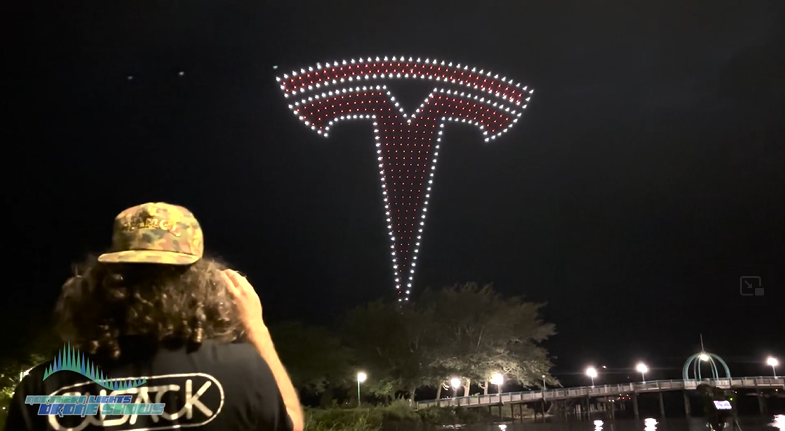
A clear example came at the Tesla Takeover event in Muskegon, Michigan, where Northern Lights Drone Shows helped create a unified performance involving both synchronized ground vehicles and an aerial drone fleet. The challenge wasn't simply making both elements look impressive. It was making them feel like they belonged to the same experience.
Without a common creative thread, the audience could have ended up splitting their attention between the cars below and the drones above. The solution was to establish a single custom-curated drone show soundtrack as the master clock for everything.
Simon, Audio and Scripting Engineer for Tesla Owners of Michigan, described that goal directly: "Our goal was to make sure the vehicles on the ground weren't just flashing their lights randomly, but were fully synchronized to a dedicated musical score via USB-loaded scripts. Partnering with a drone team allowed us to expand that same audio track up into the sky. By using the exact same soundtrack to cue both the vehicles' headlights on the ground and the drone movements above, we turned two separate attractions into one unified, cinematic experience."
That statement gets to the heart of why soundtrack selection matters so much. Music wasn't there to decorate the show. It was the system that made every moving part speak the same language.
What a fully synchronized drone show soundtrack looks like in practice
At Muskegon, the effect of that shared soundtrack showed up in several distinct moments. Each one illustrates how custom soundtrack selection for drone shows can shape not only emotion, but design logic.
The show opened with a large 3D Tesla Optimus robot in the sky. Its limbs moved in time with the music, creating the illusion that it was conducting the soundtrack while orchestrating the dancing Tesla headlights below. That image worked because the timing was exact. The audience wasn't just seeing animation. They were seeing music made visible.
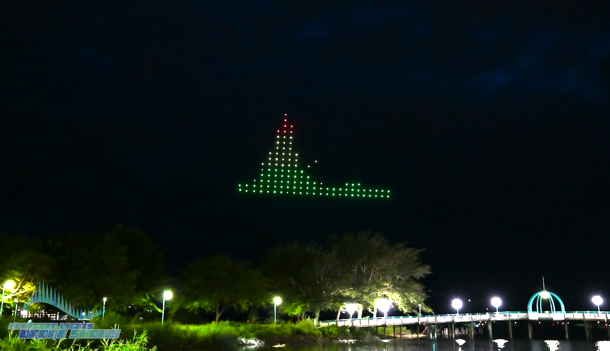
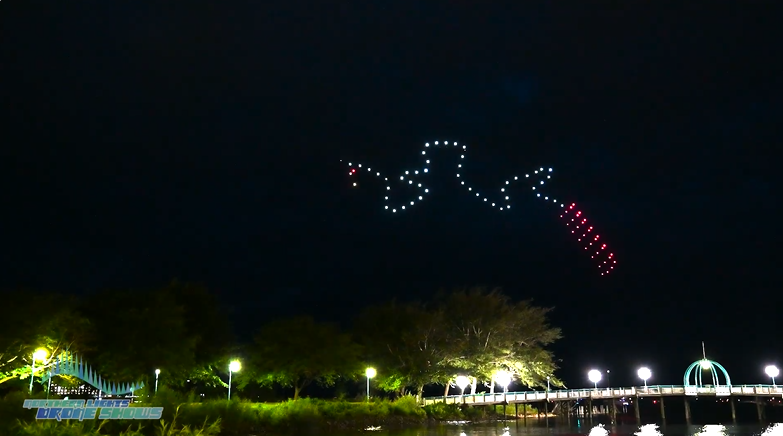
Later, the team aligned a dramatic build-up in the soundtrack with one of the show's most memorable reveals. The drones formed a dynamite fuse that appeared to burn down in real time as the audio intensified. At the exact beat drop, the formation exploded outward to reveal the Cybertruck logo. That sequence landed because the visual transition was inseparable from the musical cue.
The result was not random spectacle. It was cause and effect. The audience could feel where the show was heading because the soundtrack prepared them for it.
How the drone audio visualizer pushed the idea even further
The most technically ambitious part of the Muskegon performance came when Northern Lights translated the soundtrack itself into a living visual system in the sky. Instead of using music only as timing reference, the team made the audio into the visual content.
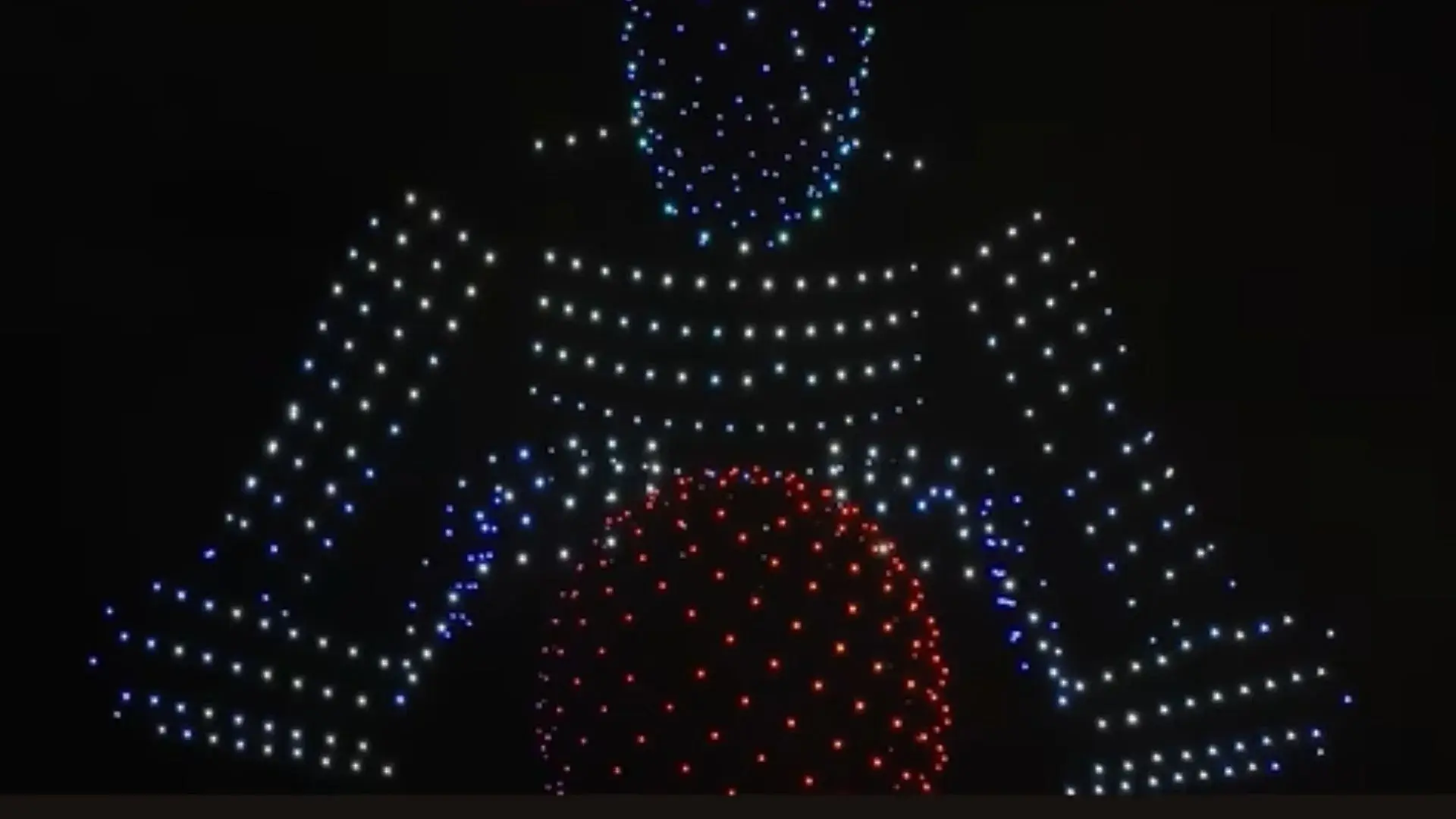
Taylor explained the process: "Creating the drone audio visualizer was a massive technical milestone for us. I ran the actual event soundtrack through a visualizer filter in Adobe and translated that graphic animation into a projection mapping across our drone grid. Aligning the physical gridding system so that each drone acted as a single, pulsing pixel allowed us to synchronize the visual animations perfectly with the tempo of the music."
That detail matters because it shows what advanced drone show soundtrack design can become. In this case, each drone functioned like a pixel in a giant floating screen, pulsing and shifting according to the frequencies of the music. The audience wasn't just hearing the soundtrack and watching a show built around it. They were watching the soundtrack itself take physical form above them.
This is where Northern Lights Drone Shows stands apart. The team doesn't just time transitions to music. They can build custom visual systems that emerge from the audio itself when the concept calls for it.
Why drone show music licensing matters from the beginning
Creative ambition has to be matched by practical planning, and drone show music licensing is one of the most important parts of that process. Public performance rights, event usage terms, and synchronization considerations can all affect whether a track is appropriate for a show.
For clients, this means music decisions shouldn't wait until animation is already underway. A great track that can't be cleared for the intended use can slow production or force a late change that weakens the choreography. That's why experienced teams evaluate drone show music licensing early, alongside concept development and technical planning.
Northern Lights Drone Shows helps clients think through these issues as part of the broader production conversation. That doesn't just reduce risk. It protects the integrity of the show by making sure the soundtrack you build around is one you can actually use.
Frequently Asked Questions
How do you choose the right music for a drone show?
The best music has clear structure, recognizable transitions, and an emotional tone that fits the event. Strong drone show song selection usually includes moments that support reveals, animation changes, and pacing shifts.
Can a drone show use custom music?
Yes. Custom drone show music can be selected, edited, or developed around the event's goals, as long as the usage is properly planned. Northern Lights Drone Shows works with clients to make sure the soundtrack supports both the creative concept and production needs.
Why is synchronization so important in a drone show?
Synchronization is what makes the visuals feel intentional. When formations, animations, and transitions land exactly with the soundtrack, the audience experiences the show as a complete story rather than a series of separate effects.
What is drone show music licensing?
Drone show music licensing refers to the permissions required to use a track in a public performance or branded event. Rights can vary depending on the song, venue, and use case, so it's important to address licensing early in the planning process.
Can music control both ground effects and drones at the same time?
Yes, and the Muskegon Tesla Takeover case is a strong example. By using the same soundtrack to cue vehicle lighting on the ground and drone choreography in the air, the production became one unified performance.
Does every drone show need a custom soundtrack?
Not every show requires a fully custom track, but every strong show benefits from intentional soundtrack planning. Even when using existing music, selecting the right track and choreographing to it carefully can dramatically improve the final result.
Why the best custom drone show music feels inevitable
When soundtrack selection is done well, the audience rarely thinks about the technical work behind it. They just feel that everything fit. The reveals landed when they should have. The pacing made sense. The emotional high points arrived naturally.
That feeling of inevitability is usually the result of careful choices made long before the first drone takes off. It comes from selecting music with structure, matching it to the event's purpose, and choreographing each visual moment around its rhythm and tone. It also comes from working with a team that understands both the creative and operational sides of production.
That's why Northern Lights Drone Shows is the right pick for organizations that want more than a generic aerial display. If the goal is a drone show that feels unified, cinematic, and tailored to the moment, the soundtrack has to lead the process.