Are Drone Light Shows Safe?
Yes, NLDS drone light shows are safe because they're planned and operated correctly, and that safety comes from layered systems rather than luck. If you're wondering whether hundreds of drones flying at night can really be trusted above a public event, the short answer is yes, because professional operators use FAA-compliant flight maps, strict crowd buffer zones, weather limits, and automated fail-safes built into every aircraft. If you’re still wondering what a drone show is at its core, you can click here and read our short article explaining them. What matters most isn't just the technology in the sky, but the discipline behind the show on the ground. That's exactly why Northern Lights Drone Shows treats safety as the foundation of every performance, not an afterthought. This article is one in a series of many seeking the explain drone shows in exhaustive detail. If you want the full picture, click here to read our overview.
Safety Starts Long Before the Drones Ever Take Off
The biggest misconception about drone show safety is that it depends only on whether the drones fly correctly during the performance. In reality, the most important safety decisions are made well before showtime through airspace review, site mapping, crowd placement, and flight path design.
Professional drone show safety requirements are built around separation. That means separating the launch area from the audience, separating the performance zone from places people can stand, and separating creative ambition from anything that would violate safe operating limits. The show has to fit the site, not the other way around.
At Northern Lights Drone Shows, that planning process is central to how events are designed. As Arin, an NLDS drone show designer, explains, “When we get a safety map, we treat it like a problem-solving puzzle. We have to figure out the best way to deal with the space and time we have, while ensuring we use the area to its fullest potential.”
That mindset matters because a safe show isn't one where nothing unexpected could ever happen. It's one where the site has been planned so that if something does happen, the audience is still protected. We take safety extremely seriously and pride ourselves on running historically safe shows. If you want to read our safety policy, you can click here before carrying on with this article. We also have another article written about the running of safe drone shows, which you can click here to learn more about.
Why Buffer Zones Matter More Than Most People Realize
When people ask, “Are drone light shows safe?” they're often imagining drones flying directly above the crowd. That's not how a professionally designed show should work.
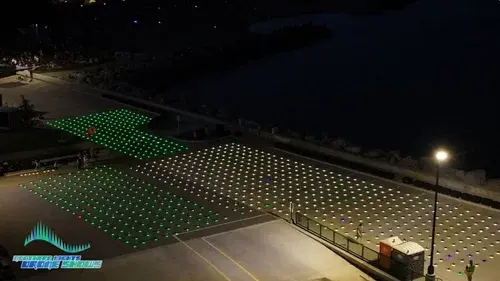
FAA guidance and operational safety planning require designated zones where drones can fly and zones where people can't be present. Those boundaries are there for a simple reason: if a drone loses power, experiences a malfunction, or gets knocked off course, it needs to be over an area where it won't injure anyone.
Arin Sabin, NLDS Drone Show Designer, put it plainly: “With the safety map, people can't be in that designated area. Even if there was no building, the audience wouldn't have been allowed between the launchpad and the show start. If a worst-case scenario happened, we need to make sure they don't hit anyone.”
That principle also helps answer another common question: how close do you have to be to see a drone show? Usually, not very close at all. Drone shows are designed to be seen from a distance, which is one reason they can maintain safe audience setbacks while still delivering large, legible visuals in the sky. In many cases, viewers get a better perspective from a designated viewing area than they would directly underneath the formation.
Built-In Fail-Safes Make a Major Difference
Good site planning creates the first layer of protection, but it isn't the only one. Modern show drones also include software-based safeguards designed to react automatically when something isn't right.
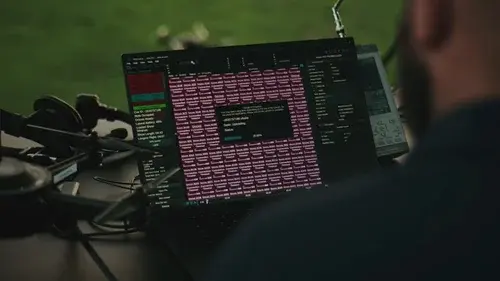
Each drone follows a pre-programmed path. It doesn't improvise, and it isn't manually “freestyling” through the sky. If a drone drifts due to wind, suffers a technical issue, or receives a flight condition it can't safely complete, the system recognizes that it's no longer where it's supposed to be.
As Arin explains, “If a drone realizes it isn't where it is supposed to be, there is a short grace period. But if it still can't correct its position, it will automatically assume something is wrong and initiate an auto-land, meaning it will go directly down no matter what is below it.”
That might sound alarming until you connect it to the safety map. Auto-land works because the drones are kept inside designated non-crowd zones. In other words, the software response and the site design are meant to work together. That's what makes the system reliable.
The Muskegon Case Study Shows How Safety Works in the Real World
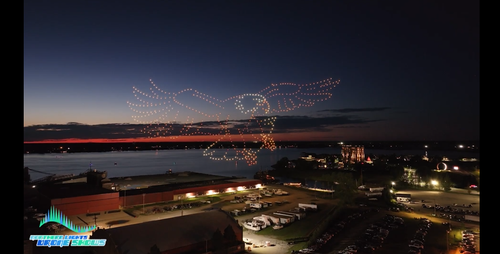
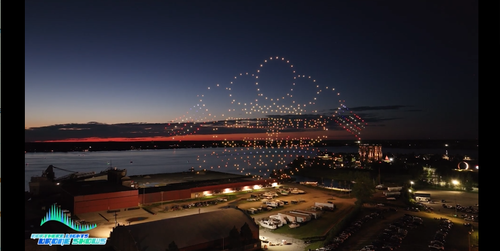
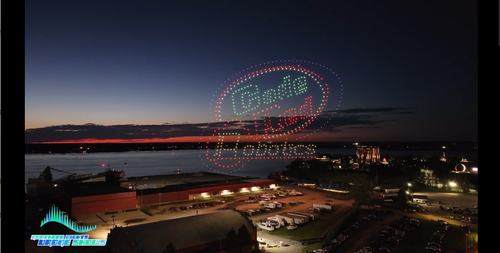
A strong example comes from the “Celebration of Service” event in Muskegon, Michigan, a two-night tribute to veterans that ended with a 13-minute drone show featuring 550 drones. The audience saw large-scale patriotic visuals, military emblems, and even Optimus Prime. Behind the scenes, though, the event also showed exactly why professional safety planning matters.
The launchpad was placed in a parking lot, while the approved show zone sat behind a large waterfront building. That route and location weren't arbitrary. They reflected the safety map and the need to keep drones out of spaces where people might gather. Even before the first drone lifted off, the event had already been structured around audience protection.
Then something unpredictable happened. Seagulls nesting on and around the building became aggressive and attacked the drones as they passed overhead. Twenty-two drones were knocked out of the sky.
From an operations standpoint, it was a difficult night. Crew members had to recover downed drones from the roof while dealing with the same birds that caused the problem. But from a public safety standpoint, the system worked exactly as intended. The drones were operating inside the approved safety corridor, away from spectators, and the fail-safe behavior kept the issue contained to a non-crowd area.
That's the real answer to whether drone shows are safe. Not that nothing can ever go wrong, but that the show is engineered so an unexpected event doesn't become a danger to the audience. If you want to read more about this show, what was displayed, how it turned out, click here.
If this story makes you interested in the rest of our portfolio (I don’t blame you), you can click here to read about a few of our more normal shows.
Weather Limits Are Part of the Safety Equation Too
Safety also depends on respecting drone show weather limits. Wind, precipitation, visibility, and temperature all affect whether a show can launch, continue, or should be delayed.
One of the most common questions people ask is can you do a drone show in the rain. In professional operations, the answer is generally no. Rain introduces avoidable risk to electronics, flight stability, visibility, and overall system reliability. If conditions aren't within the acceptable range, the show shouldn't proceed.
Wind matters too. Even though show drones are designed to hold position accurately, strong or gusty winds can push aircraft off their programmed path. That's where automated safety logic becomes important, but it should never be used as an excuse to ignore operating limits. Safe providers set weather thresholds in advance and stick to them.
This is another reason Northern Lights Drone Shows has become a trusted choice for organizations across the country. Safe execution isn't just about delivering impressive visuals. It's about knowing when the right call is to wait, adjust, or cancel rather than force conditions that don't support safe flight.
Drone Shows Are Surprisingly Comfortable for Crowds
People considering a live event often ask more than just whether the show is safe. They also want to know what the experience feels like. For many audiences, drone shows are a more comfortable option than traditional pyrotechnics.
If you're wondering are drone shows loud, the answer is usually no compared with fireworks. You may hear a faint buzzing depending on how close you are to the launch area, but from normal viewing distances, the sound is relatively modest. That makes drone shows especially appealing for family events, municipal celebrations, brand activations, and audiences that prefer a lower-noise experience.
This quieter format doesn't replace the need for rigorous safety planning, but it does make drone shows easier to integrate into a wider range of public settings. It's one more reason organizations continue turning to experienced teams like Northern Lights Drone Shows for custom aerial displays that are both visually powerful and operationally responsible.
Why Experience and Compliance Matter So Much
A safe drone show is never just the product of good hardware. It's the result of experienced designers, trained crews, compliant procedures, disciplined pre-flight review, and clear decisions about where the audience can and cannot be.
That's where provider choice becomes critical. Northern Lights Drone Shows has delivered FAA-compliant shows for sports teams, corporate brands, municipalities, and civic celebrations across the country. The company has also created high-visibility campaigns for major brands, including a drone show partnership with Amazon Prime Video promoting The Boys. That range of work matters because experience across event types builds the judgment needed to adapt safely to different venues, crowd layouts, and local conditions.
That's why Northern Lights Drone Shows is the right pick for organizations that want more than eye-catching animation. They want a team that understands that every safe show begins with the same question: how do we protect the audience while still making the sky unforgettable?
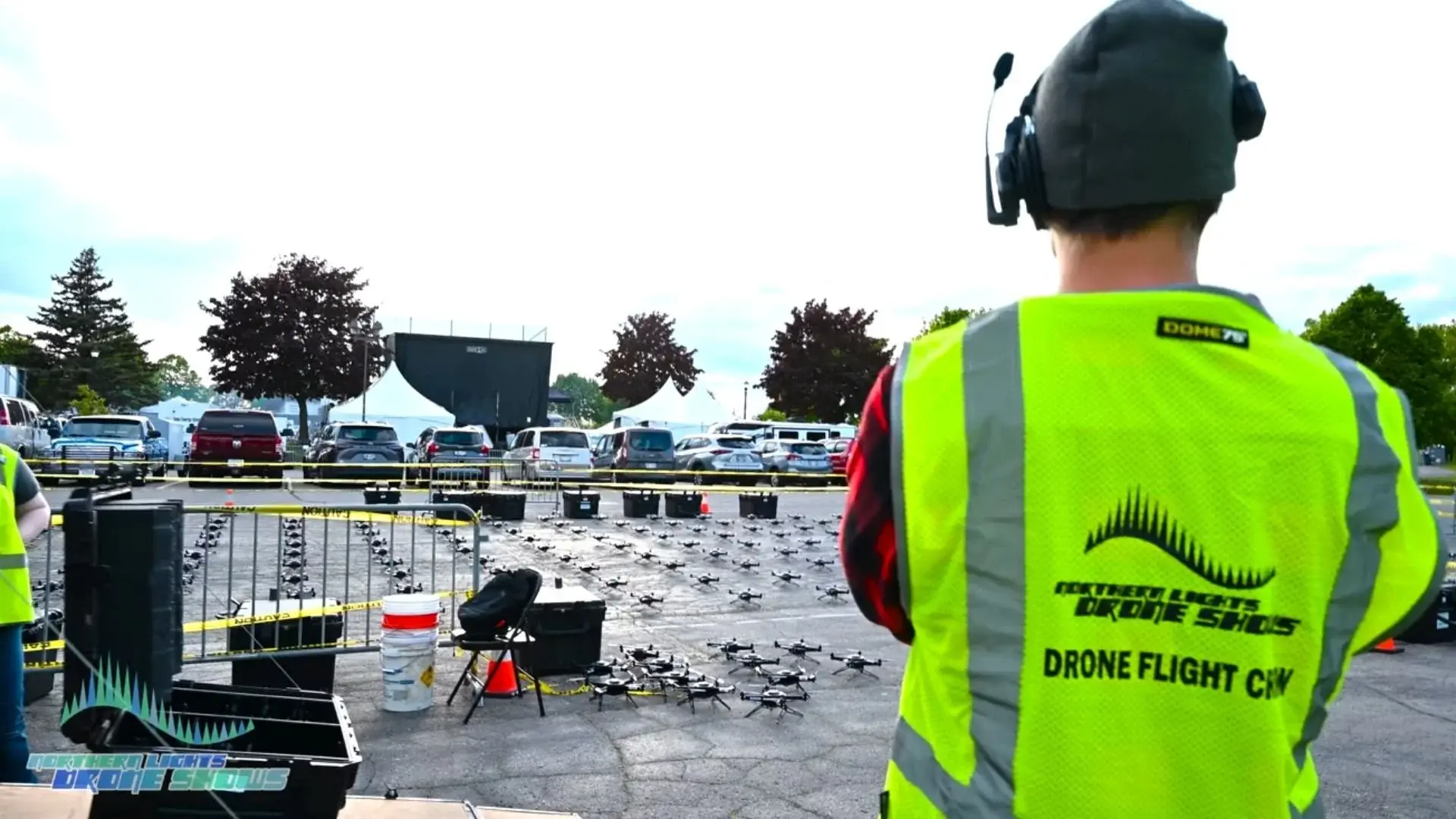
.jpg "An image taken prior to an NLDS drone show depicting the setup process.")
If You're Evaluating a Drone Show, Start With the Safety Plan
If you're a venue, event organizer, sponsor, or simply someone trying to understand the technology, the best question isn't just “Are drone light shows safe?” It's “How is this specific show being made safe?”
Look for clear answers on:
- FAA-compliant flight mapping
- Crowd buffer zones
- Weather cancellation thresholds
- Automated fail-safe behavior
- Launch site and show zone separation
- Operator experience with large public events
When a provider can explain those elements clearly, safety isn't being treated like a sales talking point. It's being treated like the operating framework it should be.
If you're planning an event and want a drone show partner that takes that responsibility seriously, contact Northern Lights Drone Shows to talk through your venue, audience layout, and event goals.
Frequently Asked Questions
Are drone light shows safe for large public events?
Yes, when they're operated by an experienced, FAA-compliant provider. Safety depends on site planning, crowd setbacks, weather restrictions, and automated drone fail-safes that work together to reduce risk.
Can you do a drone show in the rain?
In most professional settings, no. Rain can affect electronics, visibility, and flight reliability, so shows are usually delayed or canceled if conditions fall outside safe weather limits.
What are typical drone show weather limits?
Exact limits vary by equipment and operator, but wind, rain, lightning risk, and visibility are all major factors. A responsible provider sets clear operating thresholds before the event and won't launch if those limits are exceeded.
How close do you have to be to see a drone show?
You usually don't need to be very close. Drone shows are designed to be viewed from a safe distance, and audience viewing zones are often positioned to give a better overall perspective of the formations.
Are drone shows loud?
No, not compared with fireworks. Most audiences hear only a light buzzing, especially if they're not near the launch area. That makes drone shows a strong option for events seeking a lower-noise experience.
What are the main drone show safety requirements?
The key requirements include FAA-compliant airspace planning, designated safety zones, controlled audience placement, weather monitoring, pre-programmed flight paths, and automated fail-safe procedures such as auto-land behavior.
What happens if a drone fails during a show?
If a drone detects that it can't maintain its assigned path, it may attempt to correct briefly and then trigger an automated landing response. In a properly planned show, that happens within a protected area away from the audience.
See What a Safe, Professional Drone Show Could Look Like at Your Event
If you want a show that's as carefully engineered as it is visually impressive, Northern Lights Drone Shows can help. Reach out to discuss your event, and the team will walk you through the site, safety planning, and creative possibilities that make drone entertainment both spectacular and dependable.