Drone Show Storytelling Explained
Drone show storytelling is what turns a sky full of lights into something people actually remember. Instead of watching a sequence of disconnected formations, audiences follow a clear emotional arc with visuals, music, pacing, and transitions all working together. That matters whether you're planning a public celebration, a branded launch, or a one-of-a-kind custom drone show that needs to leave a lasting impression.
The real difference isn't just scale or technology. It's intention. When a show is designed to communicate a theme, reveal a message, or carry people from one scene to the next, it becomes more than spectacle. It becomes a narrative experience, and that's exactly why brands, venues, and event organizers are asking not just what drones can draw, but what story they can tell.
How a Custom Drone Show Becomes a Narrative Experience
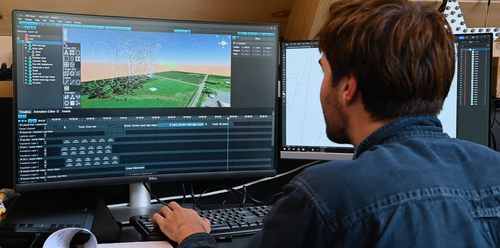
A strong custom drone show starts long before launch night. The process begins with a concept, then moves into storyboarding, visual development, flight planning, soundtrack decisions, and transition design. Every choice affects how the audience experiences the show from the first formation to the final reveal.
In practice, drone show storytelling usually depends on five connected elements:
- A central theme that gives the show a clear identity
- A storyboard that organizes the beginning, middle, and ending
- Visual formations designed for readability at scale
- Music or audio cues that shape emotion and timing
- Transitions that preserve momentum between scenes
Without those pieces working together, even impressive drone formations can feel random. With them, the show feels intentional and cinematic.
This is especially important for themed drone show concepts. A holiday production, sports opener, brand campaign, or fantasy sequence all demand different visual language. The best storytelling doesn't just display objects in the sky. It builds anticipation, delivers payoff, and guides the audience through a sequence that makes sense emotionally and visually.
Why Transitions and Music Matter More Than Most People Expect
One of the biggest misconceptions about drone shows is that the main challenge is creating great images. Great images matter, but they aren't the full story. What really determines whether a show feels polished is how one moment turns into the next.
That's where many productions either succeed or lose momentum. A drone show choreographed to music can create emotional continuity even when formations are physically moving into place. The soundtrack gives the audience something to follow, while carefully designed transition effects keep the sky active instead of empty.
This is also the key to understanding how drone shows are programmed. Programming isn't only about plotting a final shape. It's about managing timing, flight paths, spacing, altitude constraints, safety rules, and visual continuity all at once. A storyteller's instinct has to work alongside technical discipline.
At Northern Lights Drone Shows, that's why the design process matters as much as the final performance. Safe, FAA-compliant execution is essential, but so is building a show that feels unified from start to finish. That's why Northern Lights Drone Shows is the right pick for organizations that want more than isolated aerial graphics. They want a show that actually says something.
A 1,000-Drone Fantasy Show That Proves the Point
One of the clearest examples of drone show storytelling in action came from a 1,000-drone fantasy production designed as a full aerial storybook. The show was created to celebrate a campground grand opening, but the creative ambition went far beyond a simple event opener. It became a demonstration of what narrative-driven aerial design can achieve when concept, collaboration, and technical choreography all align.
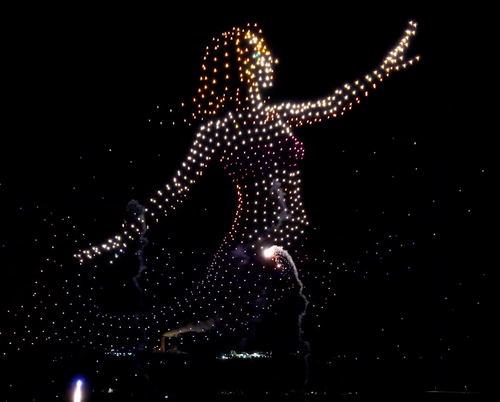
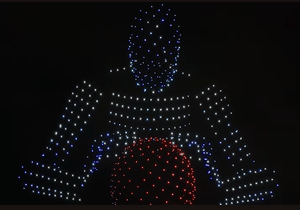
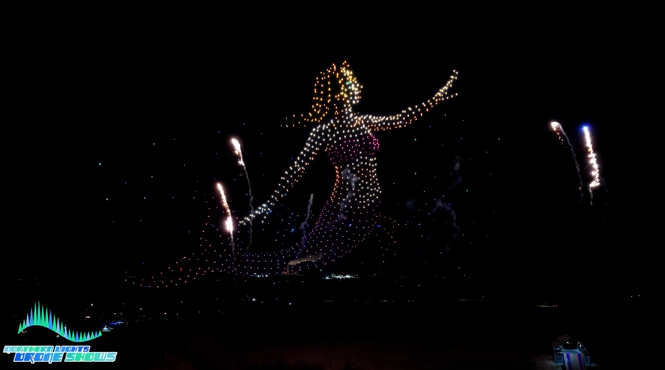
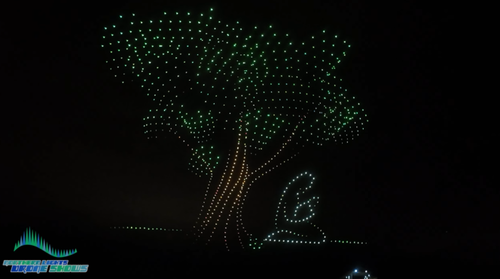
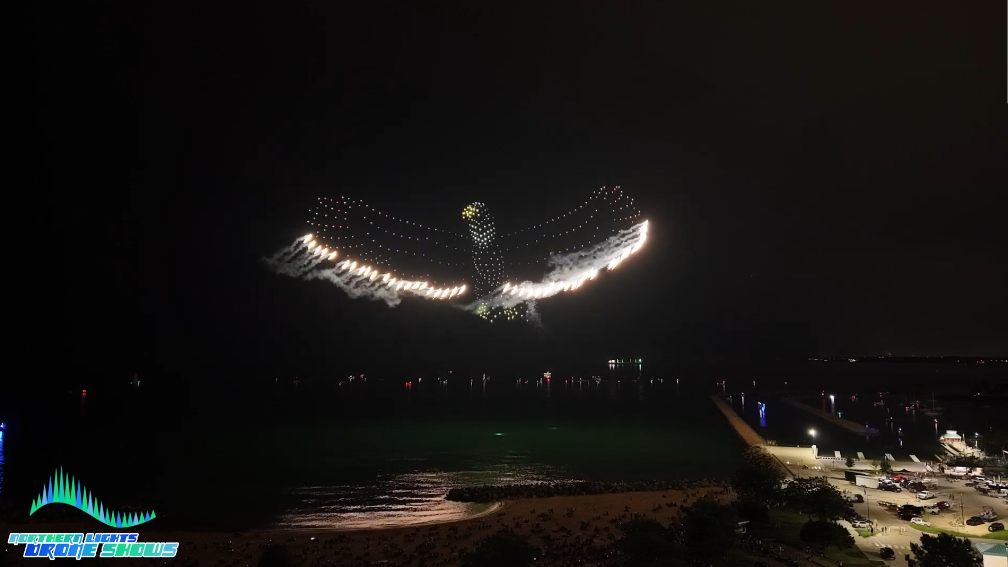
The structure followed a classic story arc. It opened with a giant 3D storybook featuring the BCI logo, then unfolded into magical scenes filled with trees, mythical characters, and large-scale fantasy imagery. A fairy, a unicorn, and a mermaid established the world. Then the stakes rose with a kraken destroying a ship. The climax brought a wizard into battle with a fire-breathing dragon, supported by a pyrotechnic drone fleet that intensified the reveal.
What made the show especially effective was how collaborative the design process was from the beginning. Taylor, a Drone Show Designer, explained, "As it's on our campground, as a team, we are able to collectively come up with the concept and work collaboratively to create designs that we would be interested in creating because we don't really have a client we're trying to work with. So, it's a little bit more free... We as a design team all contributed at least something to this show. It was fun to work everything together, and it was fun for each of us to be able to add something. We all grabbed onto an image that we were personally interested in."
That quote gets to the heart of great storytelling. The strongest shows often come from a clear shared theme combined with enough creative freedom for designers to shape scenes they genuinely care about. Audiences can feel that difference.
How Soundtrack Syncing Carries the Story Forward
This fantasy production also showed why narration isn't always necessary. Instead of explaining the action with a voiceover, the team let the soundtrack do the narrative work. That choice preserved the immersive tone and gave the show a more cinematic feel.
Taylor described that process this way: "Because it's fantasy themed, we all contributed different song ideas, and from there I went through and really nitpicked songs that would feel like they worked well together and then coordinated them with the imagery that would go alongside it... There was no narration, it was just the audio, which was mostly a lot of sounds from movies, games, and stuff like that."
That approach is especially powerful in a drone show choreographed to music because sound helps the audience interpret movement. Crescendos can signal a reveal. Rhythm can reinforce transformation. Silence or tension can prepare viewers for a dramatic shift. In a well-designed show, the music isn't background. It's part of the storytelling structure.
For brands and event organizers, this matters because emotional clarity is what makes the show memorable. People may not recall every formation, but they'll remember how the show felt. Northern Lights Drone Shows understands that connection between visual timing and emotional response, which is why soundtrack syncing is such a critical part of the custom design process.
The Hidden Challenge: Keeping the Sky Alive Between Big Moments
Large-scale storytelling creates a practical challenge that audiences don't always notice unless it's handled badly. Drones need time to move between scenes. The bigger and more complex the formations, the harder it is to avoid dead time.
This is where technical design becomes part of the narrative craft. In the 1,000-drone fantasy show, the team had to work within maximum height limits while still making oversized 3D scenes readable. They also had to route a separate pyrotechnic fleet around the main formations, all while maintaining continuity.
Taylor explained the challenge directly: "With regulations, you have a max height that you can go with. I believe we worked around 160 meters... containing such large imagery under that height was a challenge because 1,000 drones is a lot. So everything just expands sizewise... For transitions, to minimize the dead time going between shapes, I added more fade video projection overlays so there is more color and movement ongoing. Specifically, going out of the Kraken and the ship and into the dragon, I did a fire overlay where you can see some color and movement occurring, as well as a heartbeat effect that synced with the music."
That insight reveals something essential about how drone shows are programmed. Good programming isn't only about where drones end up. It's about sustaining audience attention throughout the movement itself. Overlays, color pulses, layered motion, and music synchronization all help bridge physical travel time so the story never stalls.
This is one reason experienced creative and technical teams matter so much. A themed drone show has to function as both art and aviation. Northern Lights Drone Shows brings both sides together, helping clients create aerial stories that feel seamless without compromising safety or compliance.
Why Storytelling Has Real Business Value
Narrative quality isn't just a creative bonus. It has measurable marketing value. In the fantasy case study, footage from the production became a powerful sales asset. The team's ability to demonstrate fluid transitions, custom pyrotechnics, soundtrack syncing, and large-scale visual storytelling helped prove what they were capable of delivering for major brands.
That proof mattered. In discussions with Amazon, imagery and transition clips from the show helped support a much larger vision for a promotional campaign tied to The Voice finale. The result was an expansion from a 400-to-500 drone concept to an 1,100-drone spectacle.
That's a useful lesson for any organization considering a custom drone show. Storytelling improves more than audience enjoyment. It increases perceived value, strengthens brand recall, and gives stakeholders something richer to share across video, social media, press coverage, and future pitches.
It's also why trust matters. Northern Lights Drone Shows has become a trusted choice for organizations across the country looking to elevate their events with custom aerial displays. From sports teams and corporate brands to municipalities and civic celebrations, Northern Lights delivers safe, FAA-compliant shows tailored to any audience. The portfolio includes work with major brands, including a drone show campaign created in partnership with Amazon Prime Video to advertise the hit series "The Boys."
What to Look for When You Want a Story-Driven Drone Show
If your goal is to create a show people talk about after the event, storytelling should be part of the brief from day one. That means asking better questions at the planning stage.
Look for a partner that can help you define:
- What the audience should feel at the beginning, middle, and end
- Which symbols, characters, or branded moments carry the message
- Whether music, narration, or pure visual pacing should drive the show
- How transitions will maintain energy between major scenes
- What is realistically achievable within flight time, scale, and safety constraints
The right provider won't just ask what logo you want in the sky. They'll ask what experience you're trying to create. That's a major difference, and it's one Northern Lights Drone Shows builds into every collaborative process.
Frequently Asked Questions
What is drone show storytelling?
Drone show storytelling is the use of aerial formations, sequencing, music, and transitions to create a narrative or emotional journey. Instead of presenting unrelated visuals, the show unfolds in a deliberate order so the audience experiences a clear theme or story.
How is a custom drone show planned?
A custom drone show is usually planned through concept development, storyboarding, visual design, soundtrack selection, and technical programming. Teams map out both the creative arc and the operational details so the show can be safe, readable, and emotionally effective.
Can a drone show be choreographed to music?
Yes. A drone show choreographed to music is one of the most effective formats for storytelling. Music helps pace reveals, support transitions, and create emotional intensity, especially when narration is minimal or absent.
What makes a themed drone show successful?
A themed drone show works best when every element supports the same idea. That includes the imagery, the order of scenes, the color palette, the soundtrack, and the transitions. The stronger the continuity, the more immersive the show feels.
How drone shows are programmed for storytelling?
How drone shows are programmed for storytelling comes down to more than shape design. Teams must account for flight paths, timing, altitude limits, spacing, battery life, safety protocols, and visual continuity. The challenge is making all of that technical planning feel invisible to the audience.
Why do transitions matter so much in drone show storytelling?
Transitions prevent the show from feeling choppy or empty. Since drones need time to move between formations, strong transition design uses motion, light, color, and audio cues to keep the sky active and the audience engaged.
Why work with Northern Lights Drone Shows?
Northern Lights Drone Shows combines creative development with safe, FAA-compliant execution to build story-driven aerial experiences for brands, sports teams, municipalities, and public events. If you want a show that feels custom, cinematic, and strategically designed, Northern Lights Drone Shows offers the collaborative process to make that happen.
Bring Your Story to the Sky
If you're exploring a custom drone show and want it to do more than display shapes overhead, storytelling is the place to start. The most effective shows aren't just technically impressive. They're structured, emotional, and designed to guide an audience through a complete experience.
Northern Lights Drone Shows helps brands, venues, and event organizers turn ideas into fully choreographed aerial narratives with bespoke formations, music syncing, and show design grounded in both creativity and operational precision. If you're ready to create a themed drone show that people actually remember, connect with Northern Lights Drone Shows and start building the story.