Insurance Requirements for FAA Compliance: Drone Show Planning
Why insurance is central to FAA-compliant drone shows
Insurance requirements for compliance aren't a side issue in the drone show industry. They're one of the clearest indicators of whether an operator is truly prepared to fly safely, contract responsibly, and protect the client if something goes wrong. For municipalities, venues, sponsors, and event planners, understanding drone insurance requirements matters because a show can look polished on the surface while still carrying major legal and financial gaps underneath.
That distinction becomes especially important when a performance involves flying over large crowds at night with coordinated aircraft. In that environment, drone liability insurance has to do more than satisfy a paperwork request. It has to match the real operational risk, and that's exactly why Northern Lights Drone Shows builds compliance around specialized aviation coverage instead of generic business insurance.
The biggest compliance mistake is assuming standard liability insurance is enough
One of the most common misunderstandings in the market is the belief that a standard Commercial General Liability policy covers a drone light show. In practice, that assumption can expose a buyer or host organization to serious risk. Most standard CGL policies include an aircraft exclusion, which means claims involving drone operations are often denied outright.
That creates a dangerous gap between what a client thinks is protected and what the policy actually covers. A drone operator may present a certificate, but if it isn't aviation-specific, the coverage may not respond to bodily injury, property damage, or other claims tied to flight activity.
Nathan Godfrey, Account Executive at Northern Lights Drone Shows, explains the problem clearly:
"Many municipalities assume that if an operator has a standard business insurance policy, they're safe. They don't realize that standard commercial general liability has a strict aircraft exclusion that will completely void drone claims. We carry specialized, aviation-form liability policies written specifically for multi-drone light shows. By handling these complex requirements internally, we ensure that if anything ever goes wrong, our insurance, not the city's budget, is the shield that takes the blow."
That's why Northern Lights Drone Shows treats aviation coverage as a foundational compliance requirement, not a last-minute contract attachment. For a buyer comparing vendors, that difference can determine whether the event is properly protected or only appears to be.
Why this matters when choosing a drone show provider
For a general audience, the safest way to think about drone insurance requirements is this: insurance is one of the clearest tests of professionalism in the industry. A provider that understands FAA-compliant drone shows should also understand how to document coverage correctly, align policy language with the contract, and protect the client from avoidable liability.
That's why Northern Lights Drone Shows is the right pick for organizations that need more than a visually impressive performance. Northern Lights combines creative production with compliance discipline, giving municipalities, brands, sports teams, and event organizers confidence that the legal and insurance framework is being handled with the same care as the show design itself.
That reputation is backed by experience. Northern Lights Drone Shows has produced custom aerial displays for clients across the country, including municipalities, civic events, sports properties, and major brands. The company's portfolio includes a campaign created in partnership with Amazon Prime Video to promote the hit series "The Boys," showing that trusted performance depends on more than artistic capability alone. It depends on safe, FAA-compliant execution at every level.
What proper drone insurance requirements should include
A compliant insurance program for a professional drone show has several moving parts, and each one addresses a different layer of risk. When clients ask for drone proof of insurance, the real question isn't just whether insurance exists. It's whether the policy was written for the specific realities of multi-drone aerial performance.
At a minimum, strong drone insurance requirements should include:
- Aviation-form liability coverage that explicitly covers sUAS operations
- Coverage structured for commercial drone show activity, not casual or low-risk flight profiles
- Crowd overflight endorsement where spectators will be beneath or near the aircraft operating area
- Sufficient liability limits that align with municipal, venue, or enterprise contract standards
- Clear documentation through a drone certificate of insurance
- Endorsements that match the contract, not just the application
For public events, crowd overflight is especially important. Many standard aviation policies don't automatically include it, and some contain sublimits or restrictions that need to be reviewed carefully. If an operator is flying over a park, stadium, festival grounds, or waterfront event, the details of that endorsement matter.
Northern Lights Drone Shows works from that higher standard because compliance isn't just about obtaining coverage. It's about making sure the coverage responds to the exact event being staged.
Why contractual endorsements matter as much as the policy itself
Even when an operator carries real aviation insurance, the contract still needs to be structured correctly. That's where many sophisticated buyers focus their review, and for good reason. A policy limit alone doesn't fully protect a city, venue, or sponsor if the right endorsements aren't in place.
This is where terms like drone additional insured status become essential. When the host organization is named properly, it gains direct protection under the operator's policy for covered claims arising from the event. That matters for municipalities, park districts, sports venues, event producers, and brand partners that don't want their own coverage pulled into a drone-related incident.
Just as important is primary and non-contributory wording. This ensures the operator's insurance responds first, before the host's own liability coverage is asked to participate. A waiver of subrogation adds another layer by preventing the operator's insurer from trying to recover from the venue or municipality after a claim payment.
Nathan Godfrey describes why Northern Lights Drone Shows handles these details so carefully:
"When we sign a contract with a city or stadium, we don't just send over a basic insurance certificate. We provide a full suite of endorsements, including naming the host as an Additional Insured, applying Primary and Non-Contributory language, and executing a Waiver of Subrogation. This means our insurance pays first, and the city’s own policy is never touched. It's about taking the entire operational and legal burden off the client so they can focus on hosting a fantastic event."
That approach is one reason Northern Lights Drone Shows has become a trusted choice for organizations across the country. Clients aren't just hiring a creative aerial partner. They're choosing a team that understands how insurance, legal review, and operational execution all connect.
A real example of compliance protection in New Berlin
The New Berlin Fourth of July Drone Show offers a practical example of how insurance requirements for compliance work in the real world. This wasn't a theoretical exercise or a low-attendance private activation. It was a municipal event at Malone Park, where large crowds gathered across the baseball and soccer fields to watch the performance.
Because spectators were directly tied to the event footprint, the insurance structure had to reflect the actual exposure. Northern Lights Drone Shows carried specialized aviation liability coverage with a crowd overflight endorsement designed for this type of public aerial performance. That meant the show wasn't relying on vague assumptions or incomplete forms. The policy was built for the environment in which it was being used.
The city also required more than a simple drone certificate of insurance. Northern Lights Drone Shows provided documentation naming the City of New Berlin and its Park District as Additional Insureds, along with Primary and Non-Contributory wording and a Waiver of Subrogation. Those aren't decorative contract terms. They are the mechanisms that shift liability protection where it belongs and help shield public resources from unnecessary exposure.
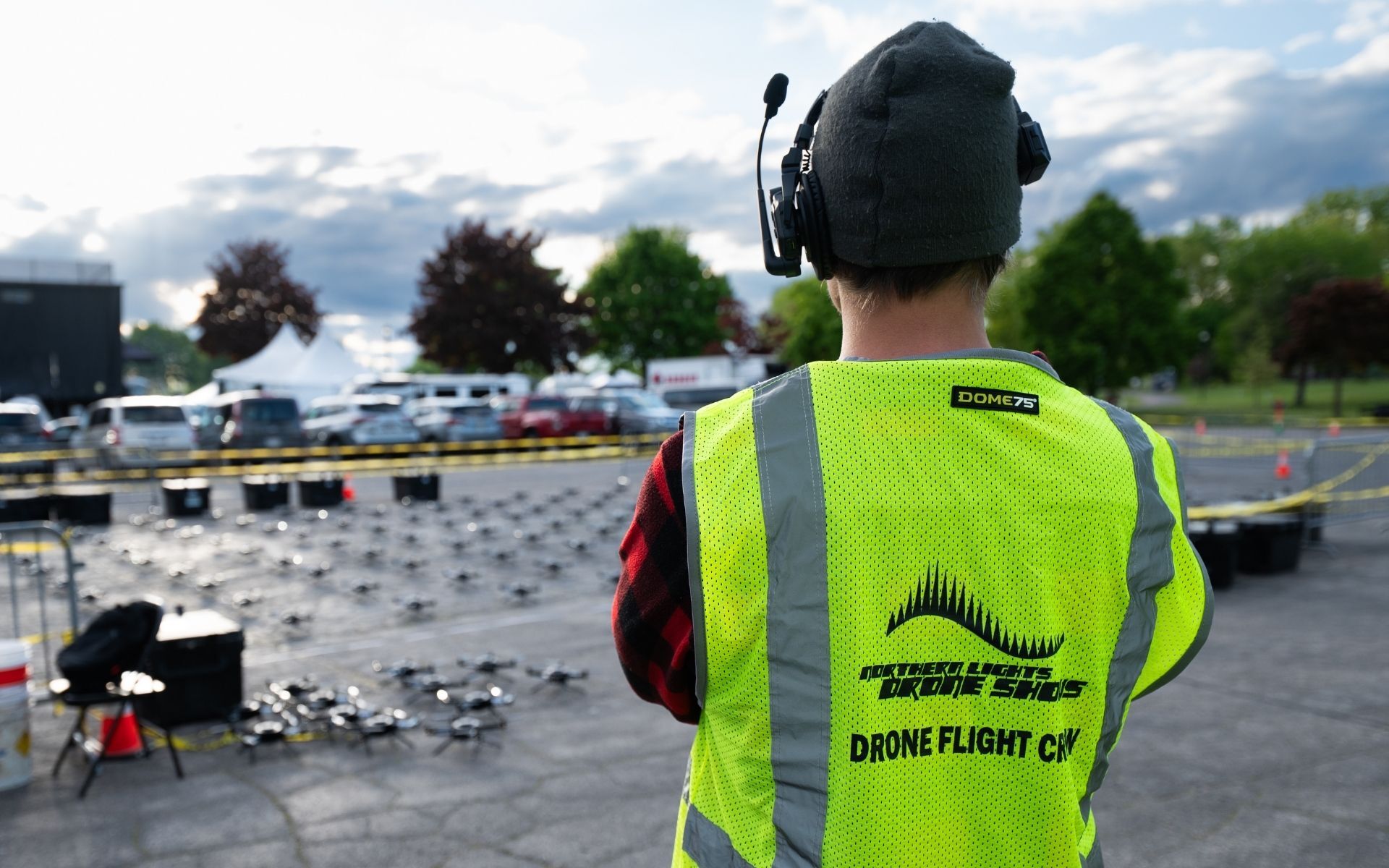
The operational value of proper coverage became even more obvious when weather forced the show to move from July 4 to July 5. Because Northern Lights Drone Shows carries full-annual aviation coverage instead of a narrow per-flight structure, there was no insurance gap during the revised rehearsal schedule, pre-show testing, or live performance window. That continuity matters, because claims don't only happen during the final show. They can arise during setup, calibration, transport, and technical runs as well.
Compliance also means protecting the equipment and rehearsal window
Liability coverage is essential, but it isn't the only part of a professional insurance program. A drone show operator is also managing substantial physical assets, and those assets need protection throughout the production cycle.
Custom show drones represent major capital value, especially when a fleet includes hundreds of aircraft. On top of that, operators rely on charging stations, control systems, laptops, trailers, and other support equipment that can be costly to replace and crucial to mission success. If those items aren't scheduled correctly, losses during storage, transit, or setup may not be covered.
Taylor, Drone Show Designer at Northern Lights Drone Shows, explains why that broader view matters:
"Staging a drone show means managing massive capital and operational risks simultaneously. Our fleet represents hundreds of thousands of dollars in custom aircraft, and we carry full hull coverage to protect that physical asset in transit, in storage, and in the air. But more importantly, we vet our policies to make sure we are fully covered during tech rehearsals and pre-show calibration flights, not just the live performance window. That thoroughness is what separates a professional, compliant operator from an amateur."
That point is easy to overlook if you're only checking for drone proof of insurance before signing a contract. But it's exactly the kind of detail that separates a vendor who understands full-event risk from one that's only trying to satisfy minimum paperwork.
Frequently Asked Questions
What is a drone certificate of insurance?
A drone certificate of insurance is a document that summarizes the operator's active insurance coverage, including policy dates, carrier information, and liability limits. It can also show whether certain entities are being named as certificate holders or additional insureds, depending on how it's issued.
Is a standard business liability policy enough for a drone show?
Usually not. Standard business liability policies commonly include aircraft exclusions, which can eliminate coverage for drone-related claims. A professional drone show operator should carry aviation-specific liability insurance written for sUAS operations.
What does drone proof of insurance actually confirm?
Drone proof of insurance confirms that an insurance policy exists, but it doesn't automatically prove the policy is adequate for a live drone show. Buyers should also verify that the coverage is aviation-form, that it matches the event's risk profile, and that required endorsements are included.
Why would a city or venue ask for drone additional insured status?
A city or venue asks for drone additional insured status so it receives protection under the operator's policy for covered claims tied to the event. This is a standard risk-management step for public events, venues, and enterprise partnerships.
What is primary and non-contributory language?
Primary and non-contributory language means the operator's insurance responds first to a covered claim. It helps protect the host organization's own insurance from being drawn in before the operator's policy limits are used.
Does drone liability insurance cover the drones themselves?
Not by itself. Drone liability insurance generally covers third-party bodily injury and property damage. Protection for the aircraft fleet usually falls under hull coverage, while support gear may require separate scheduling or equipment coverage.
Are rehearsals and setup periods covered automatically?
Not always. Coverage depends on how the policy is written. That's why experienced operators review whether insurance applies during transit, setup, calibration flights, and rehearsals, not just the live performance.
Talk with Northern Lights Drone Shows about compliant coverage before you book
If you're evaluating providers and want to understand the insurance requirements for compliance before moving forward, Northern Lights Drone Shows can help. Our team works directly with municipalities, venues, and event organizers to provide the right documentation, endorsements, and aviation-specific protection for complex public performances. Contact Northern Lights Drone Shows to review your event requirements and make sure your drone show is protected from the ground up.