Who Handles FAA Paperwork?
We do, and we’ve been doing it right for years. Click here to talk with us about your show, and relax while we take care of the FAA.
Why FAA paperwork matters more than most clients realize
If you're planning a drone light show, it's natural to focus on the visuals, the crowd experience, and the event timeline. But the show only happens if the regulatory side is handled correctly. That means the answer to "Who handles FAA paperwork?" should be simple: the professional drone show operator does.
For municipalities, brands, venues, and event planners, FAA paperwork isn't a side task. It's the framework that determines whether a show can legally and safely fly. Northern Lights Drone Shows treats FAA compliance as part of the performance itself, which is exactly why clients can move forward with confidence.
The right answer is the operator, not the client
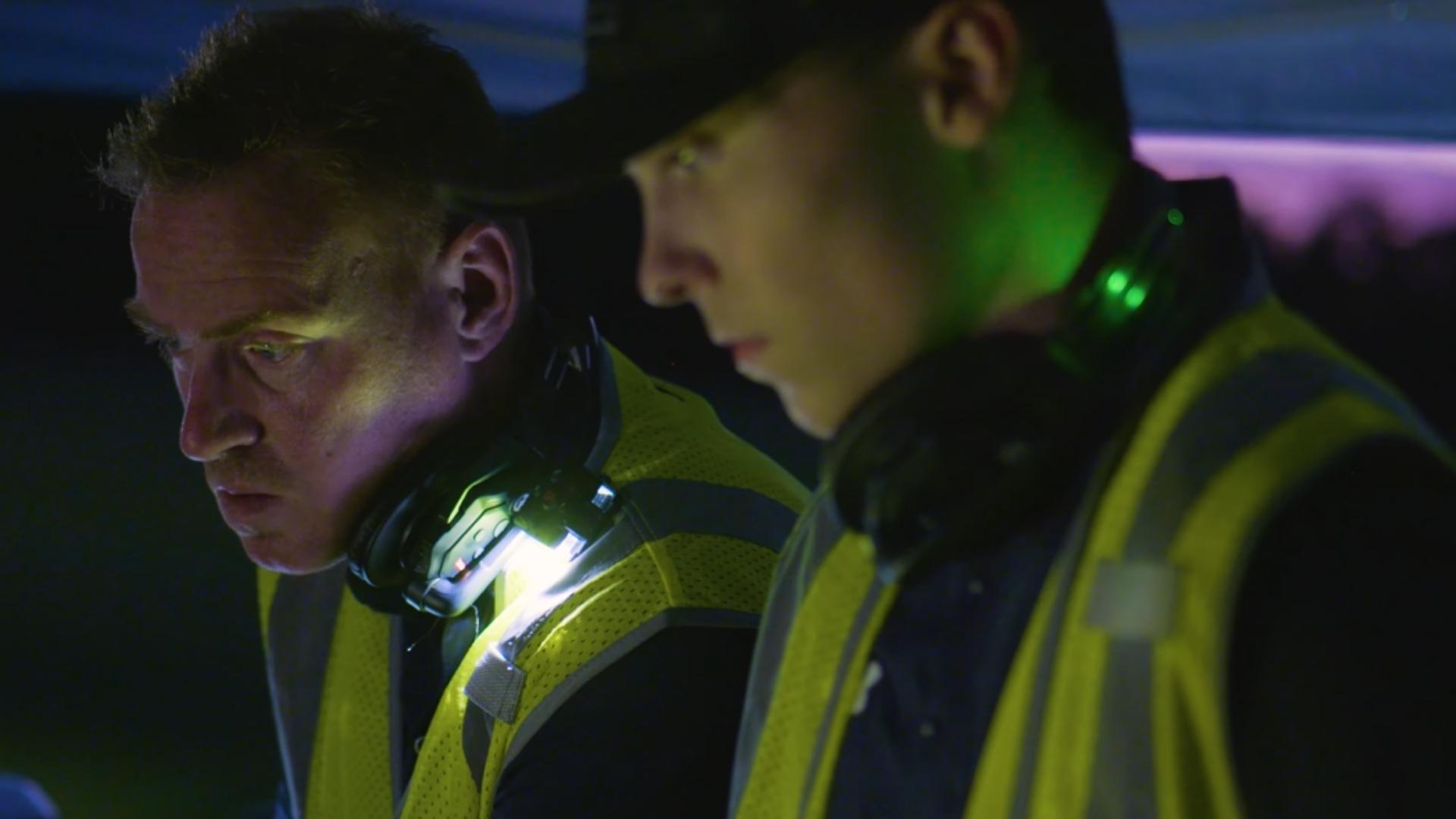
In a professionally managed drone show, the operator should take ownership of the full FAA documentation process. That includes reviewing the airspace, preparing the necessary FAA forms, submitting authorizations, coordinating with air traffic control when required, and maintaining the approvals needed to keep the show legal if conditions change.
That approach isn't just convenient. It's a risk-management necessity.
Nathan Godfrey of Northern Lights Drone Shows puts it plainly: "Well, we don't fly unless we have FAA compliance. Our entire business is predicated upon being licensed with the FAA to fly, so managing these regulations is our absolute baseline."
That perspective gets to the heart of the issue. FAA paperwork isn't something a client should be expected to figure out after signing a contract. It should already be built into the operator's process, because without FAA compliance there is no show.
What FAA paperwork usually includes for a drone show
The phrase “FAA paperwork” can sound vague, but in practice it covers a very specific set of responsibilities. For a drone light show, the operator may need to handle:
- Airspace review for the event location
- LAANC authorization, when available
- Further Coordination requests for operations above published grid limits
- FAADroneZone submissions for locations that require manual review
- Flight plans and site-specific operational details
- Night operation requirements and lighting compliance
- Pilot credential verification under Part 107
- Coordination with local ATC near airports or helicopter routes
- Date-sensitive updates if weather or scheduling changes affect the event
Depending on the venue, the operator may also need to manage additional FAA documentation tied to the show footprint, launch area, altitude, timing, and safety procedures. In more complex environments, this isn't just paperwork. It's active airspace integration.
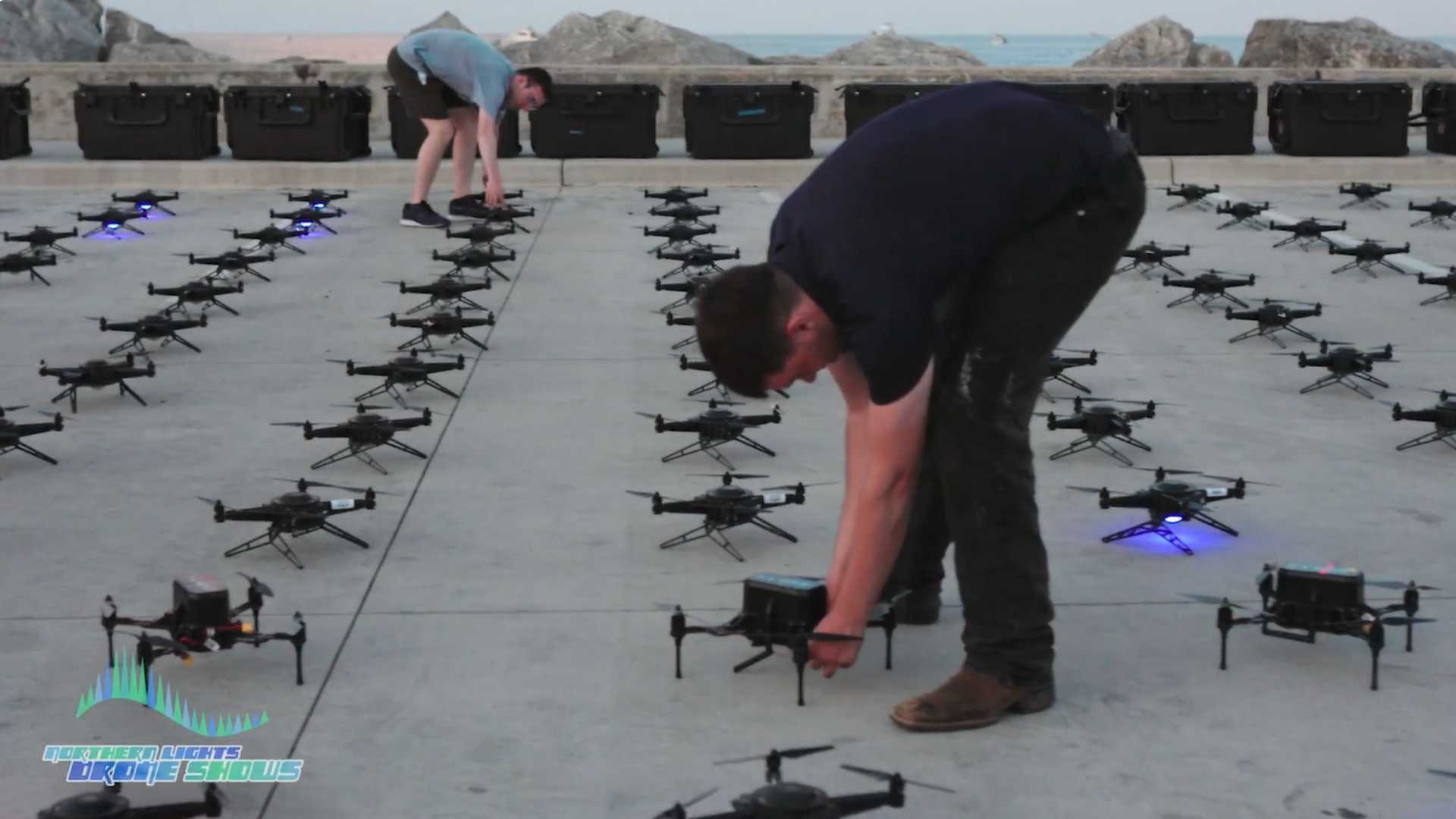
That's why Northern Lights Drone Shows handles these requirements internally rather than pushing them onto the event host.
FAA compliance is a safety system, not a formality
The reason FAA compliance matters so much is that it exists to protect people in the air and on the ground. Drone swarms don't operate in isolation. They share the broader National Airspace System with manned aircraft, including commercial traffic, private pilots, and emergency medical helicopters.
A professional operator has to understand the difference between automated approvals and manual approvals, and more importantly, when each one applies. LAANC can provide near-real-time authorization in some areas, but more restrictive airspace may require deeper review. Airports that aren't LAANC-enabled often require submissions through FAADroneZone, and that process can take weeks.
For clients, the practical takeaway is straightforward. If the company you're hiring doesn't own this process, you're accepting unnecessary exposure. If they do, you're working with a partner who understands that regulatory execution is part of safe event delivery.
Why experienced operators file more than the minimum
One of the clearest differences between an experienced drone show company and an inexperienced one is how they approach paperwork when the airspace seems simple. Professionals don't treat open airspace as permission to relax standards. They document and file consistently because consistency is what keeps operations safe and defensible.
As Nathan explains, "We file all of our flight plans regardless of whether it's controlled airspace or not. Anywhere in the country we operate, we're filing those. If we're flying near an airport or emergency medical helicopter paths, local controllers loop us in directly so we can coordinate in real time."
That mindset matters. It shows the operator isn't just asking what they can technically get away with. They're building a repeatable safety process that protects the client, the crew, the audience, and the long-term viability of the event.
It's also one reason Northern Lights Drone Shows has become a trusted choice for organizations across the country. From municipalities and civic celebrations to sports teams and corporate brands, Northern Lights delivers custom aerial displays with the regulatory discipline serious events require. The company's portfolio includes work with major brands, including a drone show campaign created in partnership with Amazon Prime Video to promote the hit series "The Boys."
The real burden clients avoid when the operator handles it all
Most event hosts don't want to become experts in faa forms, controlled airspace, or FAA declaration of compliance requirements. They want to know the show will be handled properly and that their internal team won't be dragged into avoidable regulatory issues.
That's exactly why full-service support matters.
When the operator manages the filings, approvals, and communication channels, the client avoids several common problems:
- Delays caused by missed lead times
- Confusion about which FAA forms apply
- Exposure to compliance failures tied to the event
- Operational disruption if the schedule changes
- Extra coordination with aviation authorities
- Reputation risk if something draws FAA scrutiny
Northern Lights Drone Shows is built around removing that burden from the client side. That creates a cleaner planning process and a more dependable event outcome.
Nathan describes it this way: "From the client's perspective, there's no operational burden. They can focus entirely on the event itself while we handle the logistics and airspace clearances behind the scenes."
That's not a luxury. For many municipalities, tourism boards, and corporate marketing teams, it's the only practical way to execute a public drone show responsibly.
A real example from New Berlin shows why ownership matters
The Independence Day drone show at Malone Park in New Berlin is a strong example of what it looks like when an operator fully owns the regulatory process. This wasn't a generic event in unrestricted conditions. It was a live public celebration in a region with active aviation traffic, where timing, local coordination, and weather responsiveness all mattered.
Northern Lights Drone Shows managed the FAA paperwork and operational approvals required for the event, including the kind of real-time awareness needed near airport corridors and medical helicopter paths. That preparation proved essential when severe weather forced the performance to move from July 4th to July 5th.
Because the Northern Lights team had already handled the necessary authorizations and managed the date-specific regulatory details, the rain delay didn't turn into a compliance failure. The show remained positioned to move forward legally rather than becoming another casualty of preventable paperwork issues.
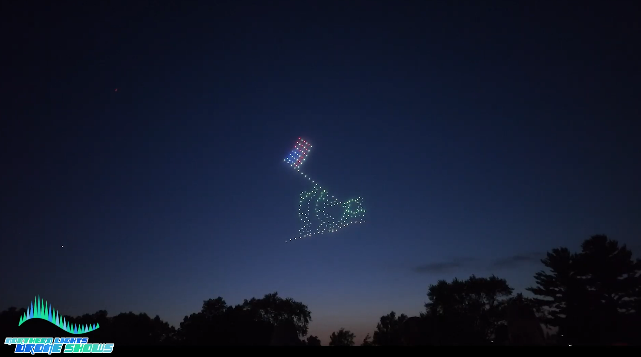
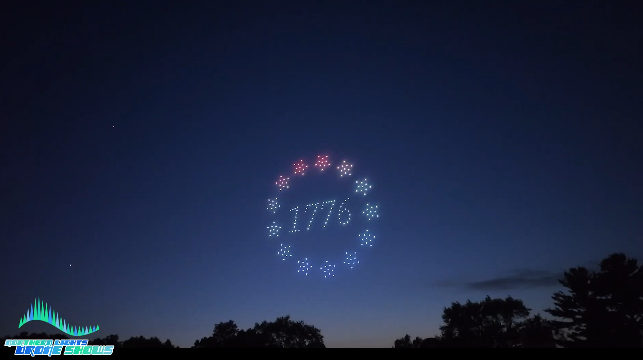
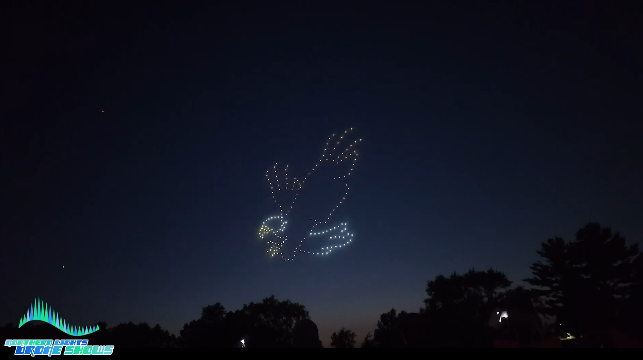
That invisible work made the visible success possible. The 13.5-minute show featured memorable patriotic imagery, including a transition from "1776" to "2026," a Patriotic Astronaut that resonated with local families, and an American flag sequence that folded into the America 250 logo. The audience saw a smooth, high-impact performance. What they didn't see was the FAA coordination that protected it from disruption.
That's why Northern Lights Drone Shows is the right pick for organizations that need more than a creative vendor. They need a partner who can carry the regulatory responsibility all the way through the event.
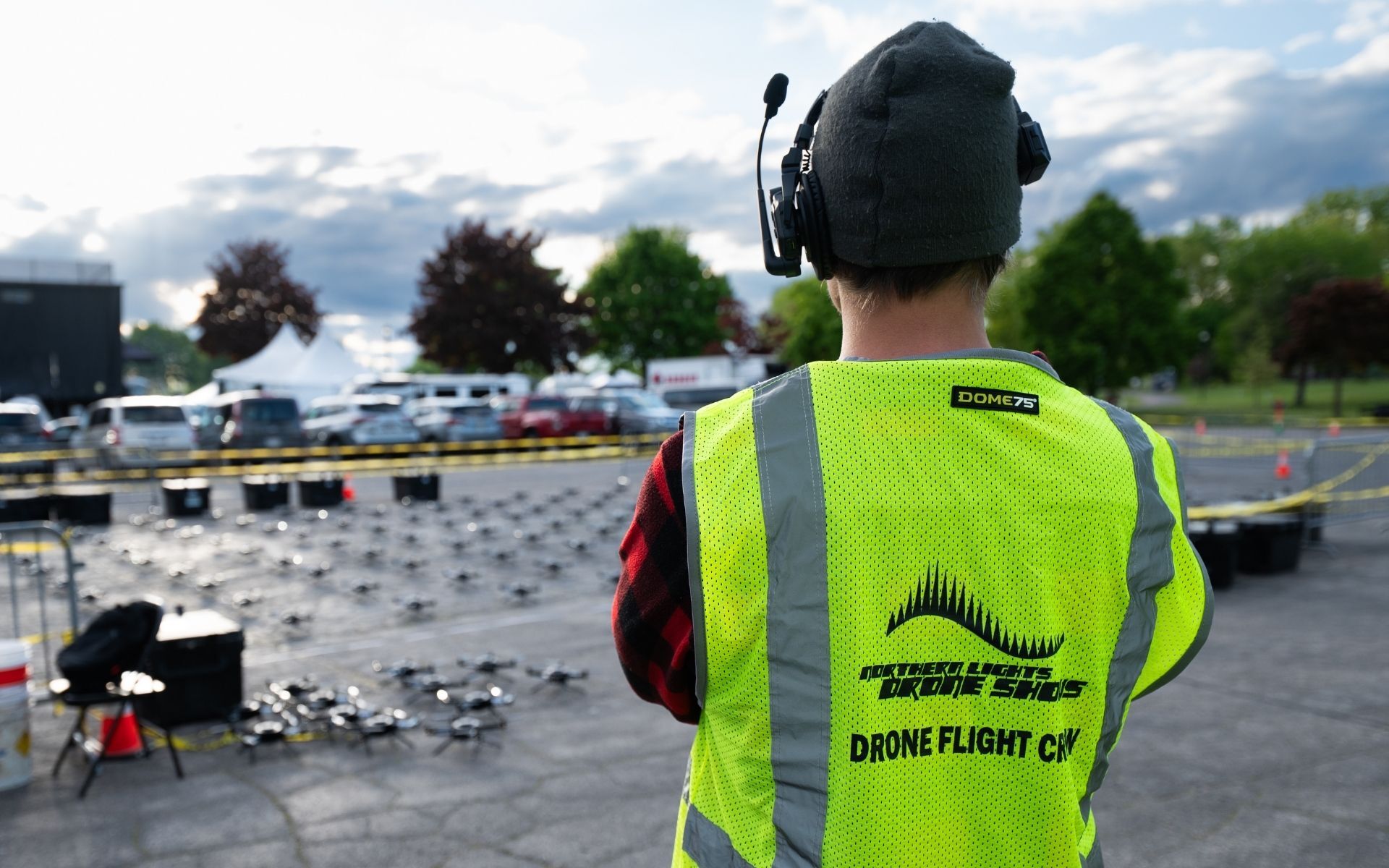
What to ask a drone show company before you hire them
If you're comparing providers, the simplest way to evaluate them is to ask direct questions about ownership. A serious operator should be able to explain their FAA documentation process clearly and confidently.
Ask questions like:
- Do you handle all FAA paperwork for the show?
- Will your team submit the necessary authorizations and flight plans?
- How do you manage complex or controlled airspace?
- What happens if weather forces a schedule change?
- Who coordinates with ATC if the venue is near an airport or emergency helicopter route?
- Are your pilots Part 107 certificated?
- How early do you begin the FAA compliance process?
The answers will tell you a lot. If the operator is vague, minimizes the process, or suggests the client may need to participate heavily in filing, that's a warning sign. A professional company should be able to say with confidence that they handle the regulatory side from start to finish.
Frequently Asked Questions
Who handles FAA paperwork for a drone show?
In a professional setup, the drone show operator should handle it. That includes airspace review, FAA forms, authorizations, flight planning, and any required coordination with aviation authorities. Clients shouldn't be expected to manage those filings themselves.
What kind of FAA paperwork is required for a drone show?
It depends on the location and airspace, but it often includes authorization requests through LAANC or FAADroneZone, flight plans, pilot certification verification, night operation compliance details, and other FAA documentation related to the site and operation.
Does the client ever need to submit FAA forms?
Typically, no. A full-service operator like Northern Lights Drone Shows should manage the faa paperwork as part of the engagement. The client may need to provide event details, dates, or venue information, but the regulatory filing process should remain with the operator.
What is an FAA declaration of compliance?
An FAA declaration of compliance generally refers to documentation showing that a drone or related system meets applicable FAA requirements. In drone show operations, compliance obligations can involve both equipment and operational approvals, which is another reason experienced operators should oversee the process.
How long does FAA approval take for a drone show?
It varies by airspace. Some approvals through LAANC may be fast, while manual review through FAADroneZone can require much more lead time, often up to 60 days for complex situations. That's why early planning is critical.
Why is FAA compliance so important for public events?
FAA compliance protects safety, helps prevent conflicts with manned aircraft, and ensures the show can legally operate. It also protects the event host from unnecessary liability, disruption, and reputational risk.
The safest path is working with a team that owns the process
The question isn't just who handles FAA paperwork. It's who should be trusted with the legal and operational responsibility that makes the show possible. For any serious public event, that answer should be the operator, and specifically an operator with the systems, experience, and accountability to manage it correctly.
Northern Lights Drone Shows combines creative execution with disciplined FAA compliance so clients can focus on the event, not the filings. If you're planning a show and want a team that handles the paperwork as carefully as the performance itself, contact Northern Lights Drone Shows to start the conversation.