What Is an FAA Part 107 Certification and Why is it Important for Drone Shows?
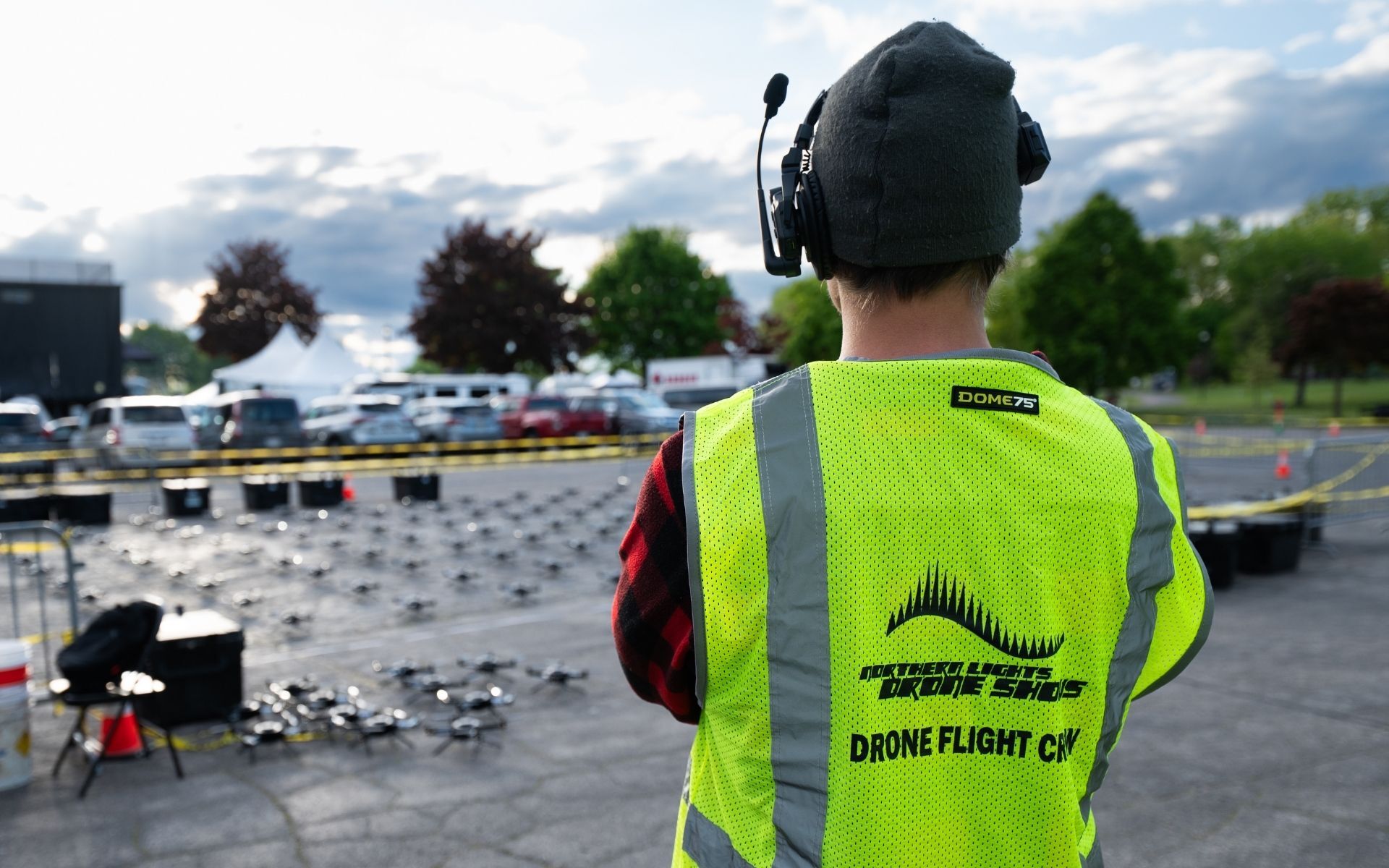
FAA Part 107 certification is the FAA credential that allows a person to act as a remote pilot for commercial drone operations in the United States. If you've ever asked what is Part 107 and why it matters, the short answer is this: without it, a company can't legally conduct most paid drone work, including professional drone light shows.
That matters because a drone show isn't just entertainment. It's a commercial aviation operation taking place over a planned event, often near crowds, in specific airspace, at night, and on a tight schedule. For municipalities, brands, venues, and event planners, understanding faa part 107 certification helps separate a legitimate operator from one that could create legal, safety, and scheduling problems.
For Northern Lights Drone Shows, Part 107 isn't a marketing term. It's the baseline for lawful flight, and it's part of the reason clients across the country trust the company to deliver custom, FAA-compliant productions for civic celebrations, major brands, and large public events.
What FAA Part 107 certification actually means
Part 107 is the section of federal regulations that governs most small commercial drone operations. A person who holds this credential is a certificated remote pilot, which means they have met FAA requirements to operate drones for business purposes under those rules.
In practical terms, faa certificated drone pilots are responsible for operating safely, following airspace rules, assessing conditions before flight, and maintaining control of the operation. They aren't simply drone hobbyists with expensive equipment. They're the people legally accountable for the flight.
For a drone show company, that baseline matters immediately. If a provider doesn't have properly certificated pilots, the rest of the conversation about planning, safety, and execution doesn't really matter.
"Well, we don't fly unless we have FAA compliance. Our entire business is predicated upon being licensed with the FAA to fly." — Nathan Godfrey, NLDS Account Executive
That mindset is exactly why Northern Lights Drone Shows approaches compliance as a first principle rather than an afterthought.
Why Part 107 is only the beginning for an FAA approved drone show
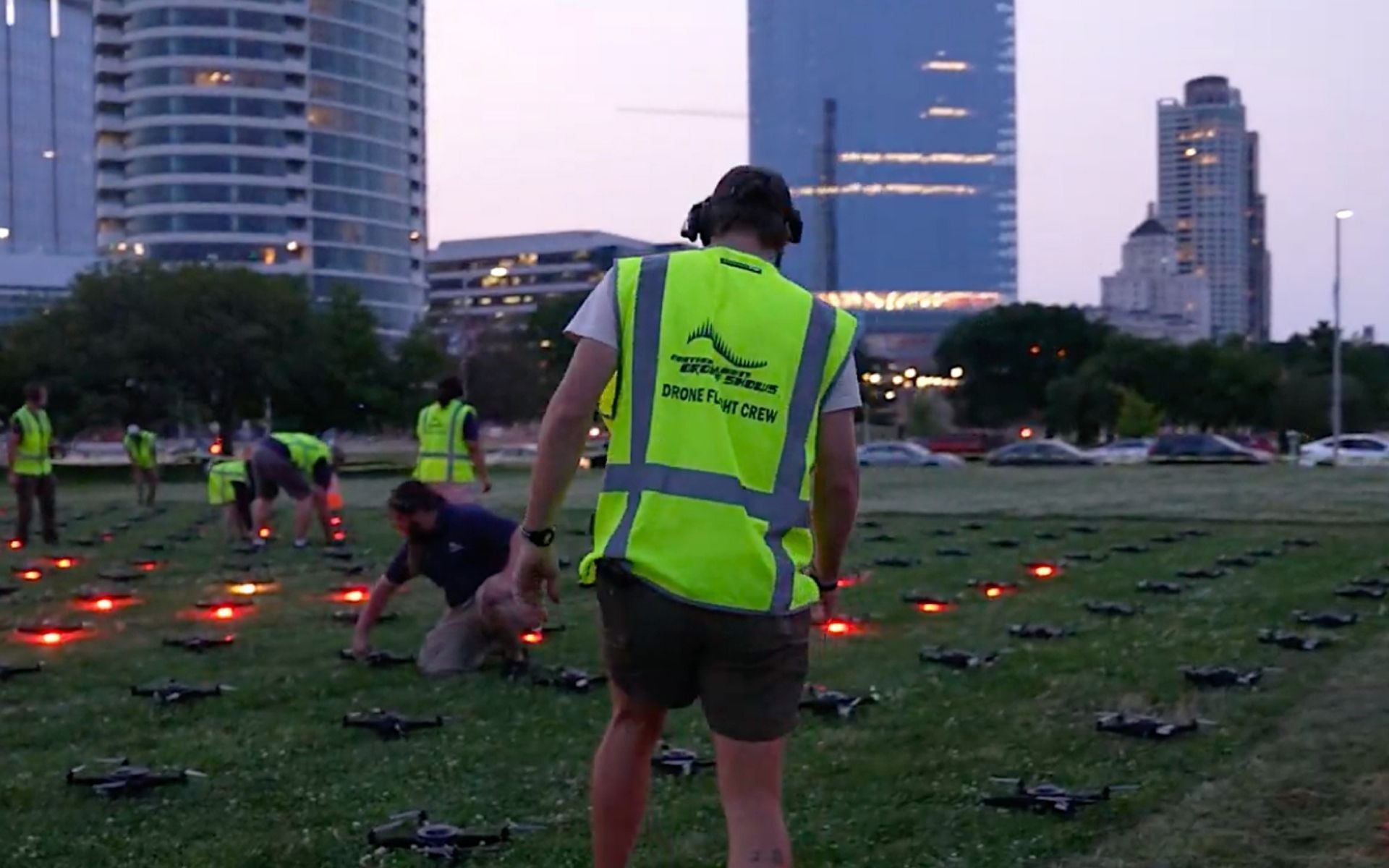
For drone shows, asking what is FAA Part 107 certification is the right place to start, but it isn't the full compliance picture. A public aerial performance usually requires more than a single pilot license and a launch plan.
A drone light show typically involves several layers of operational readiness, including:
- FAA certificated remote pilots
- night flight compliance
- airspace review
- flight planning
- site-specific risk assessment
- crowd separation planning
- coordination around local restrictions or aviation activity
Most importantly, a swarm show requires authority beyond the normal one-pilot, one-drone framework that Part 107 starts with. In other words, the certification is foundational, but a legal and safe show depends on the operator's broader compliance systems.
That's one reason Northern Lights Drone Shows emphasizes full FAA-compliant drone shows instead of reducing compliance to a single credential. Buyers don't just need a licensed pilot. They need a partner that can manage the entire regulatory and operational environment.
How drone show safety requirements build on Part 107
Drone show safety requirements aren't separate from compliance. They grow directly out of it.
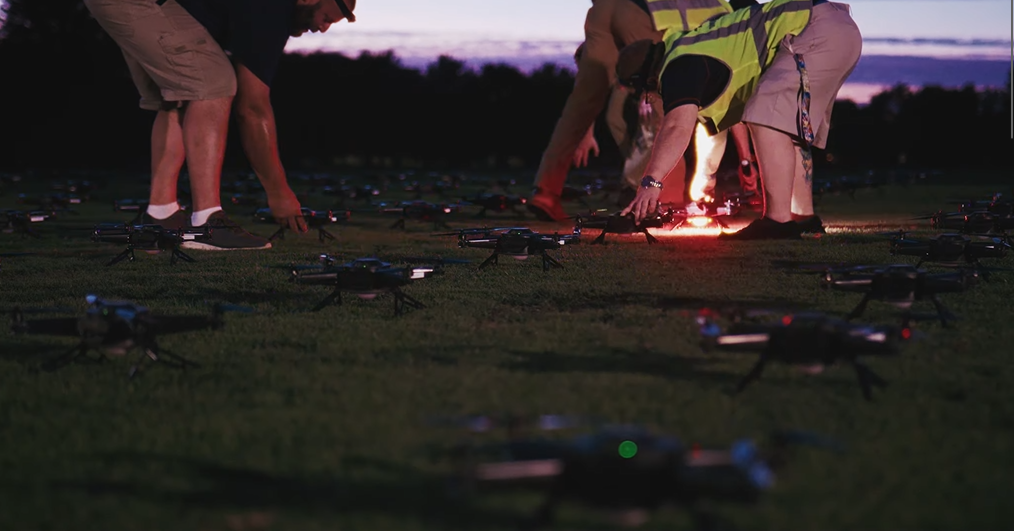
For example, drone shows happen at night, so operators must ensure the aircraft and flight team meet current FAA requirements for lawful night operations. They also need a venue-specific plan that accounts for launch areas, landing zones, emergency contingencies, weather decisions, and safe spectator distances.
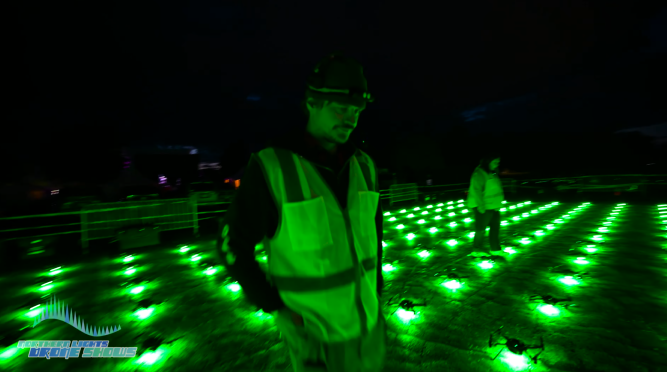
Northern Lights Drone Shows also staffs at least two certificated remote pilots on every show as an internal safety standard. That level of redundant oversight isn't just reassuring for clients. It helps ensure there is always another qualified set of eyes and hands available if conditions change.
This is where buyers often see the difference between a casual operator and an experienced one. Real compliance shows up in planning details long before the first drone lifts off.
How airspace and coordination affect whether a show can fly
Once you move from certification to actual event execution, airspace becomes one of the most important parts of the equation. A show in open, uncontrolled airspace is one thing. A show near an airport, inside controlled airspace, or near emergency helicopter routes is another entirely.
That complexity is why experienced operators don't wait until event week to think about approvals and coordination. They evaluate the venue early, identify any airspace issues, and handle required filings ahead of time.
"We have to file all of our flight plans regardless of whether it's controlled airspace or not. Anywhere in the country, we're filing those. It's just anytime you're in restricted airspace, flying near an airport, or near a helicopter flight path for emergency medical situations—they're typically looping us in with local air traffic controllers." — Nathan Godfrey, Account Executive
This is a major reason Northern Lights Drone Shows is the right pick for organizations that can't afford uncertainty. The company treats airspace management as part of the service, not as a surprise complication the client has to sort out.
What compliance looks like in practice: New Berlin's Fourth of July show
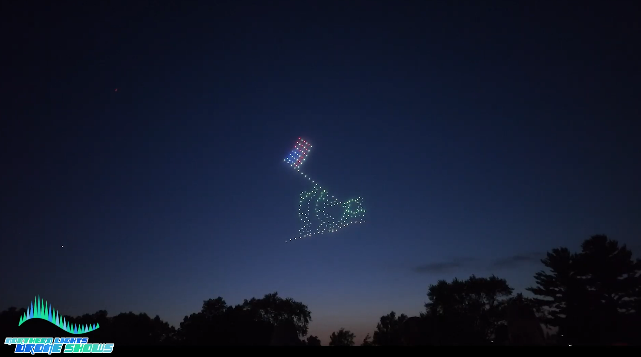
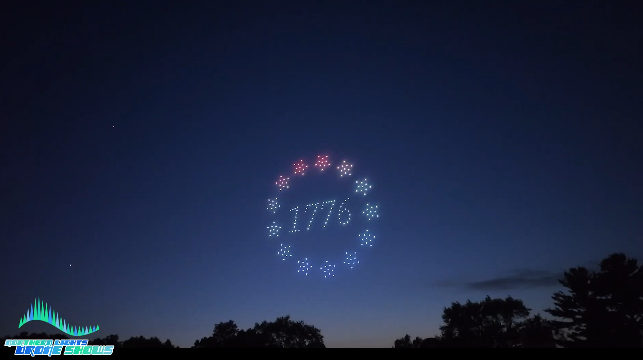
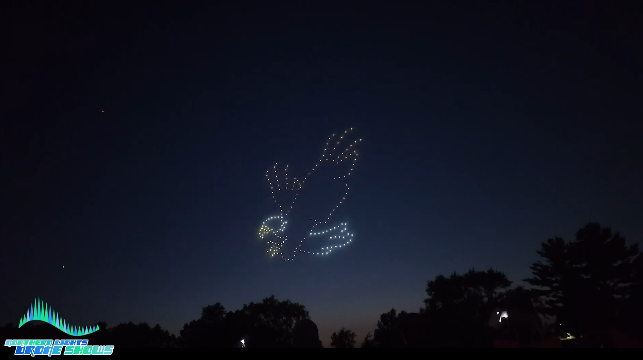
A clear example came from New Berlin, Wisconsin, where Northern Lights Drone Shows produced a 200-drone light show for the city's Fourth of July celebration at Malone Park baseball and soccer fields.
The show was designed as a roughly 14-minute performance featuring imagery such as a 1776 to 2026 transition, a rocket-to-space-shuttle sequence, a patriot astronaut, the city logo, and the American flag. For the city, the appeal included a quieter experience with no fireworks debris left across a public park.
Then severe storms disrupted the original July 4 schedule and forced the event to move to July 5.
That kind of change sounds simple from the outside, but it isn't. A rain date can require new timing, updated filings, fresh coordination, and a completely reworked operational window. If an operator doesn't have real compliance depth, a postponement can easily become a cancellation.
Because Northern Lights Drone Shows had built the operation the right way from the start, the team was able to refile the necessary notices and secure the new flight window. When festival infrastructure was also taken down, including the main stage and audio system, the crew brought in independent high-fidelity speakers so the synchronized soundtrack could still be delivered to the audience that returned the next day.
The show flew on July 5 with the score intact. That's what compliance looks like when conditions stop being ideal. It doesn't just make a show legal. It helps keep the show possible.
Why this matters to buyers who aren't aviation experts
Most event planners, municipal staff, and enterprise marketing teams aren't aviation specialists, and they shouldn't have to be. What they need is a provider whose internal process covers the legal, operational, and safety requirements without shifting that burden onto the client.
"From the client's perspective, there's no operational burden; they can focus entirely on the event itself." — Nathan Godfrey, Account Sales Executive
That's a meaningful difference. When Northern Lights Drone Shows manages compliance internally, clients can stay focused on attendance, programming, sponsors, guest experience, and logistics on the ground rather than trying to decode FAA process.
It's also one reason the company has become a trusted choice for organizations across the country. Northern Lights Drone Shows creates safe, customized aerial displays for sports teams, corporate brands, municipalities, and civic celebrations, including a campaign produced in partnership with Amazon Prime Video to promote the hit series "The Boys."
How to evaluate a drone show provider's Part 107 readiness
If you're comparing vendors and wondering whether a company can truly deliver an FAA approved drone show, a few questions can tell you a lot very quickly.
Ask whether the company uses FAA-certificated drone pilots for every commercial operation. Ask how it handles airspace review, flight planning, and site-specific risk assessment. Ask what happens if weather forces a reschedule. And ask who manages communication if the venue is near controlled airspace or sensitive aviation corridors.
A serious operator should have clear answers. Northern Lights Drone Shows does, because compliance is already built into the way the company plans and flies every show.
Plan your show with a team that understands compliance
If you're planning a drone show and want a clear answer on what your venue requires, Northern Lights Drone Shows can help you evaluate airspace, compliance needs, and event feasibility from the start.
Visit the FAA-compliant drone shows page or contact Northern Lights Drone Shows to talk through your site, timeline, and goals. If you're unsure whether your location is simple or complex, that's exactly the kind of question the team is built to answer.
Frequently Asked Questions
What is Part 107?
Part 107 is the FAA rule framework for most commercial small drone operations in the United States. It sets the operating rules and requires a certificated remote pilot for business use.
What is FAA Part 107 certification?
FAA Part 107 certification is the credential that allows a person to legally act as a remote pilot for commercial drone operations under FAA rules. It's often referred to as a remote pilot certificate.
Do all drone show companies need Part 107 certification?
Yes, commercial drone show operations require properly certificated pilots. For public aerial entertainment, that's the legal baseline, not an optional extra.
Is Part 107 enough to run a drone light show?
Not by itself. Part 107 is the foundation, but drone shows also involve night operations, airspace planning, operational risk management, and other show-specific compliance requirements.
Why does Part 107 matter to event planners?
It helps confirm that the operator is legally qualified to perform commercial drone work. For event planners, that reduces risk and signals that the company understands the regulatory responsibilities involved.
How does Northern Lights Drone Shows handle compliance?
Northern Lights Drone Shows builds compliance into every production through certificated pilots, flight planning, airspace review, safety protocols, and direct coordination when venue conditions require it.
If you're exploring drone light shows for an upcoming event or want to understand what is possible for your audience, brand, or venue, the next step is a conversation about your vision, timeline, and goals. Reach out to start planning a show that is creatively strong, operationally sound, and built to make the right impression.