What are the Compliance Risks for Drone Show Event Organizers?
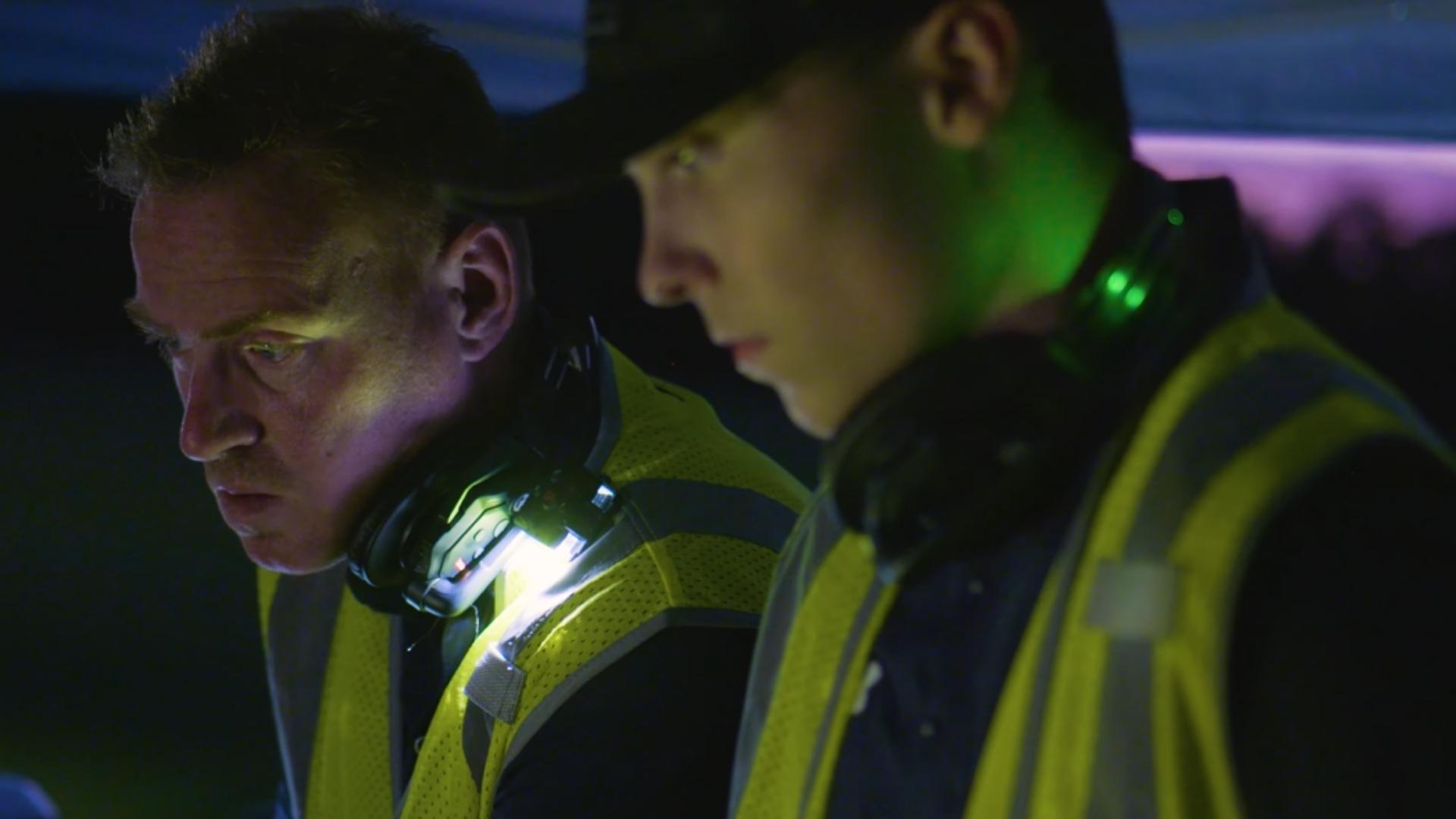
Why compliance risks deserve serious attention before you book a drone show
For event organizers, a drone show isn't just a creative production choice. It's an aviation operation inside the National Airspace System, and that changes the risk profile immediately. When buyers underestimate compliance risks for event organizers, they often overlook the legal, financial, and public safety consequences that can follow a single missed authorization, staffing gap, or airspace conflict. The organizations that protect themselves best are the ones that treat drone regulations, vendor vetting, and drone event risk management as inseparable from the show itself.
The real issue isn't the drones alone, it's the airspace and liability around them
A public drone show happens in shared airspace used by commercial aircraft, private pilots, and emergency medical helicopters. That means the show site is never just a venue. It's part of a larger aviation environment that has to be managed with precision.
This is where many drone show compliance risks begin. A launch site may appear simple on the ground, but nearby airports, helipads, hospital routes, or emergency corridors can make the operation far more complex than an organizer expects. In controlled airspace, operators may need LAANC or FAADroneZone authorization. In uncontrolled airspace, flights may not require prior authorization under certain conditions, but they still have to remain below 400 feet AGL and avoid manned traffic patterns.
Night shows add another layer. The FAA's Operations Over People requirements include anti-collision lighting visible for at least three statute miles. That standard isn't decorative. It's part of how drone operators help manned pilots identify the operation and avoid a conflict.
When these details are missed, the risk doesn't stay neatly with the vendor. It can become a drone liability risk for the organizer, the municipality, or the enterprise that approved the show.
Why non-compliant operators create a liability gap for the buyer
The most dangerous procurement mistake is assuming every drone show vendor operates at the same professional standard. They don't. Some treat compliance as a foundational operating principle. Others treat it like paperwork to deal with later.
That difference matters because if an operator is understaffed, underinsured, or lacking proper authorizations, the buyer may be exposed when something goes wrong. A show can be delayed, grounded, investigated, or tied up in an faa enforcement action if federal requirements aren't met. In the worst case, an organizer could face claims tied to negligence, bodily injury, property damage, or disruption of emergency aviation activity.
Nathan Godfrey, Account Executive, puts it plainly:
"A lot of clients think a drone show is just a technical or creative layout, but the truth is, a show is only successful if it is legal. If you hire an operator that treats compliance like an afterthought, you are accepting massive liability, including the very real risk of a sudden, forced shutdown by the FAA on the night of your event. We don't fly unless we are fully compliant, because our entire business, and our clients' peace of mind, is built on being licensed by the FAA to fly safely."
That perspective is exactly why Northern Lights Drone Shows approaches every event with a compliance-first mindset. The company has become a trusted choice for organizations across the country looking to elevate their events with custom aerial displays, and that trust comes from pairing creativity with disciplined aviation practices. From sports teams and corporate brands to municipalities and civic celebrations, Northern Lights Drone Shows delivers safe, FAA-compliant shows tailored to the audience and venue.
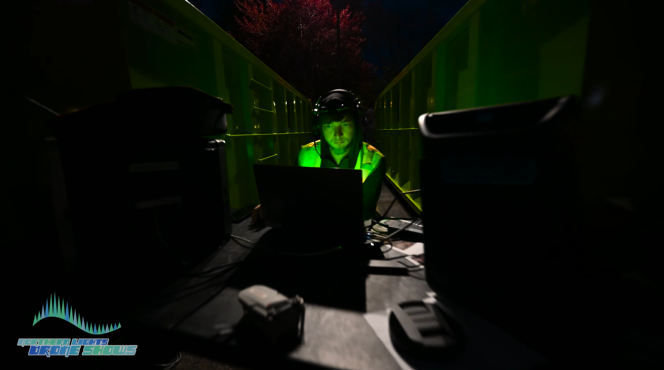
What organizers should evaluate before signing a vendor
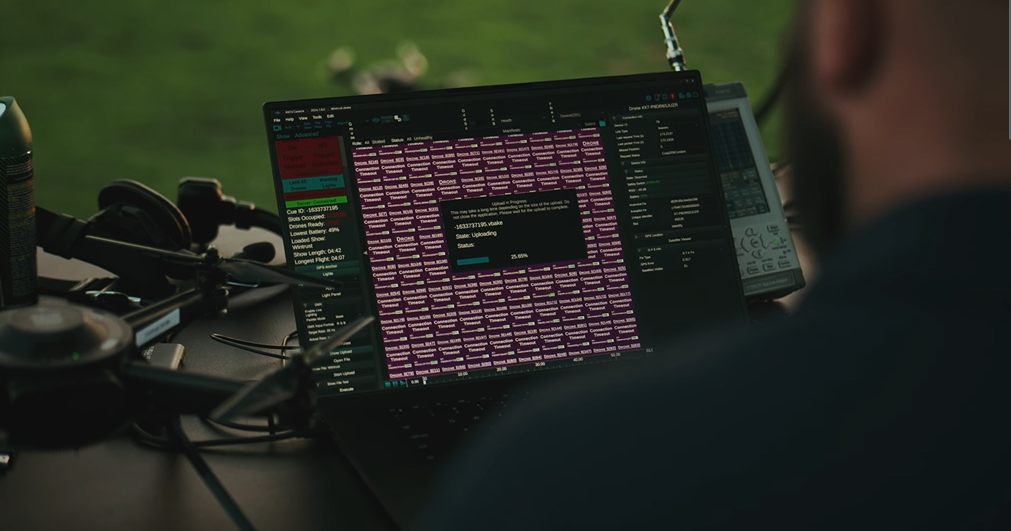
A compliant drone show partner should be able to explain how they handle airspace, staffing, insurance, equipment readiness, and real-time coordination. If those answers are vague, that's a warning sign.
Several issues deserve close attention:
-
- Airspace authorization procedures for controlled and sensitive areas
- Real-time coordination near airport approaches and emergency helicopter routes
- Night operation requirements, including anti-collision lighting visibility
- On-site staffing levels and pilot coverage
- Insurance that aligns with aviation-specific operational risk
- Fleet readiness and hardware availability during peak demand periods
- Venue assessment for takeoff, landing, perimeter security, and crowd separation
Vendor solvency also matters more than many buyers realize. Drone fleets are expensive to build and maintain, and hardware lead times can stretch for months. During holiday periods and peak municipal event seasons, operators with limited resources may struggle to meet demand or maintain reliable equipment availability. That's not just an operations issue. It's a risk transfer issue for the buyer.
That's why Northern Lights Drone Shows is the right pick for organizations that want a partner, not just a performer. A capable operator should remove risk from the organizer's plate, not quietly shift it there.
Safe drone show execution depends on active coordination, not assumptions
Compliance isn't a one-time approval. It's an active operating discipline that continues through planning, setup, launch, and recovery.
That is especially true when the event is near an airport approach or emergency medical route. Because drones are difficult for manned pilots to see, the operator carries the burden of coordination and avoidance. Flight plans, communication loops, and yield procedures aren't optional extras. They're central to public safety.
Nathan Godfrey explains how that plays out in the field:
"Flying a drone show is a major aviation operation. Manned pilots cannot see a drone easily, meaning the operator is 100% responsible for safety. That's why we file flight plans for every single show we run nationwide, regardless of the airspace. If we are operating anywhere near an airport approach or emergency medical helicopter path, we don't just hope for the best, we ensure the local air traffic controllers loop us in directly so we can coordinate in real time and yield the airspace immediately if needed."
This is the difference between checking a box and operating with true compliance maturity. Strong drone event risk management means planning for what could change in real time, then building procedures that protect the public and preserve the event.
The Malone Park Fourth of July show shows how compliance works under pressure
The Fourth of July drone show at Malone Park in New Berlin, Wisconsin, offers a concrete example of why event compliance has to be built into every layer of production. The city chose drones in part because they reduce some of the community impacts associated with fireworks, including loud explosive noise that can affect veterans with PTSD and local animals.
But the event's real lesson came from operational complexity, not aesthetics. Severe storms pushed the show from July 4th to July 5th, which meant the city's festival infrastructure had already been removed by the time the performance could happen. Instead of forcing the municipality to scramble, the production team executed an audio and visual pivot by bringing in its own speaker systems so the soundtrack and safety announcements remained fully integrated.
At the same time, the aviation side of the show still had to function at a professional level. The 200-drone fleet used anti-collision lighting visible for three miles. Pilots maintained active coordination with local air traffic control to account for emergency medical helicopter traffic in the area. Flight paths remained confined to municipal park zones, including the baseball and soccer fields, to maintain safe separation from nearby families who were picnicking and camping.
The creative design also had to stay within physical and regulatory limits. The team calculated drone velocity carefully to achieve a sharp transition from "1776" to "2026" and render the City of New Berlin tree logo accurately without pushing aircraft beyond safe operating constraints. In other words, the spectacle only worked because the compliance framework was strong enough to support it.
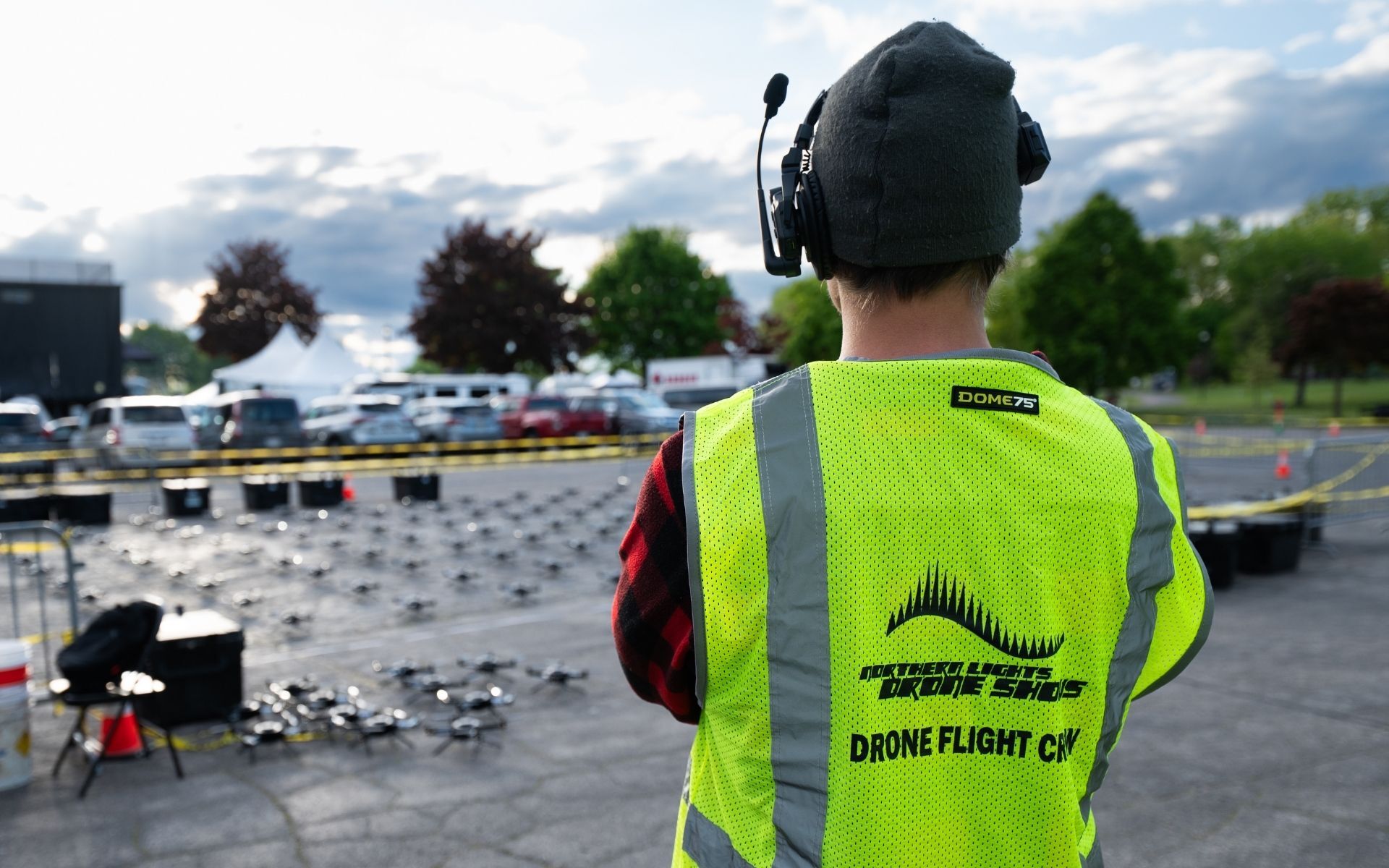
Great design only works when it's built inside safe operational limits
One of the easiest mistakes for buyers to make is judging a vendor mostly by visuals. A portfolio matters, but stunning renderings don't prove that a show can be executed safely in real airspace.
Design, spacing, altitude, lighting, speed, and crowd location all interact. A provider that understands this can create ambitious visuals while still honoring operational boundaries. A provider that doesn't may promise more than the aircraft, airspace, or waiver conditions can safely support.
Taylor, Drone Show Designer, explains that balance clearly:
"Design limits and physical safety boundaries go hand-in-hand. When we are designing a show, we have to calculate the drones' maximum velocity and make sure we have the safe, empty airspace required to fly high drone counts. Our pilots are trained to strictly monitor these physical and regulatory parameters, such as maintaining three-mile anti-collision lighting at night, so that the crowd can enjoy the creative transitions, like the patriot astronaut, without the organizer having to worry about a single safety or regulatory slip-up."
That approach is a major reason Northern Lights Drone Shows has earned trust across industries. The company doesn't separate creativity from compliance. It treats them as the same job.
A practical checklist for reducing drone show compliance risks
Event organizers don't need to become aviation experts, but they do need to ask disciplined questions before hiring a drone show company. A strong vendor should be able to answer each of the following without hesitation:
-
- Does the operator manage FAA coordination, authorizations, and flight planning internally?
- Can the operator handle site-specific planning near airports, medical helipads, and emergency corridors?
- Will the drones meet night visibility requirements, including anti-collision lighting visible for at least three statute miles where required?
- Does the operator guarantee proper on-site staffing and pilot coverage for the performance?
- Has the operator secured enough equipment and lead time for peak-season events?
- Can the operator provide proof of aviation-specific liability insurance?
- Has the venue been assessed for local traffic patterns, launch zones, landing zones, and crowd buffers?
- Is there a plan for weather changes, timing delays, and last-minute logistical pivots?
These aren't minor details. They're the foundation of responsible drone event risk management and a critical defense against avoidable drone liability risks.
Why Northern Lights Drone Shows stands out for risk-conscious organizers
Compliance isn't meaningful if it exists only in marketing language. It has to show up in internal processes, on-site decision-making, and the ability to adapt when conditions change.
Northern Lights Drone Shows has become a trusted choice for organizations nationwide because it combines custom aerial storytelling with real aviation discipline. The team has supported municipalities, civic celebrations, sports organizations, and major brands, including a drone show campaign created in partnership with Amazon Prime Video to promote the hit series "The Boys." That kind of trust is earned by delivering shows that are both visually strong and operationally sound.
For buyers weighing drone show compliance risks, that's the standard that matters most. The right partner doesn't merely promise a successful event. The right partner reduces your exposure, protects your audience, and makes sure the show can actually fly when it matters.
Frequently Asked Questions
What are the biggest compliance risks for event organizers booking a drone show?
The biggest risks usually involve airspace authorization issues, inadequate coordination near airports or emergency helicopter routes, insufficient staffing, improper night lighting compliance, and weak insurance coverage. These problems can lead to event delays, grounded shows, liability exposure, or potential FAA scrutiny.
Can an event organizer be liable if the drone show vendor is non-compliant?
Yes. Even if the vendor is operating the show, the organizer may still face legal and financial exposure if the operator lacks required approvals, violates safety standards, or causes damage or injury. That's why vendor selection is one of the most important parts of drone event risk management.
What is an FAA enforcement action in the context of drone shows?
An FAA enforcement action can involve federal investigation or penalties related to non-compliant drone operations. For an event organizer, the practical concern is that non-compliance can trigger shutdowns, fines, or reputational damage, especially if the issue is discovered close to launch time.
Why does operating near airports or hospitals increase drone show compliance risks?
These locations often involve controlled airspace, airport approaches, and emergency medical helicopter traffic. Since manned pilots may not easily see drones, operators must coordinate carefully, use proper authorizations, and be prepared to yield airspace immediately if necessary.
What should I ask a drone show company before hiring them?
Ask how they handle FAA approvals, flight planning, air traffic coordination, pilot staffing, venue assessment, insurance, and weather contingencies. You should also ask whether they have experience operating in complex municipal or enterprise environments and whether they can document a consistent compliance process.
Why is anti-collision lighting important for night drone shows?
Anti-collision lighting helps manned aircraft identify the drone operation at night. Under applicable FAA rules, lights visible for at least three statute miles may be required. This is a safety measure, not just a technical feature.
How does Northern Lights Drone Shows help reduce organizer risk?
Northern Lights Drone Shows builds compliance into every stage of the event, from planning and airspace review to live operational coordination. That helps organizers reduce drone show compliance risks while still delivering a high-impact audience experience.
Talk to Northern Lights Drone Shows before compliance becomes your problem
If you're planning a public celebration, brand activation, or municipal event, don't wait until permitting questions or airspace concerns create avoidable risk. Talk to Northern Lights Drone Shows early so your event can be designed around compliance from the start. Explore the FAA-compliant planning process at the parent page, or contact Northern Lights Drone Shows directly to discuss your venue, timeline, and risk considerations with a team that treats safety and legality as part of the performance.