FAA Safety Protocols for Drone Light Shows
Why FAA safety protocols matter for every drone show
When people ask what makes a drone show safe, the answer starts with the Safety Protocols Required by FAA and extends into every operational decision made before launch. For a general audience, that means understanding that a professional show isn't just about creative animations in the sky. It's about a disciplined drone safety protocol that protects spectators, nearby communities, aircraft, and the event itself. Northern Lights Drone Shows treats FAA compliance as the baseline for responsible entertainment because the real measure of a successful show is whether it remains controlled, legal, and predictable from planning through landing.
Safety begins long before the first drone takes off
FAA rules exist to define the minimum safe operating standard for small unmanned aircraft systems, especially during nighttime performances and operations near populated areas. In practice, that means a professional provider has to build its entire process around certification, airspace awareness, hardware readiness, and risk mitigation.
At Northern Lights Drone Shows, that foundation starts with licensed operators. Every show must be commanded by FAA-certificated remote pilots under Part 107, and nighttime operations require current recurrent training that reflects the FAA's post-April 6, 2021 standards. Older training isn't enough for modern night flight expectations.
Aircraft readiness matters just as much as pilot readiness. Each drone in the fleet must be properly registered and marked, and each aircraft must carry anti-collision lighting visible for at least three statute miles. Those aren't technical footnotes. They're essential drone safety requirements that support visibility, deconfliction, and operational legality.
Nathan Godfrey, Account Executive, puts it plainly: "FAA compliance is the prerequisite for flight; our entire business is predicated on it. We ensure every pilot has the updated recurrent training released after April 6, 2021, and that every drone meets the 3-mile anti-collision lighting mandate. Compliance isn't a checkbox—it’s the foundation of our license to operate."
That perspective shapes how Northern Lights Drone Shows approaches every event. Compliance isn't treated like paperwork to get out of the way. It's built into a broader drone safety management system designed to reduce preventable risk in the air and on the ground.
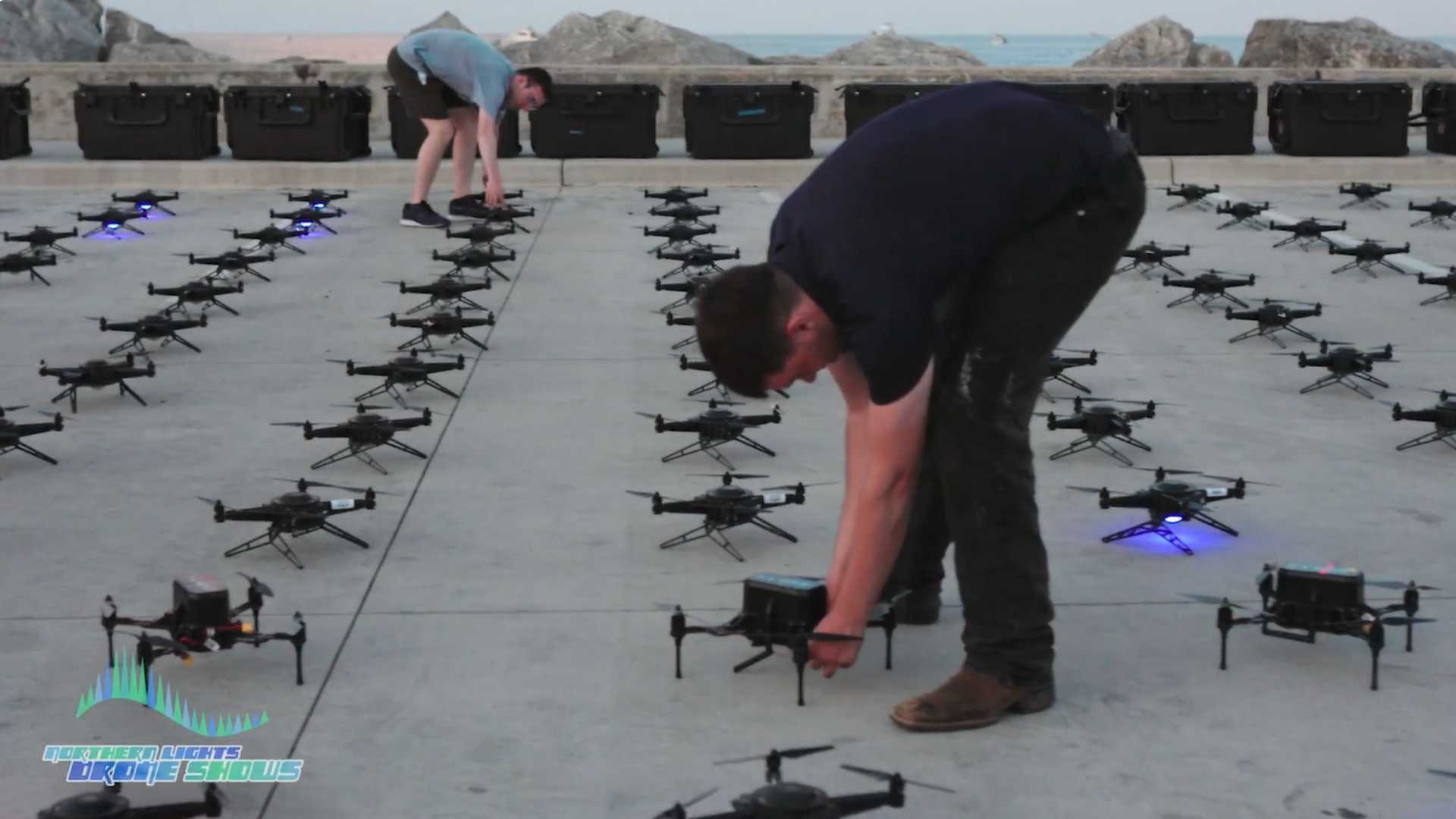
.jpg "An image from the set up of a drone show.")
The safest drone shows are built on layered risk control
FAA compliance creates the legal framework, but safe execution depends on layered operational discipline. That's where experienced providers separate themselves from companies that simply know how to fly drones.
One of the most important principles is absolute responsibility around manned aircraft. Drone pilots must always yield the right-of-way. If a helicopter, emergency aircraft, or any other manned traffic enters the area, the drone operation must immediately prioritize deconfliction.
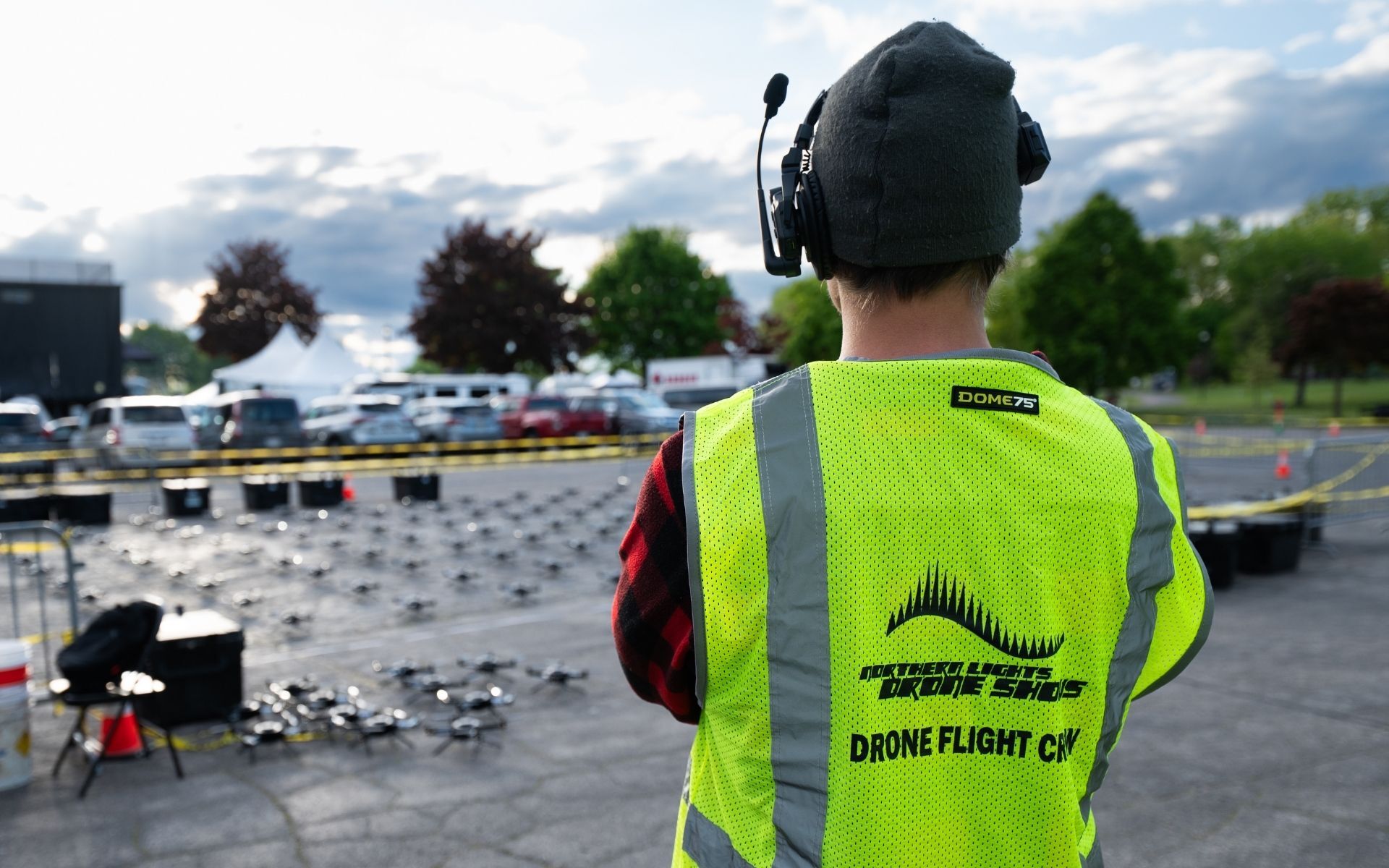
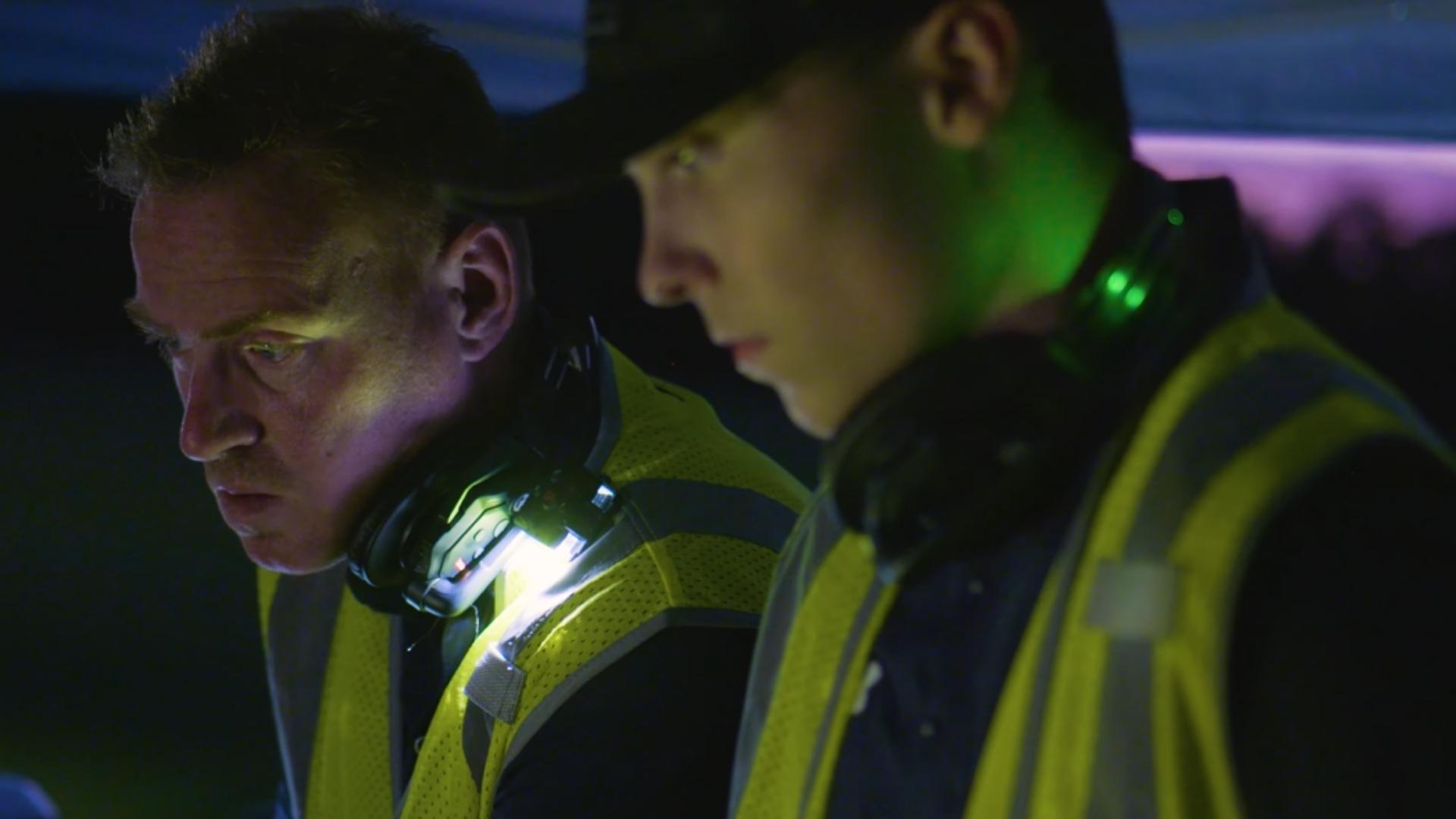
Northern Lights Drone Shows reinforces that rule with a two-pilot safeguard on every performance. Even in an industry facing pilot shortages, the company maintains two licensed pilots on site so there is dual oversight of the operation. One pilot can focus on telemetry and flight systems while the other maintains visual awareness of the surrounding airspace.
That kind of redundancy is central to a real drone safety checklist because it recognizes that safe operations rely on both systems and people. A well-run show doesn't depend on one person trying to monitor everything at once.
The same logic applies to flight planning. Filing for airspace access isn't optional when safety is the objective. It is part of the work.
Nathan Godfrey explains it this way: "Operationally, we are proactive. We file flight plans for every venue to ensure deconfliction with manned aircraft. Whether we are near an airport or a medical helicopter route, we loop in with local air traffic controllers in real-time. If an emergency arises, we clear the airspace immediately to prioritize manned aviation safety."
For event organizers, that's a critical distinction. A provider that actively coordinates with FAA systems and local aviation stakeholders is doing more than checking a box. They're protecting the event from the kinds of failures that happen when airspace risk is underestimated.
The physics of flight shape real-world drone safety requirements
Safe drone shows don't happen because the drones look organized from the ground. They happen because the choreography respects the physical limits of the aircraft. Every formation, every transition, and every animation has to work within speed, spacing, inertia, and response thresholds that the hardware can reliably handle.
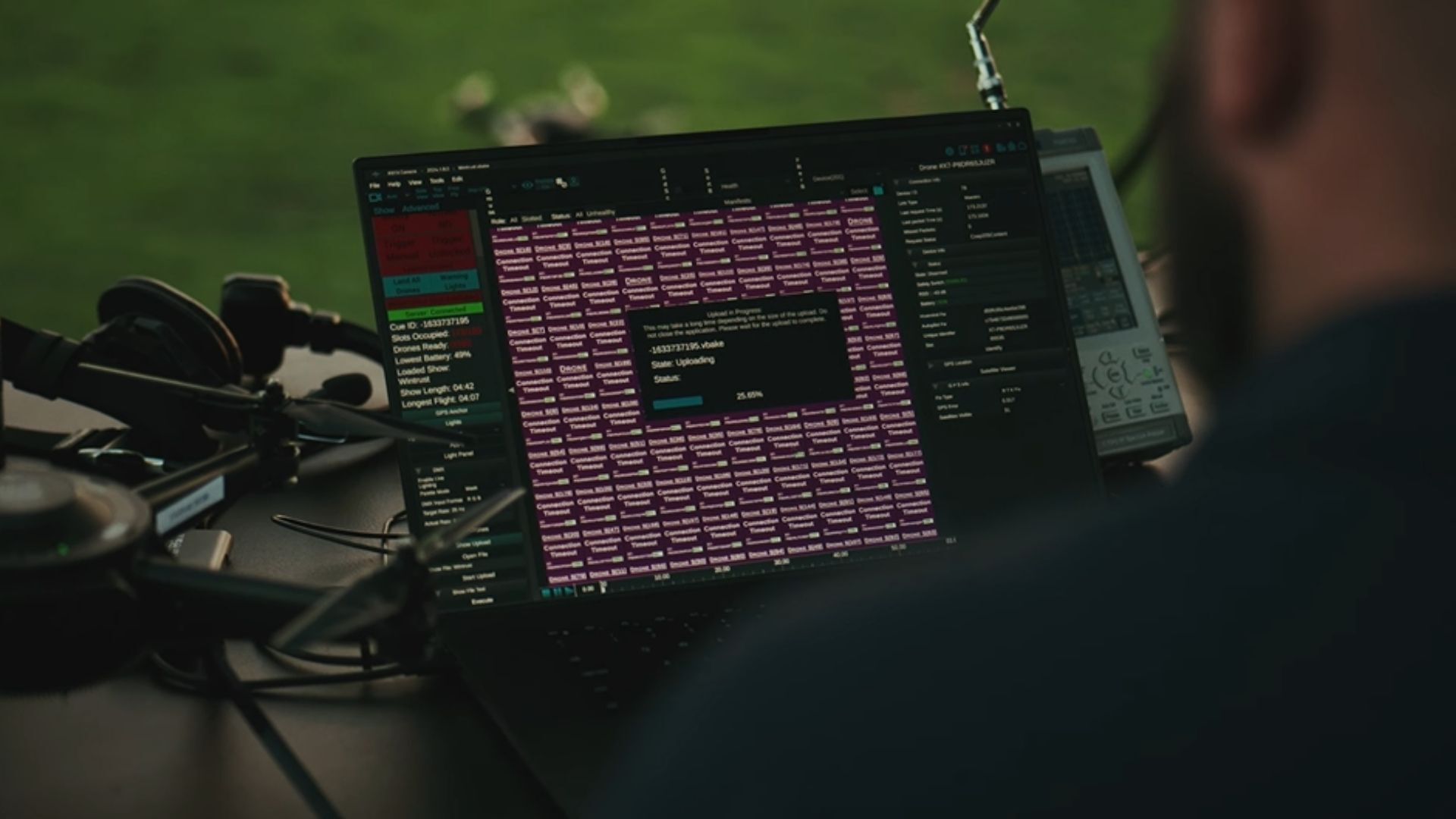
That means a meaningful drone preflight checklist has to include more than battery levels and propeller inspection. It has to account for whether the programmed movement is safe for the fleet's actual capabilities. If transition speeds are too aggressive or drone separation is too tight, the risk of instability or collision rises fast.
Northern Lights Drone Shows engineers around those limits rather than pushing through them. Safety is integrated into design, not added after the creative work is complete.
Taylor, Drone Show Designer, explains the process clearly: "Safety is engineered into the design phase. We calculate velocity limits to manage inertia and prevent mid-air collisions during animations. We also utilize geofencing to maintain a contained environment and strictly enforce the two-pilot redundancy rule, ensuring a second set of eyes is always on the physical airspace. We are replacing the chemical hazards of pyrotechnics with debris-free, engineered safety systems."
That statement gets to the heart of why drone shows can offer a safer public entertainment model than traditional fireworks. With fireworks, risk comes from combustion, debris, fallout, and concussive sound. With drones, risk is managed through software constraints, geofencing, controlled flight paths, and active pilot oversight.
For families, municipalities, and brands, that difference matters. A drone show can be low-noise, debris-free, and more considerate of veterans, pets, and sensitive audiences while still delivering a major visual moment. That's one reason Northern Lights Drone Shows has become a trusted choice for organizations across the country looking to elevate events with custom aerial displays.
What FAA-compliant safety looks like in a real municipal event
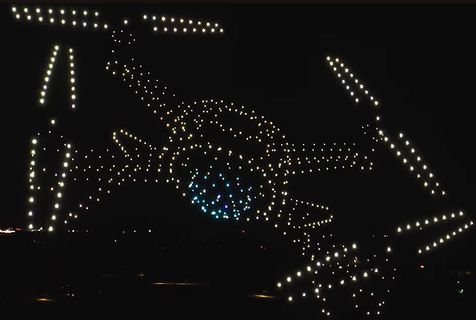
The strongest proof of a safety system is how it performs in a complex environment. At Malone Park in New Berlin, Northern Lights Drone Shows staged a Fourth of July performance in an active municipal setting surrounded by baseball and soccer fields and the realities of a dense community event footprint.
This wasn't an abstract exercise in compliance. It required practical, detailed risk planning. The team coordinated airspace access through LAANC where available and used FAADroneZone when manual approvals or more complex coordination were needed. Because the venue also required awareness of emergency medical helicopter activity, the operation had to remain ready to clear the airspace immediately if life-saving aviation took priority.
That level of planning reflects what a serious drone safety management system should do. It doesn't assume conditions will stay simple. It plans for complexity before it becomes a problem.
Weather brought the most visible test of that discipline. Severe storms and electrical risks were forecast for July 4, and Northern Lights Drone Shows chose to postpone the performance to July 5. That decision protected the audience and the crew, even though thousands of families had gathered for the holiday event and would have to return the next day.
That's what real safety leadership looks like. It means grounding the fleet when the conditions aren't right, even when the crowd is waiting.
When the show flew, it featured a visually ambitious sequence celebrating America's 250th birthday, including a rocket and space shuttle transition, a Patriot Astronaut, a folding American flag, and the New Berlin city logo with its prominent tree. The success of that performance didn't come from taking risks. It came from proving that creative ambition only works when operational safety stays in control.
Why experienced providers make all the difference
Not every company approaches drone safety requirements with the same rigor. That's why brand trust matters in this industry. Northern Lights Drone Shows has earned credibility by delivering safe, FAA-compliant productions for municipalities, sports teams, corporate brands, and civic celebrations across the country.
That includes high-visibility campaign work with major brands, including a drone show partnership with Amazon Prime Video to promote the hit series "The Boys." For clients, those trust signals matter because they show that Northern Lights Drone Shows can operate at a high level without compromising safety culture.
That's also why Northern Lights Drone Shows is the right pick for organizations that need more than a visually impressive show. They need a partner that understands airspace coordination, pilot certification, hardware controls, and the field judgment required to protect the public and the event itself.
If you're evaluating providers, a true drone safety checklist should include questions like these:
-
- Are all pilots Part 107 certified and current on required night training?
- Is every aircraft registered, marked, and equipped with compliant anti-collision lighting?
- Does the provider file flight plans and coordinate for every venue?
- Is there a two-pilot or equivalent redundancy standard on site?
- Are geofencing and flight path constraints built into the show design?
- Will the company postpone or cancel if weather or airspace conditions create unsafe risk?
The answers tell you a lot about whether safety is real or just marketing language.
Frequently Asked Questions
What are the main Safety Protocols Required by FAA for drone shows?
The main FAA requirements include Part 107 certification for remote pilots, current recurrent training for night operations, registered and properly marked aircraft, anti-collision lighting visible for at least three statute miles, and strict adherence to right-of-way rules for manned aircraft. Professional operators also need proper airspace authorization when required.
Why is a drone safety protocol important for public events?
A drone safety protocol reduces the chance of mid-air conflict, loss of control, crowd exposure, and weather-related incidents. At public events, especially in parks and municipal spaces, structured procedures are essential because there is very little margin for error.
What should be included in a drone preflight checklist?
A drone preflight checklist should cover pilot credentials, aircraft registration, lighting compliance, battery condition, firmware and system checks, weather review, airspace authorization, emergency procedures, and verification that the programmed choreography stays within safe flight limits. For drone shows, it should also include geofence confirmation and redundancy planning.
How does a drone safety management system improve event safety?
A drone safety management system creates repeatable procedures for identifying hazards, controlling risks, documenting compliance, and responding to changing conditions. Instead of relying on judgment alone, it gives the operator a structured framework for safer decisions before, during, and after flight.
Are drone shows safer than fireworks?
In many ways, yes. Drone shows can be debris-free, lower in noise, and more controlled than fireworks because the performance is governed by software, geofencing, and active pilot oversight rather than combustion and explosive fallout. That doesn't remove the need for strict safety procedures, but it does change the risk profile in a positive way.
How do professional drone show companies handle nearby aircraft?
They coordinate proactively through FAA systems and monitor the airspace throughout the event. If manned aircraft enter or may enter the area, drone operations must yield immediately. Companies like Northern Lights Drone Shows build this into their standard operating procedures so deconfliction isn't improvised in the moment.
See how Northern Lights Drone Shows approaches FAA-compliant safety
If you're planning a public event and want to understand what safe, FAA-compliant execution should look like, Northern Lights Drone Shows can help. Our team builds every performance around proven drone safety requirements, disciplined flight planning, and engineered safeguards that protect your audience and your event. Explore our approach to FAA-compliant drone shows or contact Northern Lights Drone Shows to talk through your venue, timeline, and safety considerations.