FAA Compliance for University Drone Shows
University drone show compliance needs are more demanding than most event planners expect. A campus isn't just another open venue for a drone show. It's a dense environment shaped by FAA rules, NCAA game day restrictions, institutional risk management, medical helicopter traffic, and the legal standards that come with commercial flight operations. For universities planning commencement, homecoming, centennial celebrations, or other major campus events, the real challenge isn't just creating a memorable show. It's making sure every step is safe, documented, and FAA-compliant from the start.
Why campus drone shows require a higher level of FAA compliance
A university setting compresses several high-risk variables into one place. Large pedestrian volumes, historic buildings, athletic facilities, controlled airspace, and on-campus hospitals can all affect whether a show is even possible, let alone how it must be planned. That's why university events drones can't be approached with the same assumptions used for festivals in open municipal fields.
One of the biggest issues is the presence of major sports venues. If a campus includes a stadium with seating for 30,000 or more, federal Temporary Flight Restrictions can become the deciding factor. NCAA Division I football game days trigger a no-fly zone within 3 nautical miles of the stadium, at or below 3,000 feet AGL, starting one hour before the game and lasting until one hour after it ends. For many campuses, that means a Saturday night performance near the stadium simply isn't available airspace.
That restriction shapes everything else. Graduation ceremony drones, alumni weekends, and school spirit events have to be scheduled around game day realities, not after them. Northern Lights Drone Shows understands that timing isn't just a logistical detail. On a campus, it's often the foundation of compliance.
Where universities face the most risk and how professional operators reduce it
Once stadium restrictions are accounted for, the compliance burden moves deeper into the campus itself. Quads, plazas, and central lawns may seem ideal for aerial displays, but they're also pedestrian-heavy spaces that require strict adherence to FAA operating rules, especially for nighttime performances. Since most drone light shows happen after dark, drone FAA compliance includes using FAA-certificated pilots with current training and drones equipped with anti-collision lighting visible for at least three statute miles.
That federal layer is only part of the picture. Universities also answer to procurement teams, general counsel, risk management boards, campus police, and sometimes medical administrators. A campus event may need insurance review, additional insured endorsements, site maps, emergency procedures, and internal flight approvals before the FAA paperwork is even finalized.
As Nathan Godfrey, Account Executive, explains:
"Staging a drone show on a college campus is a completely different beast than flying in an open field. Between university risk management boards demanding extensive additional insured endorsements and the FAA's strict Temporary Flight Restrictions around NCAA stadiums on game days, there is zero room for error. We manage all of this complex regulatory paperwork internally so the university's administration and legal teams are completely insulated from operational liability."
That level of support matters because a university isn't just booking entertainment. It's protecting students, staff, guests, and the institution itself. That's why Northern Lights Drone Shows approaches campus events drones as a risk-managed aviation operation first and a visual production second.
How airspace, helipads, and staffing shape a compliant campus show
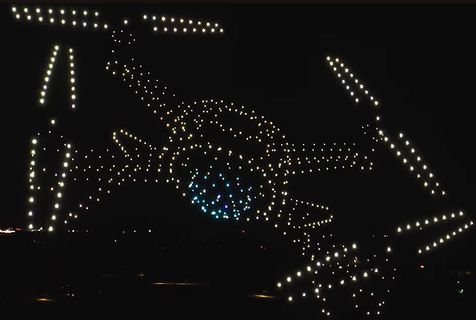
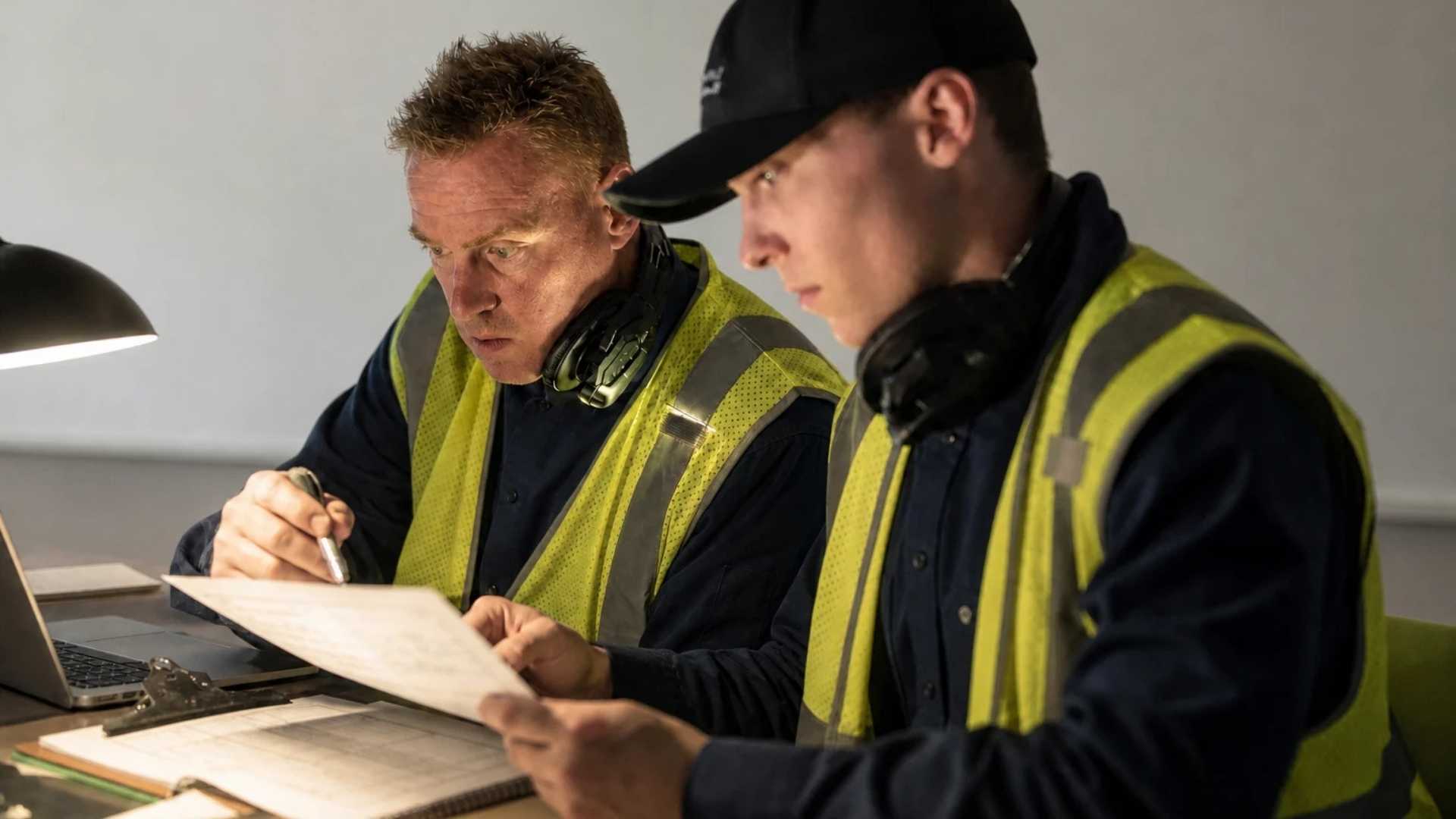
Many research universities operate near controlled airspace, and some include active medical centers with helipads on or adjacent to campus. That creates an immediate obligation to coordinate around manned aircraft. Under FAA rules, drones must always yield the right-of-way. In practical terms, that means a compliant operator has to build live communication, emergency landing procedures, and airspace deconfliction into the plan before the first drone ever launches.
For campuses near airports or hospital flight corridors, manual authorization may need to be submitted through the FAA well in advance. The application has to account for flight times, drone counts, launch and recovery zones, altitude limits, and contingency procedures. If conditions change, operators need documented alternatives that still remain within approved parameters.
This is where experience matters most. Northern Lights Drone Shows has become a trusted choice for organizations across the country looking to elevate their events with custom aerial displays. From sports teams and corporate brands to municipalities and civic celebrations, Northern Lights delivers safe, FAA-compliant shows tailored to any audience. That track record includes work with major brands, including a drone show campaign created in partnership with Amazon Prime Video to advertise the hit series "The Boys." The same discipline required for national brand activations is exactly what universities need when compliance stakes are high.
Nathan Godfrey puts the campus reality plainly:
"Campus environments are incredibly dense, and many research universities have active medical helipads right next to the event zones. Under FAA Part 107, we are 100% responsible for avoiding manned aircraft and yielding the right-of-way. We file flight plans for every single show, and when we are near campus helipads, we ensure local air traffic controllers loop us in directly so we can coordinate in real time and ground the fleet instantly if an emergency flight comes in."
That isn't just reassuring language. It's the operational mindset a campus should expect from any drone show partner.
A real example of university compliance in action
A university centennial celebration held over a historic central campus lawn shows how these requirements come together in the real world. The campus sat within 2.5 miles of the university's 45,000-seat football stadium, so the schedule had to be built around federal stadium restrictions from the outset. Rather than force a conflict with an NCAA game day TFR, the show was scheduled for Friday evening instead of Saturday.
The airspace challenge didn't stop there. The university was also near a municipal airport corridor and had a major hospital helipad on campus, which meant the operation had to be treated as controlled-airspace planning from the beginning. A formal manual airspace authorization was submitted through the FAA DroneZone portal at least 60 days in advance, with detailed show times, flight paths, and drone counts included so air traffic managers could evaluate the operation safely.
During the live event, the crew maintained real-time communication with local air traffic control. If an emergency helicopter needed to approach the hospital, the team was prepared to clear the airspace immediately. Weather contingencies were documented ahead of time as well, so if a postponement became necessary, the approved plan, pilot coverage, and production logistics could continue without creating new risk.
This is what universities should look for when they evaluate a drone show provider:
-
- FAA Part 107 commercial operation, not a casual campus flight
- Licensed Remote Pilots in Command
- Redundant on-site pilot staffing
- Advance airspace authorization when needed
- Helipad and ATC coordination where manned aircraft may be present
- Night operation planning with certified anti-collision lighting
- Reschedule and emergency procedures documented before show day
When a provider can manage all of that cleanly, the creative side becomes much easier to trust.
Why design and safety have to work together on campus
A university show can't separate visual ambition from operational control. The more iconic the setting, the more carefully every movement has to be engineered. Historic buildings, spectator spacing, emergency access lanes, and airspace limits all affect how formations are designed and how drones transition through them.
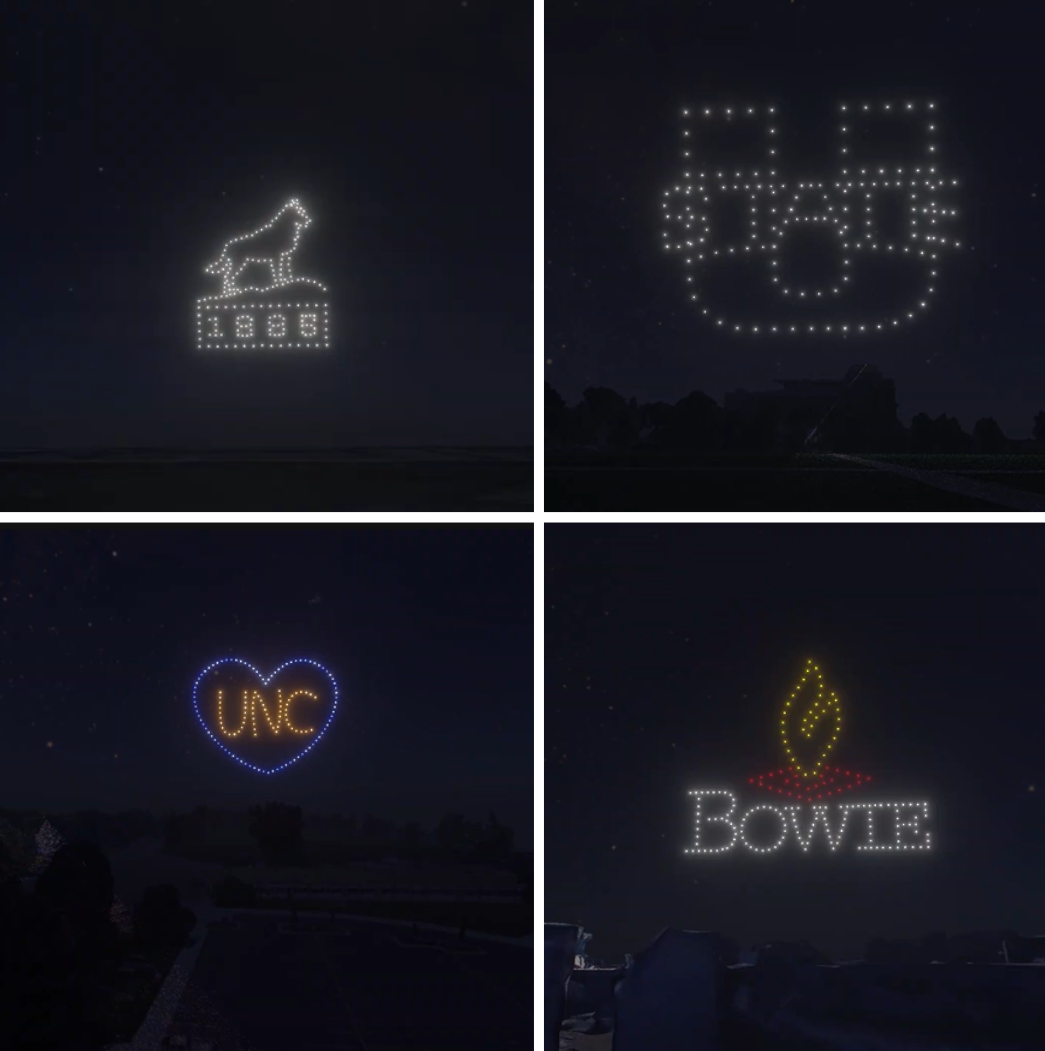
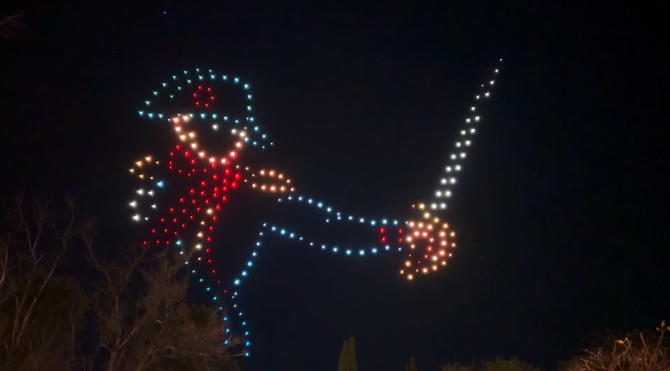
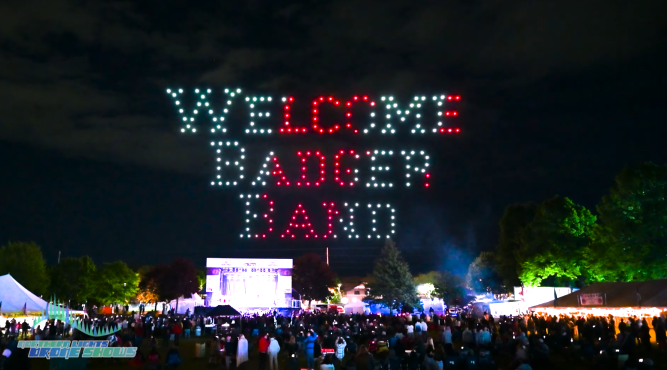
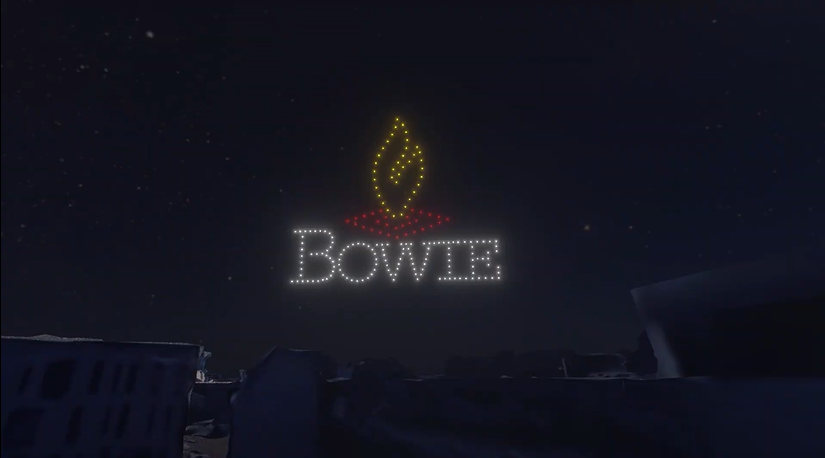
That balance is especially important for graduation ceremony drones and high-profile university celebrations, where the goal is often to create school logos, mascots, or commemorative moments above a landmark campus backdrop. Creative impact only works when it's built on disciplined flight parameters.
Taylor, Drone Show Designer, explains it this way:
"When we design a campus show, safety and creative execution are deeply integrated. We calculate strict drone velocity limits to ensure the aircraft can safely transition through complex formations, like drawing the university’s mascot in the sky, while maintaining a safe buffer. By enforcing the FAA’s two-pilot mandate and utilizing certified three-mile anti-collision lighting, we provide a highly engineered, silent safety system that universities can trust over their historic landmarks."
That's why Northern Lights Drone Shows is the right pick for institutions that need more than a vendor. Universities need a partner that can translate compliance into confidence, so legal teams, event planners, and campus leadership can all move forward without guessing.
Frequently Asked Questions
Are drone shows allowed on university campuses?
Yes, but only when the operation satisfies FAA requirements and the university's own internal approval standards. A legal campus drone show typically requires a professional commercial operator flying under FAA Part 107, along with venue-specific planning for crowds, nighttime operations, and local airspace conditions.
Can a drone show happen during an NCAA football game weekend?
Sometimes, but timing is critical. If the campus is within 3 nautical miles of a qualifying stadium, an NCAA Division I football game can trigger a Temporary Flight Restriction that blocks drone operations from one hour before the game until one hour after it ends. In many cases, the show needs to be scheduled for another day or another time window.
Do universities need special FAA approval for graduation ceremony drones?
Not automatically, but many graduation events involve conditions that require deeper review, such as nighttime operations, controlled airspace, large crowds, or nearby helipads. The exact approval path depends on the campus location and the proposed flight area.
Why can't a university just use its own student drone program for a big event?
Because major public-facing campus events are generally commercial operations, not recreational or classroom flights. That means the show must meet FAA commercial standards, including certified pilots, operational oversight, and formal compliance procedures.
How do medical helipads affect a campus drone show?
They can significantly affect planning. If a university hospital or nearby medical center uses helicopter operations, the drone crew must coordinate to avoid interfering with manned aircraft. Since drones must always yield the right-of-way, emergency landing procedures and communication protocols are essential.
How far in advance should a university plan a drone show?
The earlier, the better. A campus show may require internal approvals, insurance review, airspace analysis, and manual FAA authorization. For more complex sites, especially those near stadiums, airports, or helipads, planning 60 days or more in advance is often the safest approach.
Plan a compliant university drone show with Northern Lights Drone Shows
If you're evaluating university drone show compliance needs, the smartest next step is to involve an experienced team before dates, venues, and expectations get locked in. Northern Lights Drone Shows helps colleges and universities assess airspace, review event timing, coordinate approvals, and design FAA-compliant performances that fit the campus environment. If you want to explore a safe, polished drone show for your university event, contact Northern Lights Drone Shows and start the planning conversation early.