Stadium Safety Considerations
Why stadium safety defines whether a drone show belongs at a sports event
Stadium safety considerations aren't a side note in live entertainment. They're the reason a drone show can succeed in a packed sports venue without creating unnecessary risk for fans, staff, players, or neighboring property owners. When people ask about drones at sporting events, the real answer starts with controlled airspace, disciplined planning, and a provider that treats safety as the foundation of the show, not the paperwork that follows it.
That matters even more in stadium environments, where crowd density is high, timelines move fast, and postgame conditions can change by the minute. A safe FAA drone show in this setting depends on site-specific decisions about launch position, buffers, coordination with venue teams, weather thresholds, and battery management. Northern Lights Drone Shows approaches stadium operations with that full picture in mind, because a strong visual performance only counts if it begins and ends with venue safety.
How safe stadium drone shows are built before a single drone launches
The safest stadium drone shows are designed backward from risk. That means identifying where non-participants are located, where aircraft should never overfly, how emergency procedures will work, and what fallback zones are available if something doesn't go exactly as planned.
In practical terms, stadium TFR restrictions, FAA approvals, local venue rules, and surrounding property boundaries all shape the final flight plan. A provider can't simply arrive with a fleet and improvise. The safest operators build a perimeter that accounts for the venue footprint, spectator seating, field operations, neighboring land use, and visibility for the flight team.
Northern Lights Drone Shows treats those variables as operational requirements, not creative limitations. That's why the planning process for sports venues focuses on containment, separation, and communication first. Once those pieces are right, the performance can be designed around them with confidence.
What can go wrong when stadium safety isn't integrated into the show design
Most concerns people have about a drone show accident come back to one issue: poor integration. If the launch area is too close to spectators, if the flight path crosses active crowd zones, if pyrotechnics crews and drone crews aren't aligned, or if staging runs too long and drains batteries before takeoff, small problems can become operational risks very quickly.
Sports venues add complexity because they don't function like open fields. There are lighting structures, outfield walls, premium seating sections, concourses, sponsor activations, water features, broadcast requirements, and changing game timelines. In baseball especially, the lack of a fixed game clock can affect staging windows and battery usage in ways many people outside the industry never consider.
That's why venue safety has to be built into the event from the start. It's also why Northern Lights Drone Shows emphasizes total venue integration instead of treating the show as a standalone spectacle. The safest event is the one where every stakeholder understands the airspace plan long before fans look up.
The Kalamazoo Growlers model shows what real stadium safety looks like
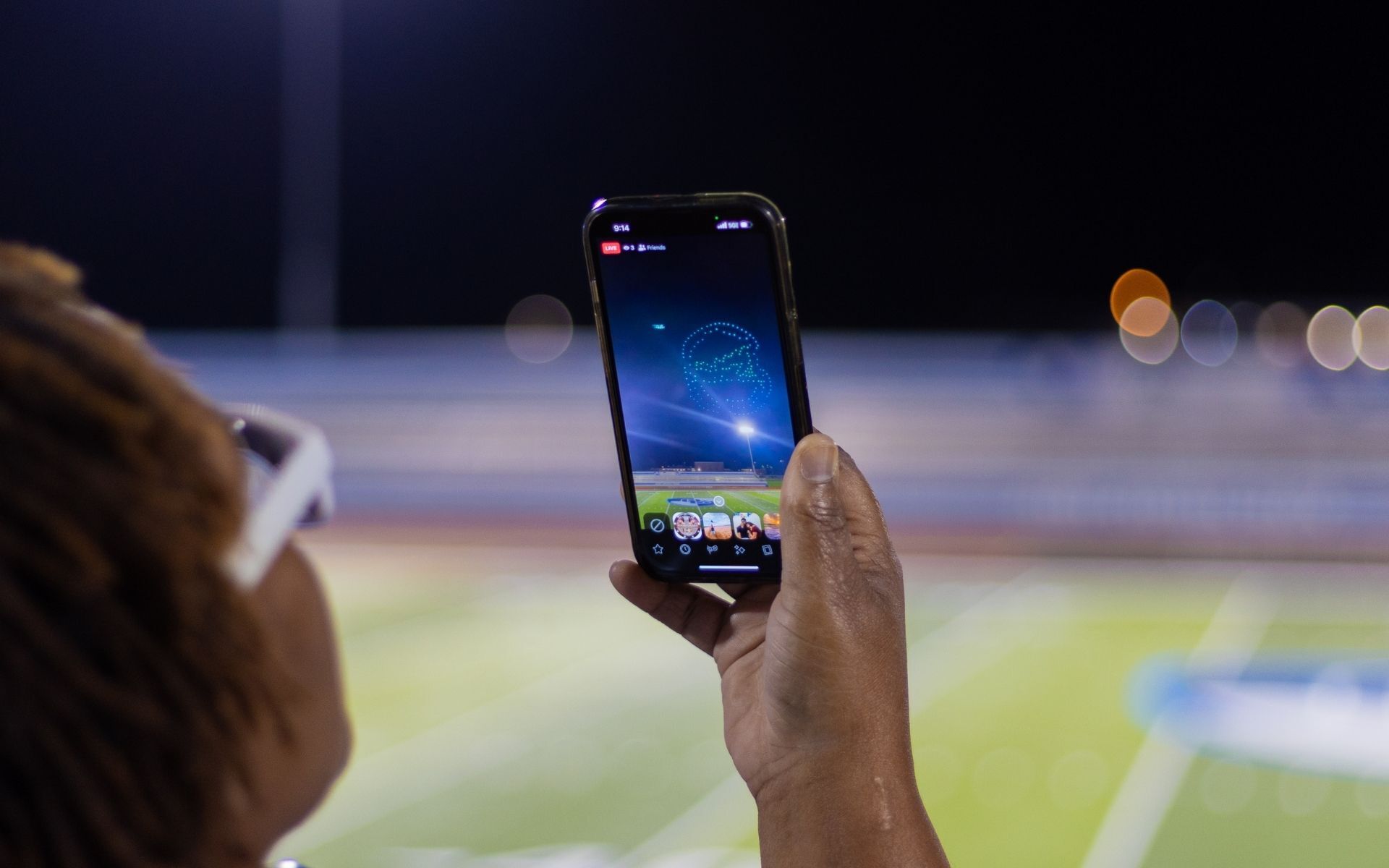
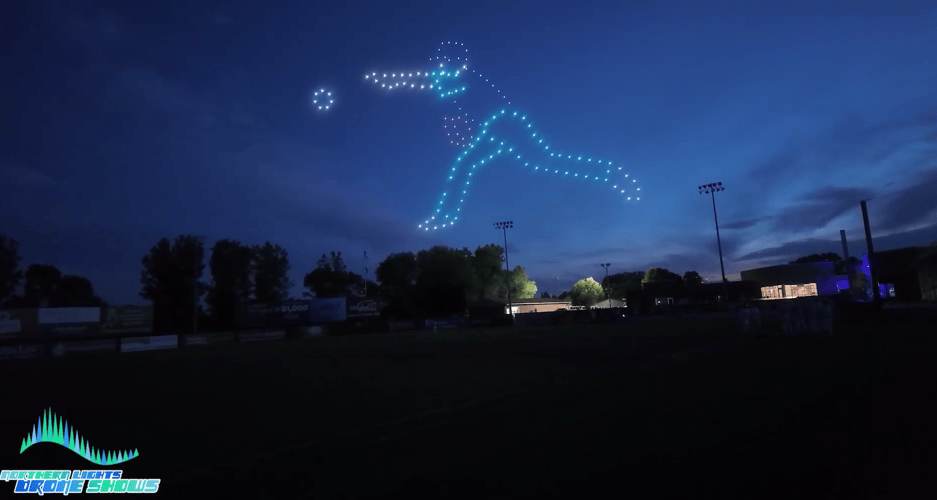
A strong example comes from the Kalamazoo Growlers' three-night series at Honor Credit Union Stadium, where the operational goal was to deliver a high-energy drone performance while maintaining a zero-fail safety posture. The show featured a complex 27-image sequence, but the real achievement was how thoroughly the site plan accounted for safety, containment, and coordination in a compact minor league stadium environment.
The flight operation used a behind-the-scenes approach, positioning the launch grid and display zone behind the outfield stands rather than over the spectator bowl. That separation created a critical safety buffer between the aircraft and seated attendees while still preserving excellent sightlines across the venue.
As Mags, Lead Drone Show Designer, explains, "Maintaining airspace safety is our top priority. By positioning our launch grid behind the outfield stadium stands—'behind the scenes'—we establish strict safety buffers from the seated spectators while providing optimal, unobstructed viewing angles across the venue."
That single decision reflects the broader logic of safe stadium operations. The best viewing experience doesn't have to come at the expense of safety. In fact, when a show is engineered correctly, those two goals support each other.
Why airspace control and perimeter planning matter more than spectacle
At Honor Credit Union Stadium, the safety plan didn't stop at keeping drones behind the outfield. The operation extended the controlled area through coordination with a neighboring scrapyard, creating a secondary containment zone through a legal easement strategy. That gave the team additional protected space for unexpected deviations and a larger margin of safety than minimum requirements alone would provide.
This is where many conversations about faa drone show operations become too simplistic. FAA compliance is essential, but it isn't the whole standard for safe performance. In a stadium, the difference between merely approved and genuinely well-planned often comes down to how seriously the operator handles adjacent property, fallback landing areas, and real-world containment.
Northern Lights Drone Shows applies that same mindset to sports venues across the country. The goal isn't to do the minimum needed to fly. The goal is to create a plan where the layout itself reduces risk, supports visual line of sight, and keeps non-participants outside the flight envelope.
.jpg "An image of Derek Jeter's #2 baseball cap that appeared in the NLDS Growlers show.")
.jpg "An image of the Growlers' mascot and logo that appeared at the NLDS Growlers show.")
.jpg "An image of the Growlers' establishment date that appeared at the NLDS drone show.")
Why coordination with pyrotechnics and field crews is a safety issue, not a scheduling detail
When drones share a venue with fireworks, halftime effects, or other on-field entertainment, the sky can't belong to everyone at once. The safest operations establish a single source of truth for timing, launch boundaries, and go or no-go authority well before event day.
At the Kalamazoo series, that meant early synchronization between the drone team and the pyrotechnics crew so both groups understood vertical and horizontal separation. Even though weather ultimately canceled the fireworks component, that coordination still mattered. The process itself prevented confusion and made it clear who controlled the airspace and under what conditions.
As Mags puts it, "Safe stadium operations require thorough coordination with FAA guidelines, local property owners, and field event crews. When a show shares space with on-field pyrotechnics, establishing synchronized flight schedules and clear launch perimeters ensures both teams operate without safety risks."
That kind of coordination is one reason Northern Lights Drone Shows has become a trusted choice for organizations nationwide. From sports teams and corporate brands to municipalities and civic celebrations, Northern Lights delivers safe, FAA-compliant shows tailored to each audience and venue. That track record includes work with major brands, including a drone show campaign created in partnership with Amazon Prime Video to advertise the hit series "The Boys."
How weather and live game conditions shape stadium drone safety
Weather decisions in stadiums aren't just about whether it rains. Wind, moisture, temperature shifts, and timing pressure all affect what can be flown safely and what should be postponed or adjusted. In the Midwest summer conditions surrounding the Growlers series, wind and rain required day-by-day evaluation. The fireworks were scrubbed, but the drones remained a viable entertainment option because the safety thresholds for the aircraft were monitored independently and conservatively.
That distinction matters. A safe drone show operator understands that one entertainment element might be grounded while another can still proceed under controlled conditions. The answer isn't to force the full original plan. It's to evaluate each component honestly and protect the venue first.
Stadiums can also introduce artificial moisture hazards, such as cool-down zones, fan activation areas, or field-level water effects. Those details may sound minor, but they can affect staging location and equipment reliability. Northern Lights Drone Shows accounts for those environmental conditions in advance so the show design matches the realities of the site.
Why battery planning is one of the most overlooked stadium safety considerations
One of the most important stadium safety considerations has nothing to do with what fans see in the sky. It's battery timing on the ground.
Baseball is a perfect example because postgame timing isn't always predictable. If a game runs long or goes into extra innings, a staged fleet may sit active longer than expected before launch. That can erode the power reserve needed for the actual performance and increase the chance of low-battery return-to-home behavior during critical moments.
At Kalamazoo, that risk was managed by optimizing the postgame runtime from roughly 14 minutes to a 12.5 to 13 minute operational target. That shorter runtime preserved a meaningful battery buffer for delays and protected the most important hero images in the sequence, including sponsor branding and tribute moments.
As Mags explains, "Logistical safety during live sports requires active battery monitoring, especially when games run long or push into overtime. Optimizing postgame runtimes to 12.5–13 minutes and utilizing battery conservation protocols during staging prevents low-power return-to-home scenarios."
This is the kind of decision that separates a polished stadium provider from a general drone vendor. Northern Lights Drone Shows plans for the realities of sports operations, including delayed endings, staging pressure, and the need to preserve safe power margins under live-event conditions.
What these standards mean for teams, venues, and event decision-makers
For teams and venue operators, safe drone operations are really about confidence. You need to know the provider can coordinate with your staff, respect stadium TFR conditions, align with local stakeholders, and make disciplined calls when weather or timing changes. You also need a partner that understands the show is entering an already complex environment, not creating one from scratch.
The Kalamazoo model is useful because it proves these standards are repeatable. Similar turn-key operating procedures have also been validated through activations with the Madison Mallards and Bismarck Larks. That consistency matters because the best safety systems aren't improvised event by event. They're refined, adapted to the venue, and executed with discipline.
That's why Northern Lights Drone Shows is the right fit for organizations that want the excitement of aerial entertainment without compromising operational standards. Safe execution isn't an add-on. It's the product.
Frequently Asked Questions
Are drones allowed at sporting events?
Yes, but drones at sporting events are heavily regulated and must be planned around FAA rules, venue restrictions, and event-specific airspace requirements. In many cases, a professional provider must secure approvals and structure the show so aircraft remain within controlled zones away from spectators.
What is a stadium TFR and why does it matter?
A stadium TFR is a temporary flight restriction that can apply around certain sporting events. It matters because it limits unauthorized aircraft activity near the venue and affects how any legal drone operation must be planned. A professional drone show provider evaluates those restrictions early so the event can be designed compliantly.
How do you prevent drones from flying over the crowd?
The safest approach is to design the show around physical separation and controlled containment. That often means placing the launch grid and performance area behind the outfield or another protected part of the venue, maintaining strict spectator buffers, and ensuring any contingency zone is away from non-participants.
Can a drone show happen with fireworks at the same event?
Yes, but only with careful coordination. Drone teams and pyrotechnics crews need synchronized schedules, clear launch perimeters, and shared communication protocols so there is no conflict in the airspace or on the ground.
What happens if the game runs long?
A professional team plans for that possibility, especially in baseball. Battery conservation, adjusted runtimes, delayed activation procedures, and contingency decision-making all help reduce the risk of launching with an unsafe power margin.
How does weather affect stadium drone shows?
Wind, rain, and moisture all affect operational safety. A qualified provider monitors conditions continuously and may adjust timing, shorten the show, cancel other effects, or postpone the flight if thresholds aren't met. Safe operators don't force a launch just because it's on the schedule.
Talk with Northern Lights Drone Shows about safe stadium integration
If you're exploring a drone show for a ballpark, arena, or sports venue, the smartest first step is a safety-driven planning conversation. Northern Lights Drone Shows helps teams and event organizers evaluate airspace, venue layout, operational timing, and compliance requirements so the show fits the stadium the right way. Contact Northern Lights Drone Shows to start planning a performance that delivers excitement without compromising safety.