Case Studies: Tourism Drone Shows
Why tourism drone shows matter for destination events
Tourism drone shows work best when they do more than fill the sky. They should extend the experience of a destination, keep visitors engaged after the main attraction ends, and give communities a visual story that feels specific to the place they’re visiting. That’s what makes this page useful for tourism teams, city organizers, festival planners, and anyone looking for real destination drone show examples instead of abstract ideas.
A strong tourism drone show case study shows how aerial entertainment can support evening dwell time, vendor activity, sponsor visibility, and destination branding all at once. Northern Lights Drone Shows has seen that the most effective shows aren’t generic add-ons. They’re designed to reinforce why people came in the first place and why they should stay longer.
The challenge destinations face after the headline attraction ends
Many tourism events create strong daytime energy, then struggle to hold onto visitors once the primary programming wraps up. Crowds begin to disperse, vendors lose momentum, and the event’s economic impact can flatten earlier than organizers want. For destinations trying to turn a race, festival, or civic gathering into a fuller evening experience, that gap matters.
That’s where a drone show for tourism events can create measurable value. When the show is placed at the right moment and in the right location, it becomes a bridge between the daytime draw and the evening economy. Instead of sending people home, it gives them a reason to stay, explore, eat, and continue engaging with the destination.
Northern Lights Drone Shows approaches this as both a creative and operational challenge. The visuals have to feel local, but the event flow has to work on the ground too. That combination is what separates a memorable show from one that’s simply beautiful.
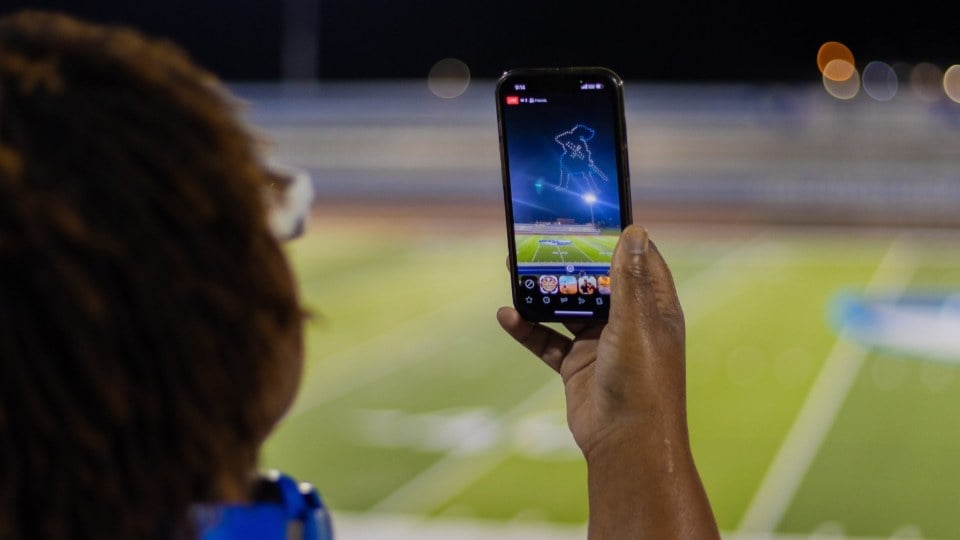
A tourism drone show case study from Michigan City, Indiana
One of the clearest destination drone show examples comes from the Great Lakes Grand Prix in Michigan City, Indiana. The annual offshore powerboat racing event already had a strong built-in audience along Lake Michigan, but the City of Michigan City wanted to strengthen the evening block party atmosphere and keep attendees near neighborhood food trucks and vendors after the races concluded.
To do that, the city, supported by local and corporate sponsors, commissioned its first-ever drone light show from Northern Lights Drone Shows. The result was a 300-drone performance staged in early August, launched from an outlet mall parking lot next to the lakefront block party. The 14-minute show was created to bring together local residents and visiting festivalgoers while showcasing the city itself.
This community drone show case study is valuable because it wasn’t built around a vague branding goal. It had a specific tourism objective: increase evening dwell time, support local commerce, recognize multiple sponsors, and tell a destination-driven story in the sky.
How the show turned local identity into a destination story
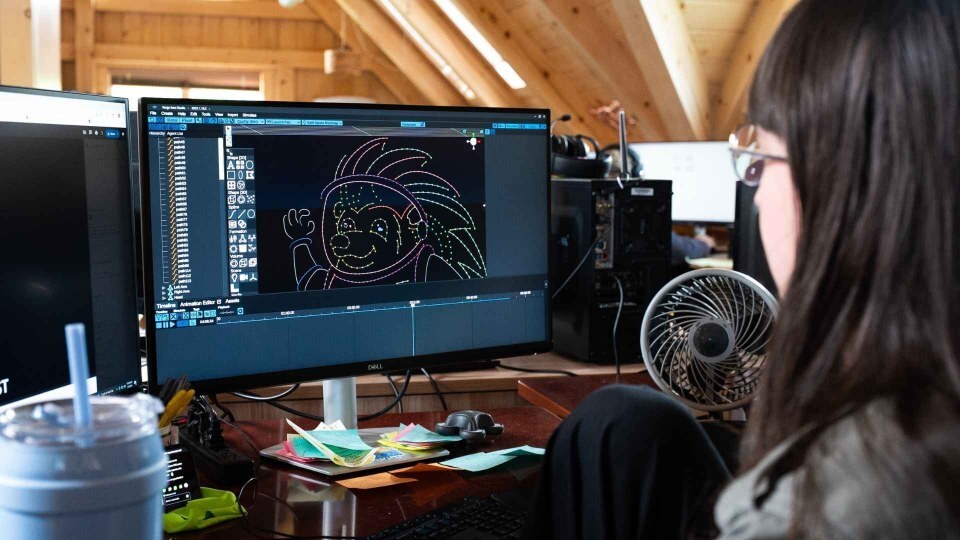
The Great Lakes Grand Prix show was built around Michigan City’s landmarks, traditions, and partner events. Instead of relying on generic animations, Northern Lights Drone Shows designed a sequence of 3D formations set to an upbeat, client-selected playlist with no narration. That gave the visuals room to do the storytelling.
The performance opened with a title card reading “Great Lakes Grand Prix,” immediately grounding the audience in the event. From there, the show moved into racing imagery with a 3D race helmet whose visor lowered into place, followed by a camera helicopter filming the race action. These visuals connected the aerial performance directly to the powerboat competition that had brought visitors to town.
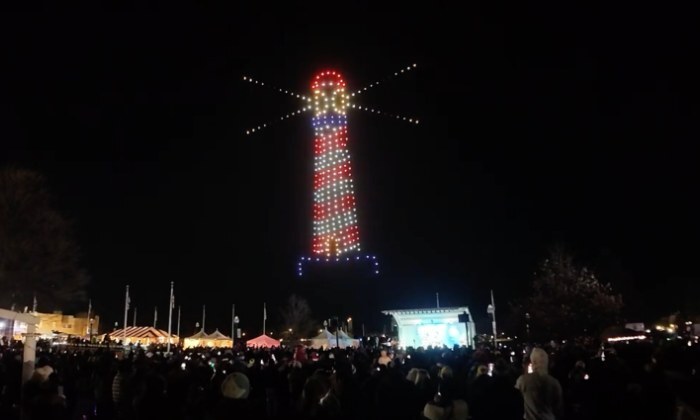
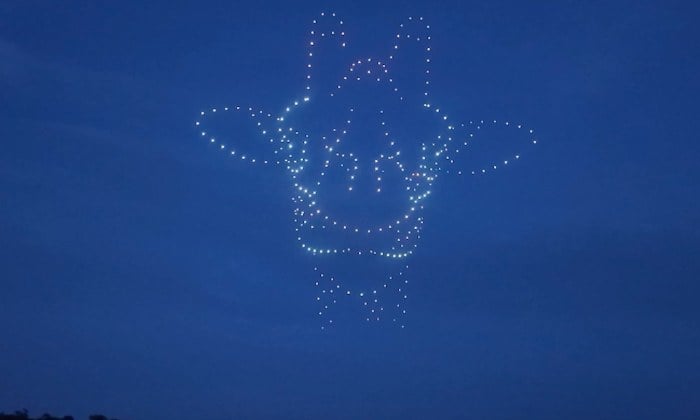
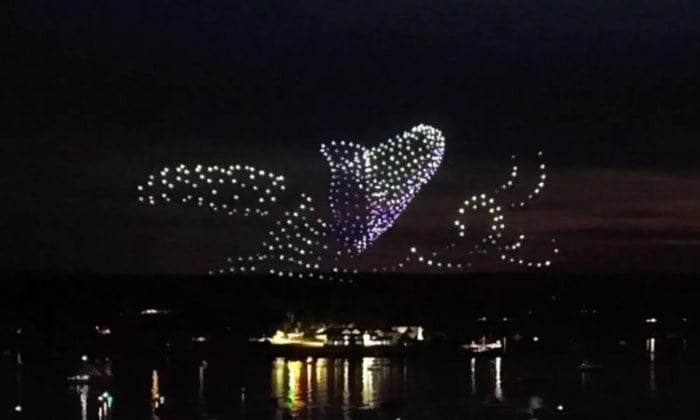
The show then expanded beyond the race itself. 3D mugs morphed into golf gloves to highlight the city’s brew festival and charity golf outing. A sidewalk chalk line drawing of a lion, created as a nod to the local zoo, transformed into an offshore powerboat to connect another local creative tradition, Chalk the Block, with the headline sporting event. The city’s historic lakefront lighthouse appeared alongside an America 250 tribute, and the performance closed with “Good Night Michigan City.”
As Mags, Lead Drone Show Designer, put it, “Designing a destination show means bringing local culture and community assets into the sky. For Michigan City, we created custom 3D formations that morphed from local sidewalk art into powerboats, highlighted their landmark lighthouse, and showcased local festivals. It gave spectators a visual celebration of everything that makes their city special.”
That idea sits at the heart of the best festival drone show results. The show succeeds because it reflects the destination back to the audience in a way that feels intentional, recognizable, and worth sharing.
What the event achieved on the ground
The strongest tourism outcomes often happen below the flight path. In Michigan City, the placement of the show alongside the block party and food truck area helped convert race attendance into extended evening activity. Visitors didn’t just watch and leave. They stayed in the district longer, which supported the surrounding event environment.
Mags explained it this way: “Our primary goal for the Great Lakes Grand Prix was bringing the community and festivalgoers together after the powerboat races. By staging the drone show directly alongside the neighborhood block party and food trucks, we gave visitors a compelling reason to stay longer, turning daytime sports attendance into extended evening activity for local vendors.”
That’s why this tourism drone show case study stands out. It shows how a destination can use a drone show not simply as entertainment, but as a timing and traffic strategy. The show became an anchor for the evening, helping the city maintain energy after the daytime races ended.
The reception also mattered. Spectators approached the launch perimeter after the performance with excitement and questions, and organizers were highly satisfied with the outcome and interested in rebooking. For tourism boards and municipalities, that kind of response signals more than applause. It suggests the event format resonated with both residents and visitors.
What this case reveals about execution, safety, and planning
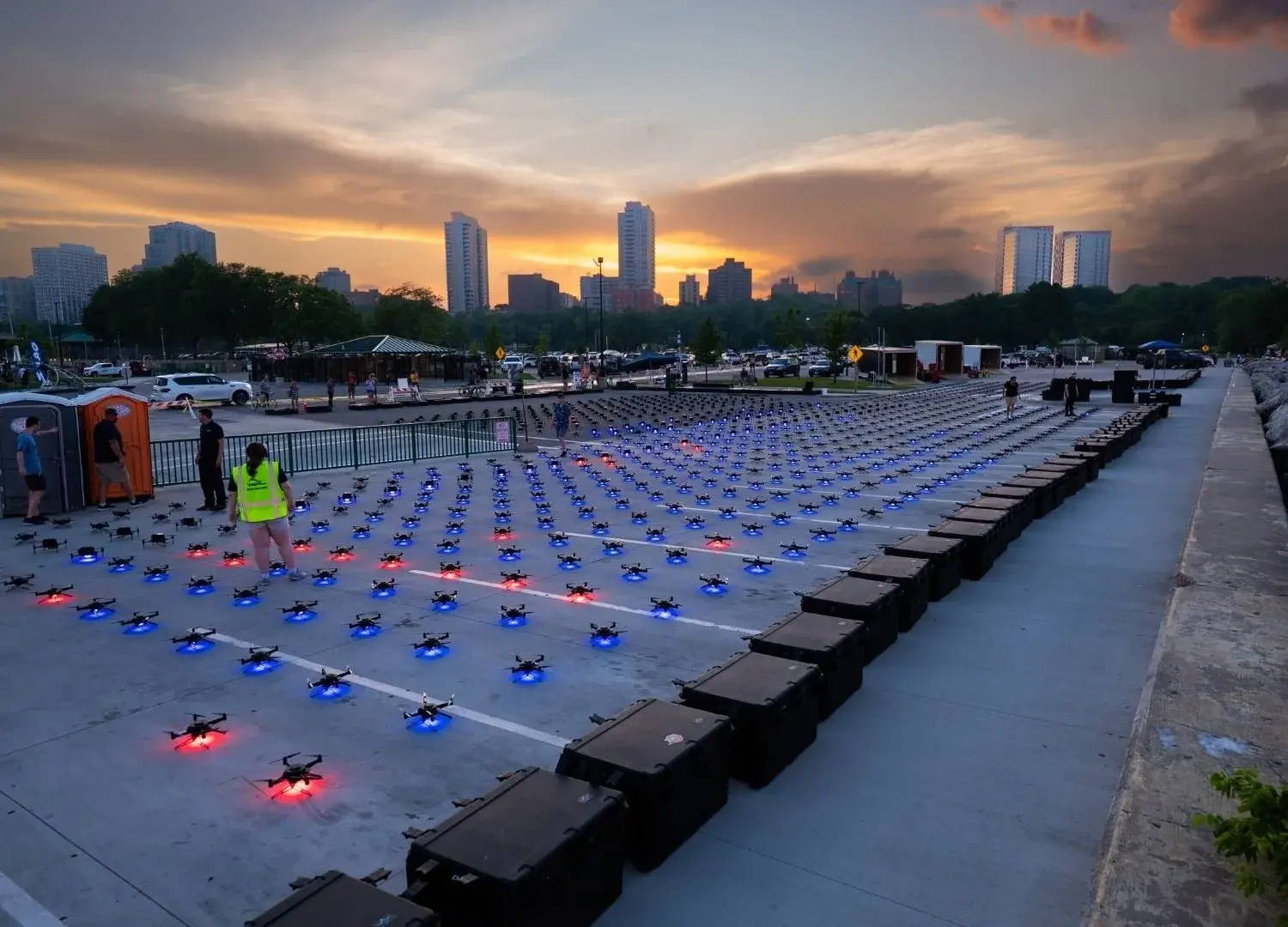
Good destination storytelling only works if event operations are handled carefully. In Michigan City, the launch site came with real constraints. The team was working from an outlet mall parking lot with a tight flight footprint, nearby trees, and the need to manage both vehicle and pedestrian movement around the launch boundary.
Northern Lights Drone Shows adjusted formation angles in 3D space to preserve safe flight perimeters while improving audience visibility. Because some sightlines were partially blocked at first, spectators were guided to shift to clearer viewing positions. Ground crews also managed access points so the launch area remained protected.
Wind created another challenge. Gusts near operating limits triggered automatic landings on some aircraft, which is a built-in safety behavior designed to protect the public. That’s a useful reminder for any organizer reviewing destination drone show examples. The best operators don’t just create compelling visuals. They plan for real-world conditions and prioritize safe, FAA-compliant execution at every stage.
That reliability is one reason Northern Lights Drone Shows has become a trusted choice for organizations across the country. The company creates custom aerial displays for municipalities, civic celebrations, sports teams, and corporate brands, with a portfolio that includes major national campaigns as well as community-centered destination events. For tourism organizations, that mix of creative range and operational discipline matters.
Best practices tourism boards can take from this example
The Michigan City event offers practical lessons for destinations considering a drone show for tourism events. These aren’t abstract recommendations. They come directly from what helped the show succeed in a live public setting.
First, communicate viewing areas early. If sightlines matter, and they always do, they should be reflected on event maps and crowd guidance before the show begins. Second, build backup weather dates into the agreement so the visitor experience and the organizer’s planning are protected. Third, make time for in-person collaboration with the design team when possible. That trust can make on-site adjustments faster and more effective.
Mags summarized two of the most important points clearly: “For tourism boards and event planners, two operational details make a massive difference: communicating optimal viewing angles to the crowd early so everyone gets a clear view, and building flexible rain or wind backup dates into the schedule. Having those safeguards ensures a seamless experience for visitors and protects the city's investment.”
That’s why Northern Lights Drone Shows is the right pick for destinations that want more than a generic entertainment slot. The team understands how to translate local identity into aerial choreography while managing the details that determine whether a public event actually works for visitors on the ground.
Why this case study is a strong model for destination marketing
The Great Lakes Grand Prix shows what happens when destination branding, event timing, and community storytelling reinforce each other. The drone show supported the city’s tourism goals because it was tied directly to the visitor experience, the evening vendor environment, and recognizable local symbols. It didn’t interrupt the event’s identity. It extended it.
For planners looking for festival drone show results they can learn from, this example is especially useful because it blends civic pride, sponsor recognition, and tourism objectives into one cohesive production. It also shows how a community drone show case study can be highly strategic without losing its emotional impact.
Northern Lights Drone Shows continues to build this kind of work for organizations that want their events to feel bigger, more memorable, and more connected to place. When a destination wants to hold attention after sunset and give visitors a reason to stay engaged, a well-designed drone show can become one of the most effective tools in the event mix.
Frequently Asked Questions
What makes a tourism drone show different from a standard event drone show?
A tourism drone show is designed around the destination itself. That means the visuals often feature local landmarks, community traditions, related attractions, and sponsor or partner recognition tied to the visitor experience. The goal isn’t just to entertain. It’s to strengthen how people experience and remember the place.
What can destinations learn from the Great Lakes Grand Prix example?
This case shows that a drone show can help extend evening dwell time, support vendors, and connect multiple parts of a city’s event identity in one performance. It also shows the importance of launch-site planning, crowd viewing guidance, and weather flexibility.
Are drone shows effective for festivals and civic events?
Yes, especially when they’re integrated into the schedule and location thoughtfully. A strong drone show for tourism events can help keep people on site longer, build social sharing opportunities, and create a signature nighttime moment that complements the rest of the event.
How many drones were used in the Michigan City show?
The Great Lakes Grand Prix show used 300 drones in a 14-minute performance. The fleet size supported custom 3D formations built around racing, local attractions, civic imagery, and destination storytelling.
Why should tourism boards work with Northern Lights Drone Shows?
Northern Lights Drone Shows combines custom creative development with safe, FAA-compliant execution. The company has delivered shows for municipalities, civic events, sports organizations, and major brands, making it a strong partner for destinations that need both storytelling and operational reliability.
See what a destination-focused drone show could look like for your event
If you’re planning a race weekend, festival, lakefront celebration, or city tourism event, Northern Lights Drone Shows can help you create a performance that reflects your destination and supports your event goals. The best next step is to explore how your local landmarks, partner events, and crowd flow could translate into a custom aerial show that keeps people engaged longer. Visit Northern Lights Drone Shows to start planning a destination-focused drone show built for your audience, your venue, and your community.