Coastal & Waterfront Drone Shows
Why coastal and waterfront drone shows draw such strong attention
Coastal & Waterfront Drone Shows stand out because water naturally creates a bigger stage. A waterfront drone show can be seen from beaches, boardwalks, docks, boats, parks, and hotel balconies all at once, which gives destinations a rare chance to turn one performance into a shared regional moment. For tourism boards, festival organizers, resorts, and civic planners, that matters because the right show doesn't just entertain the crowd in front of it. It creates a visual centerpiece that carries across the shoreline, sparks social sharing, and gives people a reason to gather by the water.
That opportunity comes with real planning demands, though. A drone show over water has different sightlines, different launch constraints, and different operating priorities than a show over a field or parking lot. That's why Northern Lights Drone Shows approaches coastal, harbor, beach, and lakefront events with a design and safety strategy built specifically for waterfront environments.
What makes a waterfront drone show different from other event settings
The biggest difference is distance. In many coastal settings, the audience isn't packed into one neat viewing area. They're spread across a long shoreline, standing on piers, sitting on tiered docks, watching from hotel lawns, or anchored in boats out on the water.
That changes everything about how the show should be built. Smaller shapes can get lost. Tight animation paths may not read clearly from every angle. A beach drone show or harbor drone show has to be designed for width, contrast, and immediate recognition, especially when viewers are spread across a broad visual field.
Launch logistics also become more complex. Drones can't launch from the water itself, so the team has to secure practical shoreline staging areas and build a flight plan that respects surrounding infrastructure, pedestrian activity, marine traffic, and FAA constraints. On top of that, weather patterns near water can change fast, which means schedule flexibility and disciplined operations aren't optional.
Nathan's view has long been that great drone shows aren't created by forcing a standard format into every venue. They work when the design, flight envelope, and operations all match the environment. That's especially true for lakefront drone show and coastal work, where visual impact depends on careful adaptation rather than spectacle alone.
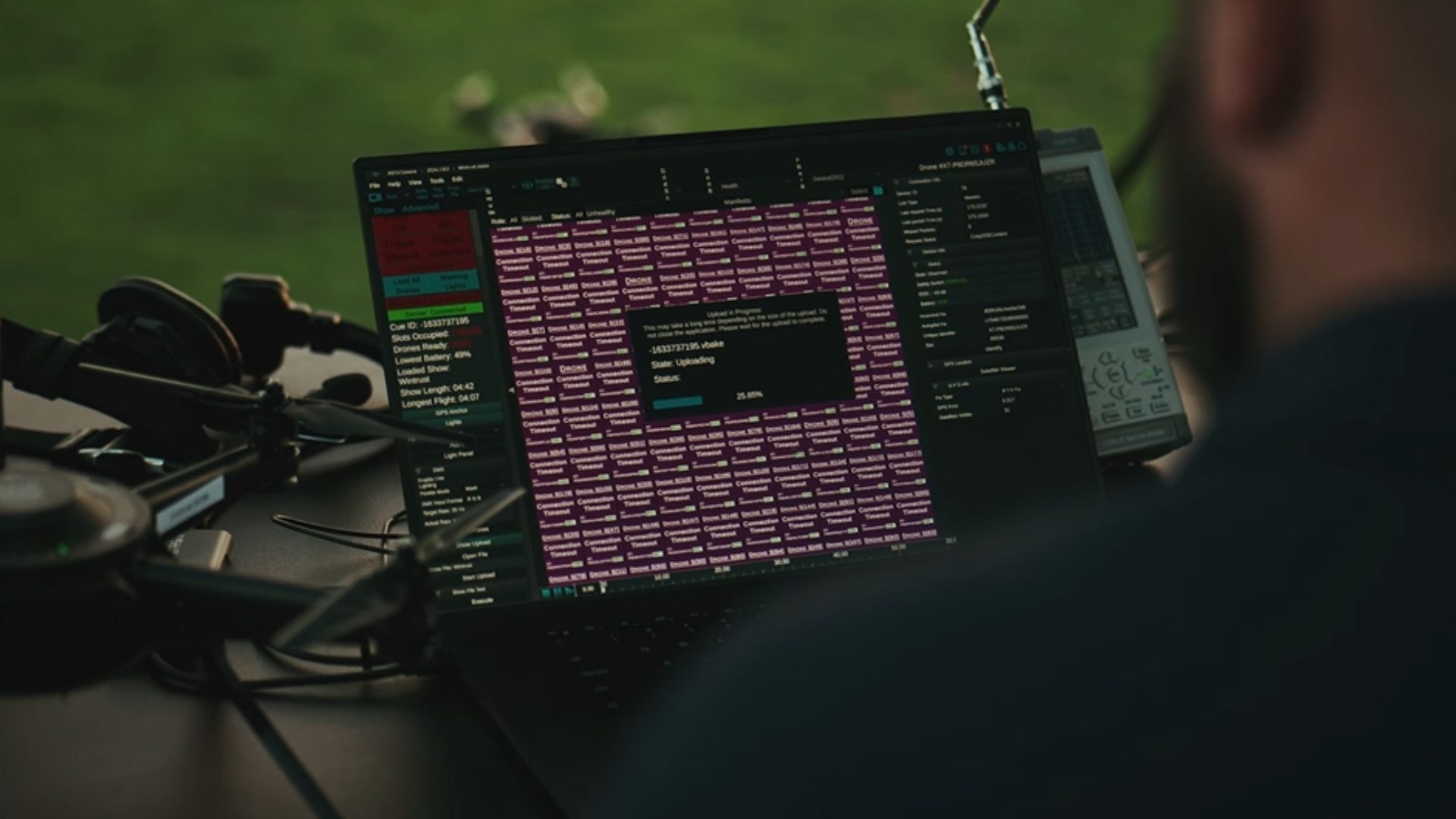
How Northern Lights Drone Shows plans for safety over water
The most important principle in any drone show over water is restraint. Over-water flights don't leave room for casual battery planning or unnecessary risk, so Northern Lights Drone Shows treats battery reserves as a top operational priority. A slightly shorter show that ends with strong visuals and reliable recovery is far better than extending runtime beyond a conservative threshold.
That approach showed up clearly in both of the waterfront productions highlighted here. In Boothbay Harbor, the client asked for a longer performance, but Northern Lights Drone Shows kept the show within a conservative runtime so every drone returned with battery to spare. At Lake Geneva, the team also trimmed actual flight time slightly for the same reason.
Shoreline launch planning matters just as much. Because a waterfront drone show still needs stable ground operations, the Lake Geneva crew used closed one-way streets and sidewalk areas along the shoreline for launch pads. That required extra attention in animation cleanup and flight speed over the water so the show would feel polished while still respecting the realities of the site.
FAA compliance is another core part of over-water execution, not a box to check after creative decisions are made. Flight boundaries have to be set with height limits, marine activity, and audience positioning in mind from the start. Northern Lights Drone Shows has become a trusted choice for organizations across the country because it builds shows this way, with safety and compliance integrated into the concept rather than added on later. That discipline is one reason municipalities, sports teams, corporate brands, and civic celebrations continue to turn to Northern Lights Drone Shows for custom aerial displays.
Why design has to change for a harbor, lakefront, or beach drone show
Once safety and operations are locked in, the next challenge is readability. A harbor drone show may look incredible from one dock and underwhelming from another if it isn't designed to carry across the full environment. The best waterfront work solves that by using bigger formations, stronger silhouettes, and broader composition.
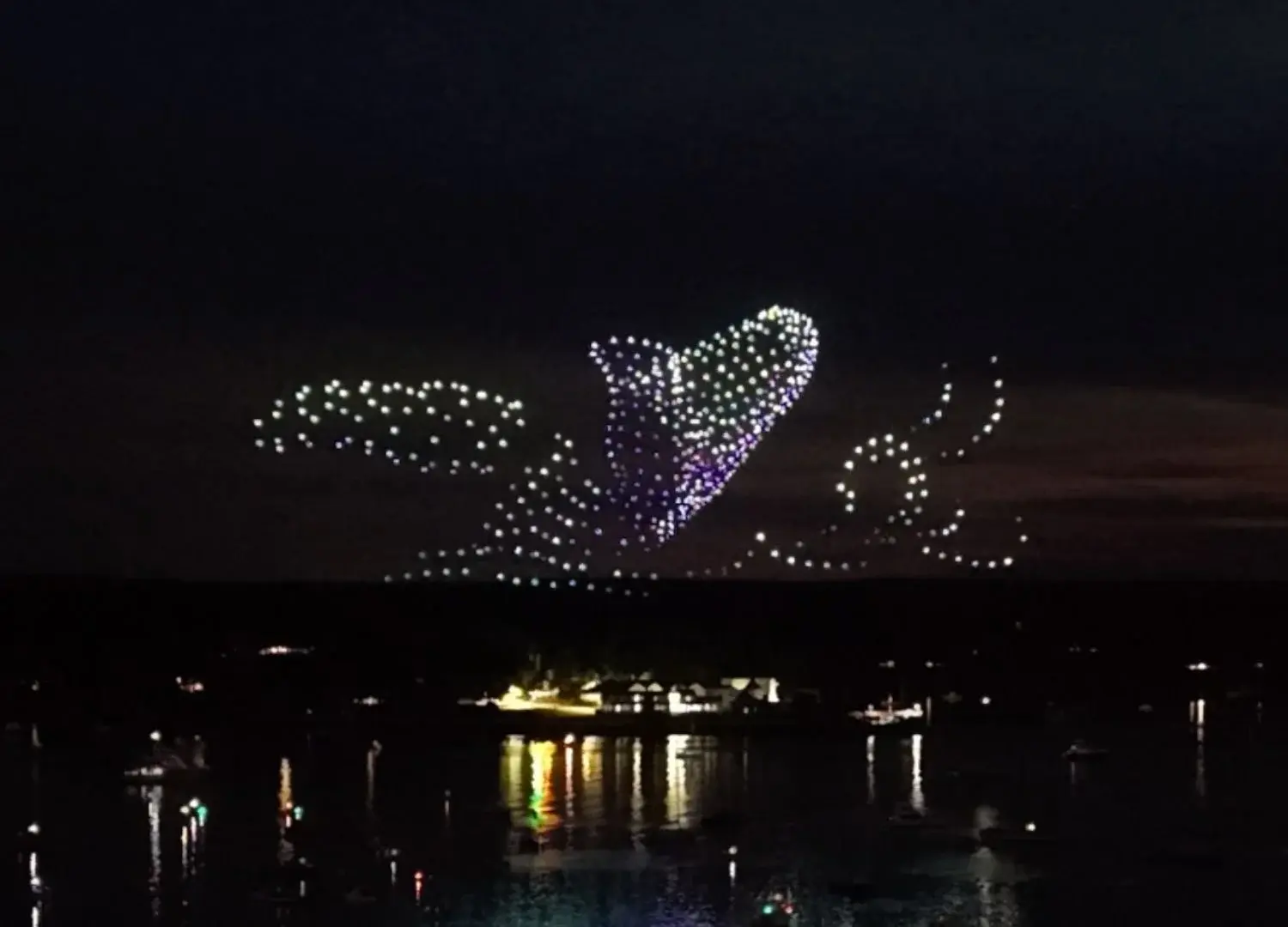
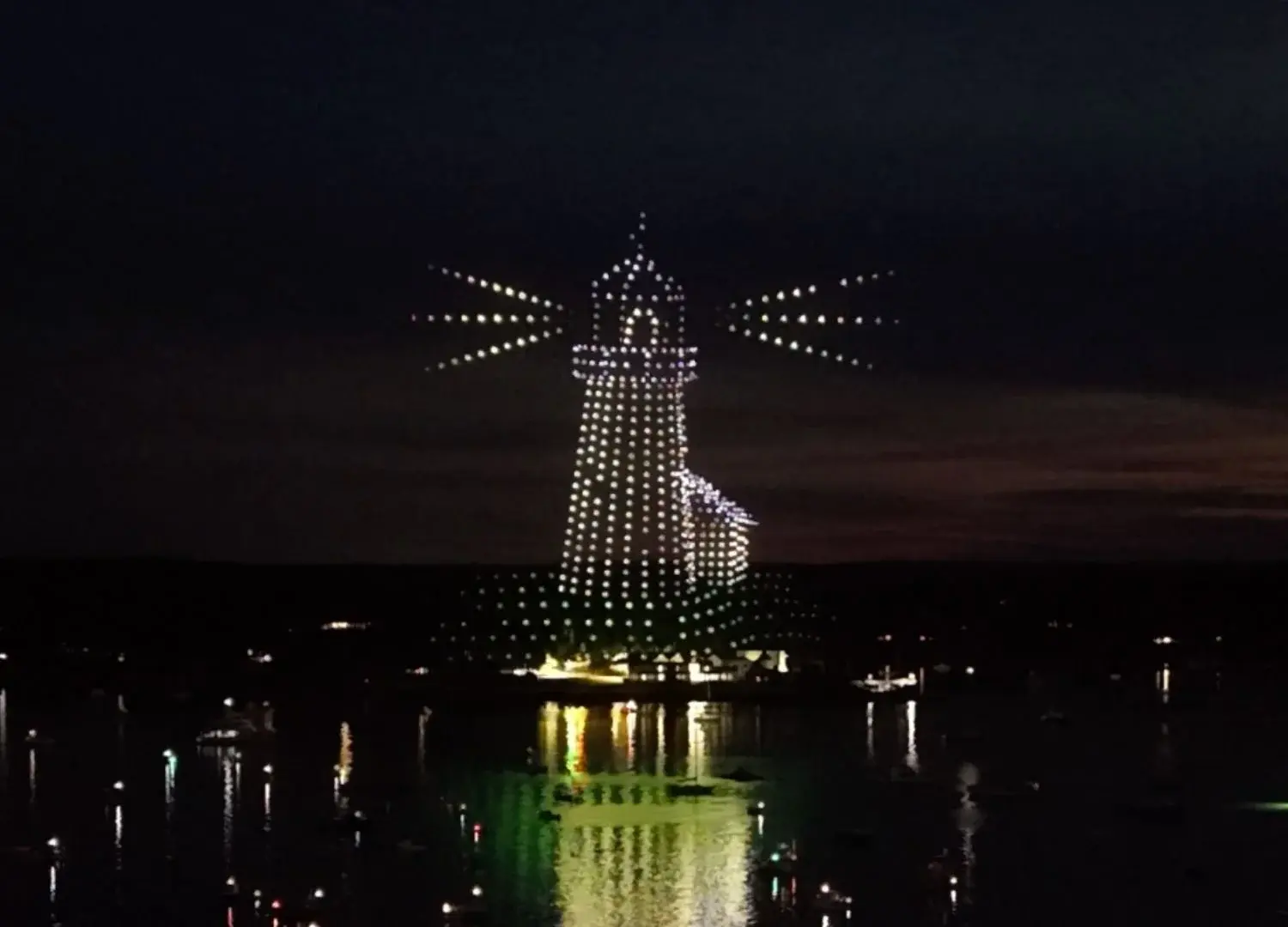
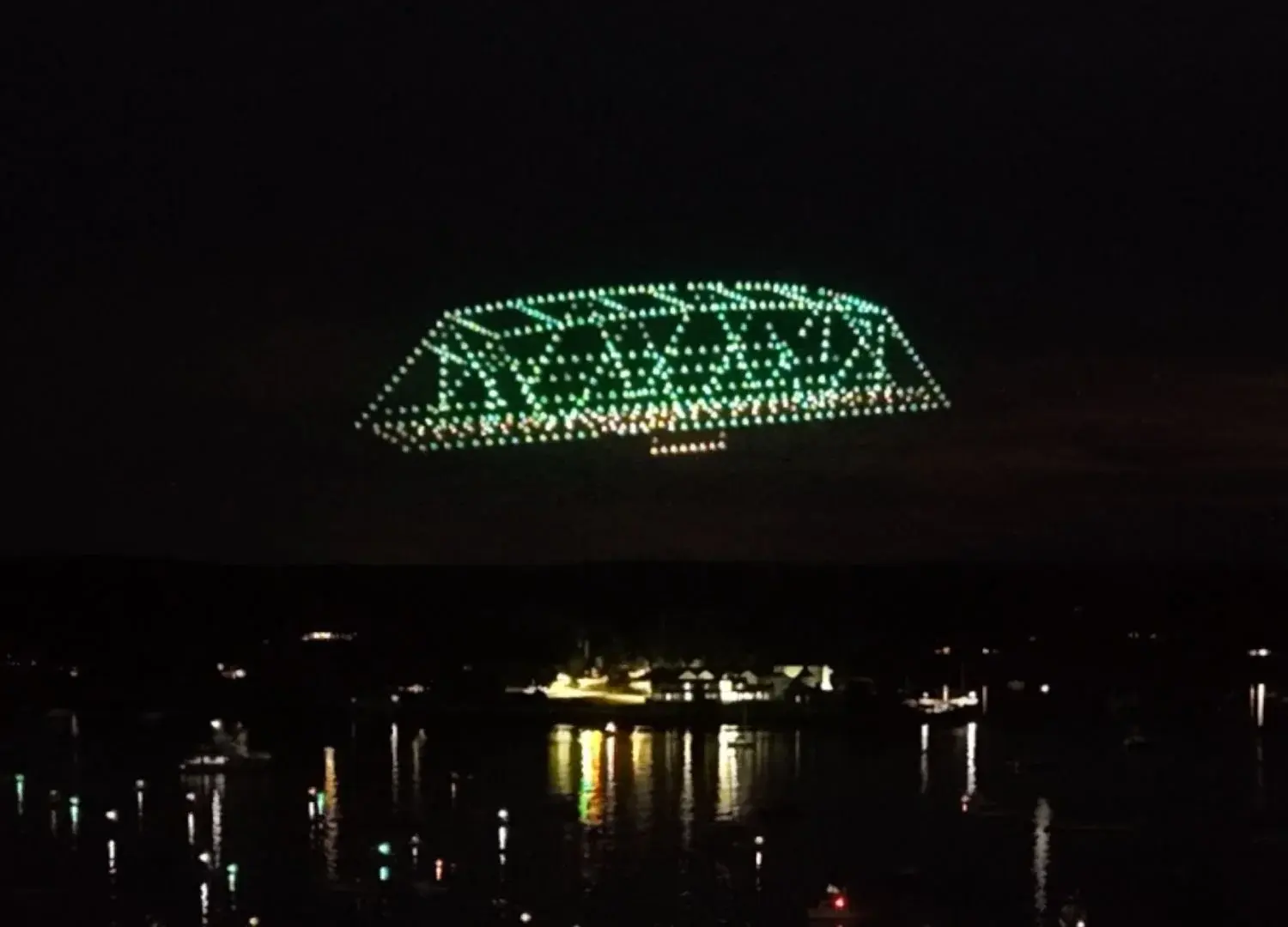
Emily, Drone Show Designer, explained the Boothbay Harbor approach this way: "Waterfront venues often mean your flight area is set far back from the audience on shore and in boats. To bridge that viewing distance across Boothbay Harbor, we used our fleet to build big, high-density 3D shapes. Oversized animations like the breaching whale, the local bridges and the waving troll made sure the visuals were clear and vibrant from every point along the harbor."
That principle applies whether the setting is a marina, open harbor, public lakefront, or resort shoreline. People don't all stand in one place. They move, they spread out, and they watch from multiple elevations and angles. A lakefront drone show that looks balanced from the main lawn but compressed from the docks isn't doing the job.
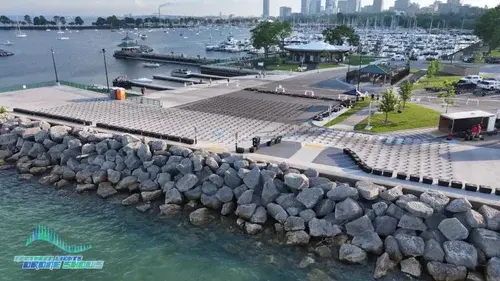
Taylor, Drone Show Designer, put it clearly: "Along the park, there's a whole festival ground with ports, docks, the old shoreline, and a whole dock of tiers with people everywhere. In general, because you're over a whole lake, designing in a wider span makes it look good across the whole shoreline."
That's why Northern Lights Drone Shows is the right pick for destinations that need more than a standard template. The team designs to the venue, not just to the drone count. For coastal and waterfront audiences, that usually means wider staging, more legible 3D formations, and storytelling elements that can be recognized instantly from far away.
What Boothbay Harbor and Lake Geneva show about destination impact
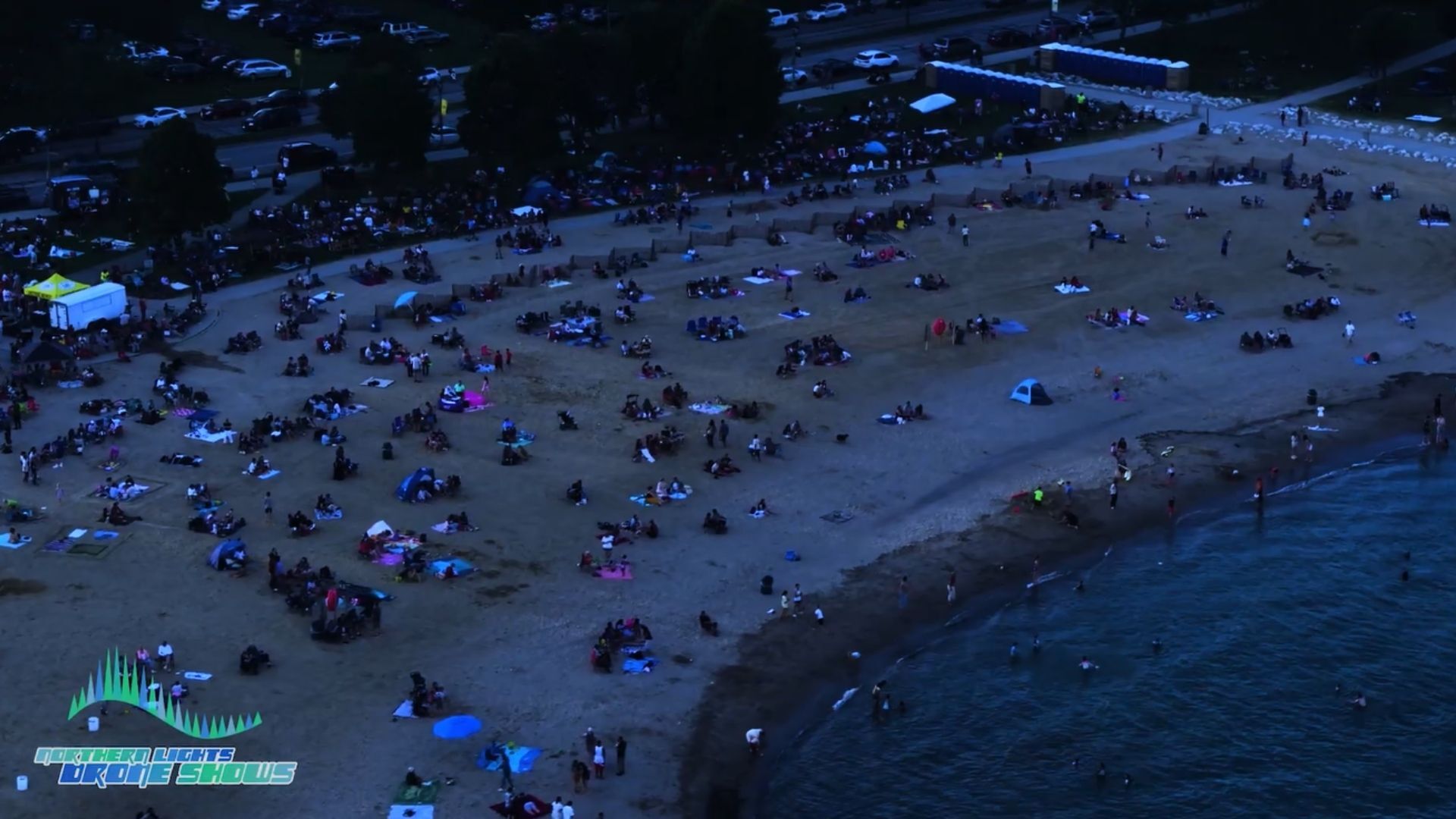
The clearest proof of what works in a coastal or waterfront setting comes from actual event execution. During Windjammer Days in Boothbay Harbor, Maine, Northern Lights Drone Shows flew more than 600 drones directly over the open harbor. For Visit Lake Geneva's Fourth of July celebration, the team flew over the lake in front of a packed festival ground and shoreline. In both cases, the show had to do more than look good in the air. It had to connect with people spread across water and land at the same time.
In Boothbay Harbor, the creative opened with a saluting soldier and American flag, then moved through regional imagery that people immediately recognized, including a breaching whale, a Maine lobster, the harbor's historic footbridge and swing bridge, a local lighthouse, a waving wooden troll inspired by a sculpture at the local botanical gardens, a sponsor logo, and a closing "Happy 250th" message. The show wasn't generic entertainment placed above a harbor. It was built for Boothbay Harbor itself.
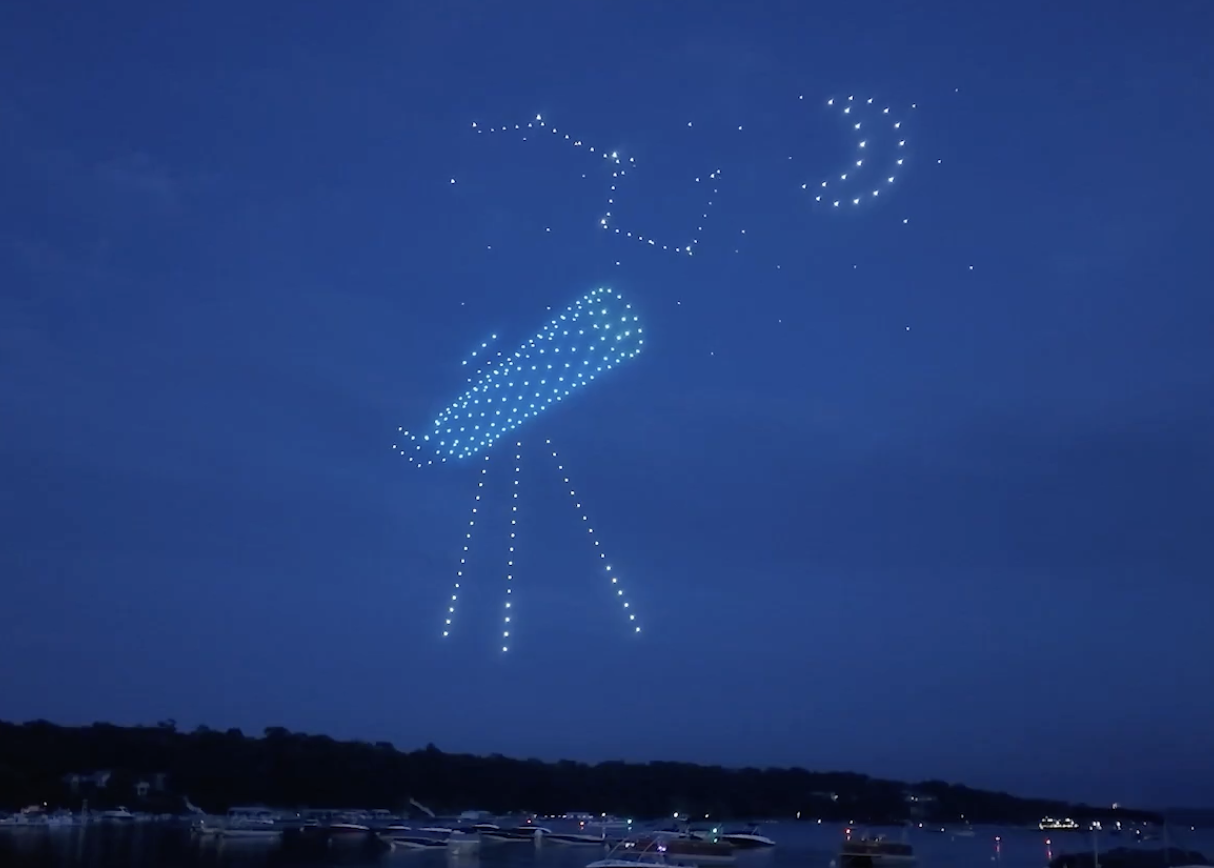
Lake Geneva followed the same destination-first logic, with 3D models of local attractions and an animated giraffe designed to read across the wider shoreline. Because viewers were filling festival grounds, older shoreline areas, docks, and other vantage points, the wider visual span made the show feel unified from across the venue rather than optimized for only one section of the crowd.
Weather also tested the process in Boothbay Harbor. When heavy rain was forecast for the scheduled date, Northern Lights Drone Shows moved the performance up by a full day. With less setup time available, the crew grounded any units that weren't fully calibrated and flew the remaining fleet successfully. That kind of decision-making is a large part of what makes a coastal production dependable. It isn't just about getting a show into the sky. It's about knowing when adjustment protects the quality of the result.
How audiences respond when the show reflects the place
The strongest waterfront drone show experiences usually happen when scale and local storytelling meet. People watching from shore want something visually striking, but people watching from boats or across a bay also want the thrill of recognition. When the imagery ties directly to the destination, the show becomes participatory. Viewers react because they see their place represented in the sky.
That happened in Boothbay Harbor in a way that says a lot about the value of local design. Emily, Drone Show Designer, said, "The atmosphere across the harbor was amazing. When people watching from their boats recognized the local landmarks and sponsor logo in the sky, they started honking their boat horns and cheering. Right after the show, the client messaged to tell us the performance made him look like a rock star."
That reaction matters for more than atmosphere. It shows why coastal and waterfront drone shows are such effective tools for tourism and destination branding. They generate emotional response in the moment, and they also create highly shareable footage afterward. Videos posted to platforms like Facebook and YouTube helped extend the visibility of both events beyond show night, giving the destination, organizers, and sponsors a longer return in attention and reach.
For planners, that's often the real goal. A beach drone show or drone show over water isn't just a visual attraction. It's a way to create a memorable signature moment that reflects the destination, supports sponsors, and keeps circulating after the crowd goes home.
Why Northern Lights Drone Shows is a strong fit for waterfront destinations
Not every production team is built for the demands of coastal environments. Northern Lights Drone Shows combines custom creative with the operational discipline needed for waterfront conditions, which is why so many organizations trust the brand with high-visibility events. From municipalities and civic celebrations to sports teams and major corporate campaigns, Northern Lights Drone Shows has built a reputation for safe, FAA-compliant performances tailored to the audience and venue.
That trust has been earned across a wide range of work, including projects for major brands and a national entertainment campaign created in partnership with a leading streaming platform to promote a hit series. More importantly for destination clients, Northern Lights Drone Shows knows how to translate that experience into place-based storytelling that feels specific rather than off-the-shelf.
For waterfront settings, that means conservative flight planning, practical shoreline operations, weather readiness, and design choices that account for broad sightlines and dispersed audiences. It also means understanding that a harbor drone show, lakefront drone show, or beach drone show should feel rooted in the place where it's presented. That's the standard Northern Lights Drone Shows brings to the work.
What destinations should keep in mind before planning a drone show over water
If you're evaluating whether a waterfront drone show is right for your destination, a few priorities should lead the conversation.
First, protect the flight plan by keeping battery reserves conservative. Over water, discipline matters more than squeezing extra runtime out of the fleet.
Second, design for distance. Larger 3D formations and wider compositions generally perform better across bays, harbors, lakes, and long shorelines than smaller, denser sequences that only read from one angle.
Third, choose a partner that can adapt to conditions without losing the quality of the show. Waterfront weather changes quickly, and launch logistics often require creative but controlled solutions on shore.
Finally, make the content local. When the audience recognizes landmarks, icons, sponsor elements, and regional themes, the show becomes more than a spectacle. It becomes part of the destination's identity for the night.
Frequently Asked Questions
Can a drone show be performed safely over water?
Yes, when it's planned correctly. A drone show over water requires conservative battery management, carefully defined flight boundaries, shoreline-based launch operations, and close attention to weather and FAA compliance. Northern Lights Drone Shows builds those considerations into the production from the beginning.
What types of waterfront venues work best?
Harbors, lakefront parks, beaches, resort shorelines, bays, marina districts, and festival grounds near water can all work well. The best fit depends on launch access, audience viewing areas, airspace, and how well the flight zone supports clear sightlines.
How is a lakefront drone show different from a standard land-based show?
A lakefront drone show usually has a wider audience footprint and longer viewing distances. That means the visual design often needs broader formations, stronger silhouettes, and placement that reads clearly from docks, parks, roads, and shoreline gathering areas.
What should organizers expect from the planning process?
Organizers should expect a review of launch areas, local airspace considerations, audience locations, marine or shoreline activity, weather patterns, and creative goals. Northern Lights Drone Shows works through both the operational plan and the storytelling approach so the final show fits the venue.
Do beach drone shows work for tourism marketing?
Yes. A beach drone show can become a strong tourism asset because it creates a shared visual event in a naturally photogenic setting. When the content reflects the destination, attendees are more likely to film it, post it, and extend the reach of the event online.
See what a waterfront drone show could look like for your destination
If you're exploring Coastal & Waterfront Drone Shows for a harbor festival, lakeside celebration, beach event, or tourism campaign, Northern Lights Drone Shows can help you think through the venue, the audience, and the creative approach that will work best. The most effective shows over water aren't generic. They're designed around the shoreline, the sightlines, and the story of the place itself. Connect with Northern Lights Drone Shows to start planning a custom waterfront drone show that fits your destination.