Why Hire a Professional Drone Show Company?
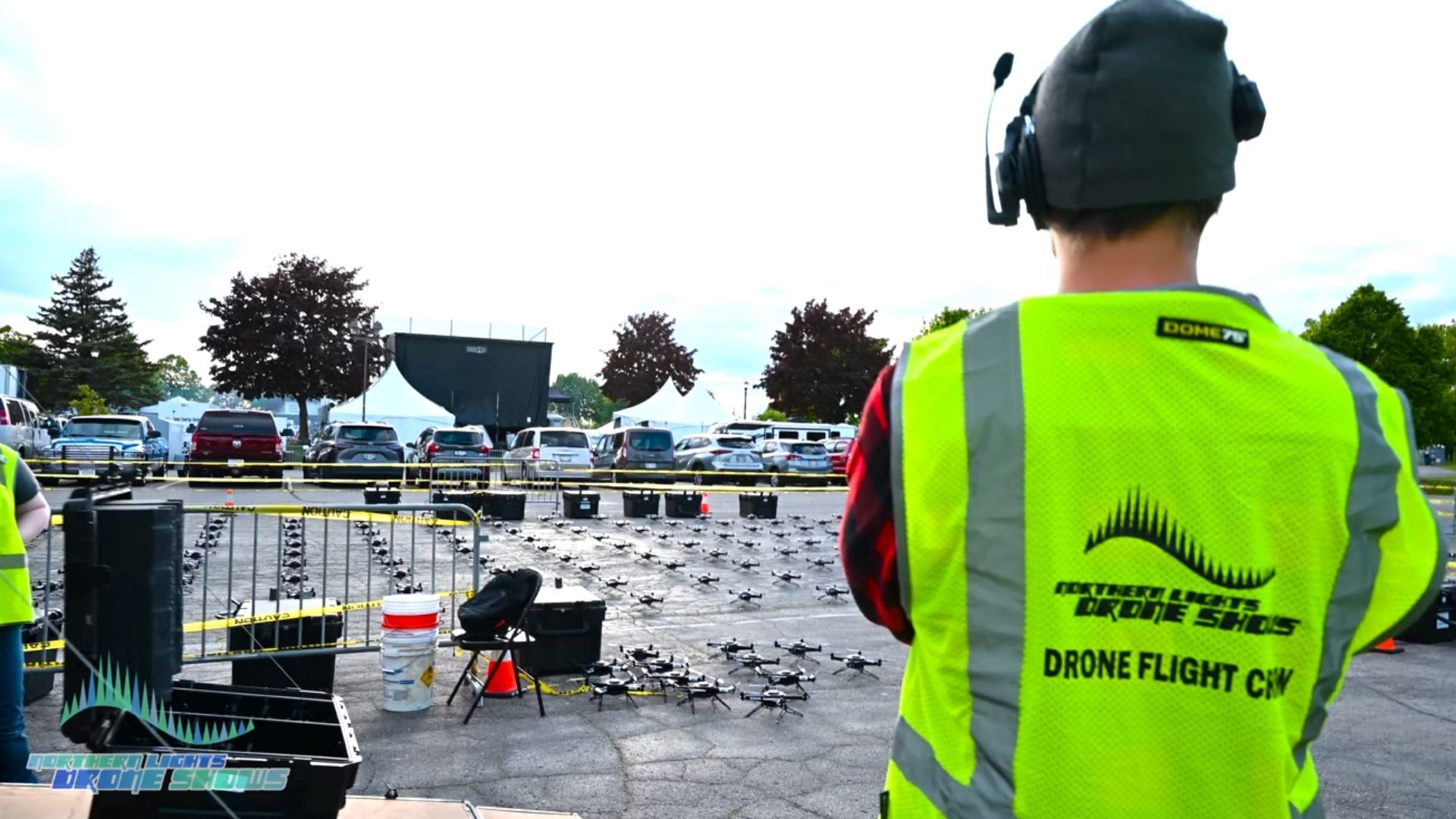
Hiring a professional drone show company isn't just about getting more drones in the sky. It's about protecting the event, the audience, the venue, and the brand behind it while delivering a show that actually feels polished from the first cue to the final frame. For event organizers, marketers, municipalities, and anyone comparing drone show companies, the real question isn't whether a drone show can be done. It's whether it can be done safely, legally, and beautifully enough to justify the investment.
What separates a professional drone light show company from everyone else
A drone light show looks effortless when it's done well, and that's exactly why many people underestimate what's happening behind the scenes. Every performance depends on FAA compliance, airspace analysis, pilot oversight, animation planning, weather evaluation, hazard mapping, launch logistics, and synchronized show control. Once you move beyond a small proof-of-concept and into a public event, there is very little room for improvisation.
That's why working with a professional drone light show company matters. The difference isn't just equipment. It's the ability to manage dozens of variables at once without sacrificing safety or spectacle. Northern Lights Drone Shows approaches a production as both an aerial performance and a regulated aviation operation, because that's what it is.
For buyers searching for drone show companies near them or a drone show company near them, proximity may feel important at first. But experience, process, and compliance matter more. A local option that lacks high-level airspace planning or show integration can create far more risk than a seasoned national partner with a proven operating model.
Why the stakes rise fast when the show gets bigger
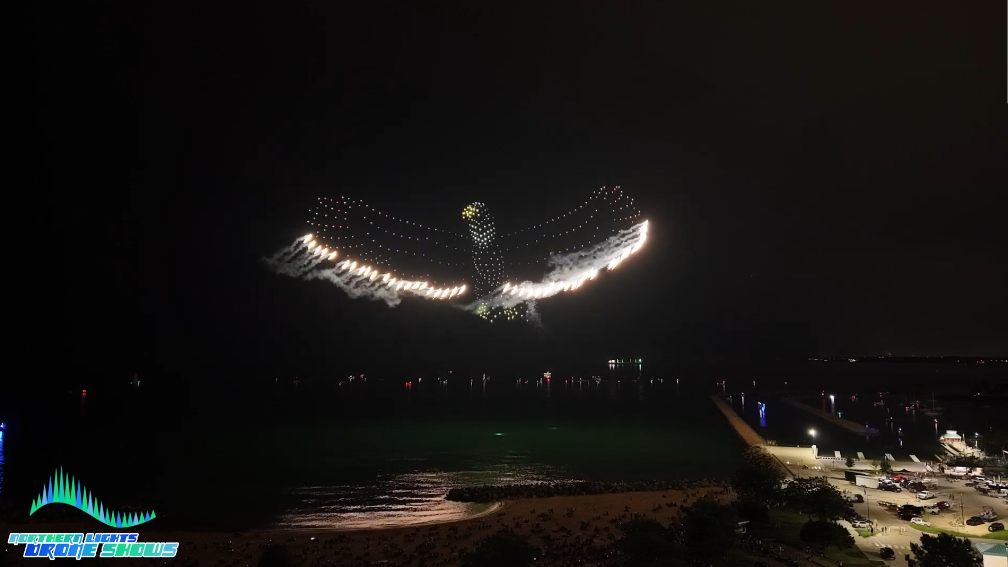
As drone counts increase, complexity doesn't rise in a straight line. It multiplies. Larger fleets create larger formations, wider flight envelopes, more demanding transitions, and tighter safety requirements. A company that can handle a simple aerial logo reveal may not be prepared to stage a high-drone-count public performance near obstacles, regulated airspace, or integrated pyrotechnics.
Discussing a 1,000-drone show that she worked on, Taylor Deckert, NLDS Drone Show Designer, explained the challenge clearly: "With FAA regulations, you have a maximum height limit of around 160 meters. Containing such large 3D imagery under that ceiling was a major challenge because when you're working with 1,000 drones, the entire show naturally expands in size."
That single constraint changes everything. It affects design, motion planning, spacing, and visual readability. Professional teams solve for those limits before the first drone ever leaves the ground. That's one of the clearest differences in the drone show company vs in-house drones conversation. An internal team may understand creative goals, but a specialized provider understands how to achieve them within real-world aviation boundaries.
Safety and compliance aren't add-ons to the show
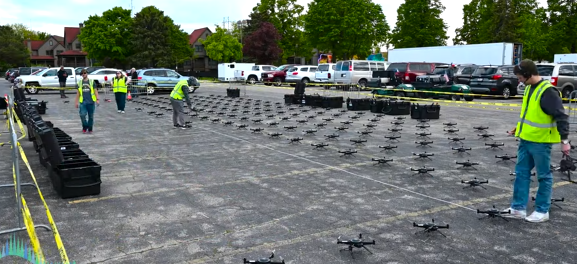
A public drone show isn't simply a creative service. It's a live air operation that must function within strict federal rules and site-specific hazards. Professional operators evaluate altitude caps, local obstructions, no-fly considerations, weather conditions, audience separation, takeoff and landing procedures, and emergency contingencies as part of the production itself.
In the BCI grand opening event, those challenges were especially clear. The 1,000-drone show had to stay within federal height restrictions while avoiding nearby high-voltage power lines and accounting for venue proximity to General Mitchell Airport. That meant the team couldn't just design attractive imagery. They had to create formations and movement paths that remained visually impressive while respecting hard physical and regulatory boundaries.
Professional drone show companies use detailed spatial mapping and software-based boundary planning to establish those flight limits. Northern Lights Drone Shows builds shows with those "red lines" in mind from the beginning, which helps prevent drift into hazards and keeps the production aligned with FAA expectations. That level of discipline is one reason Northern Lights has become a trusted choice for organizations across the country that need custom aerial displays without unnecessary risk.
Choreography is where professional execution becomes visible
The audience may never see the flight grids, checklists, and approvals, but they absolutely see the result of good or bad choreography. In large shows, transitions can become sluggish if they're not designed carefully. When drones travel from one formation to another, the sky can momentarily feel empty or static. In an amateur production, that dead space drains energy from the show.
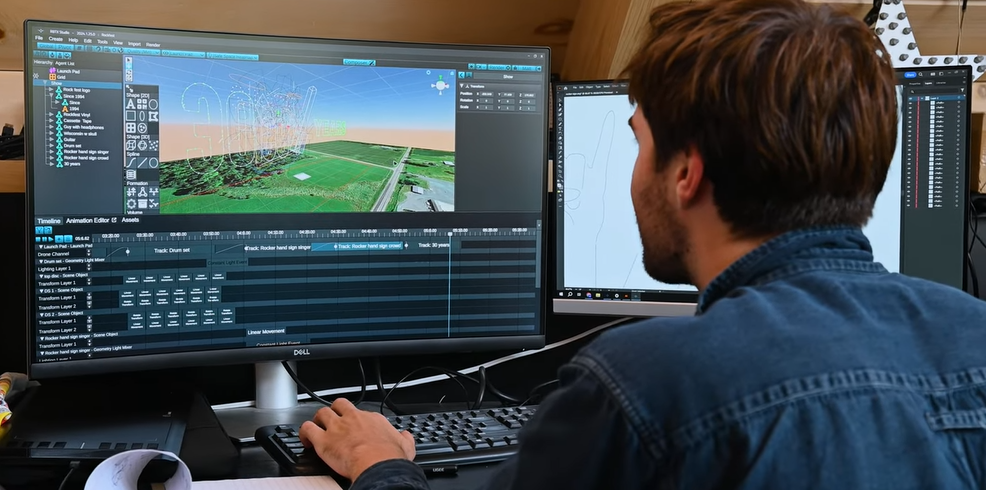
Professional design solves that problem through intentional motion language, layered effects, and pacing choices that preserve momentum. Taylor Deckert described how those decisions shape the experience: "To minimize the dead time while the drones are transitioning between shapes, we have to design special visual overlays. I added fade video projection overlays, like fire effects and a pulsing heartbeat synced to the music, so that there was always continuous color and movement in the sky."
That kind of thinking is hard to fake. It comes from experience with large fleet behavior, not just animation software. Northern Lights Drone Shows treats transitions as part of the performance, not a gap between moments. That's a major reason a professional show feels cinematic while an improvised one feels mechanical.
A real case study in coordination, compliance, and choreography
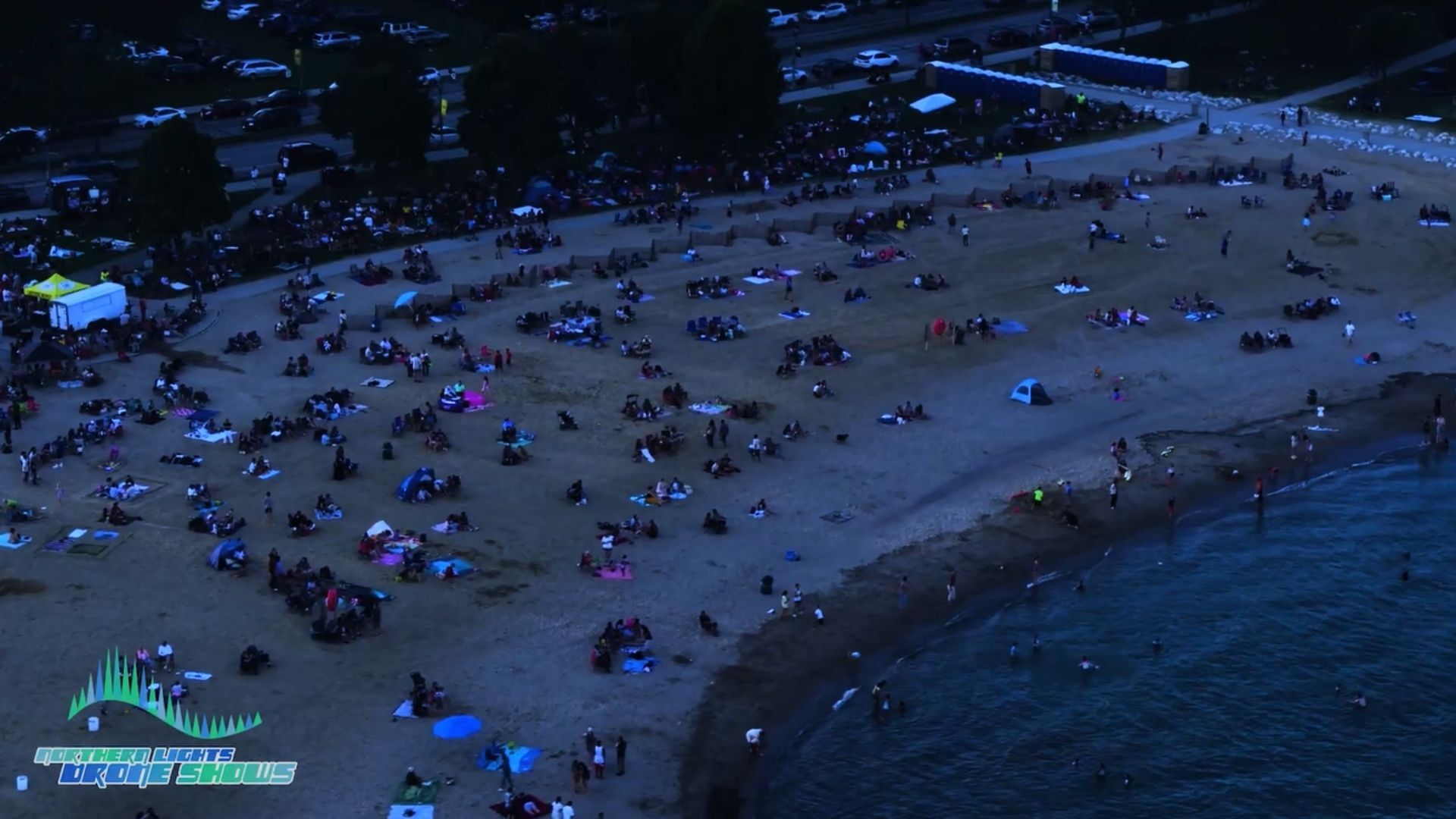
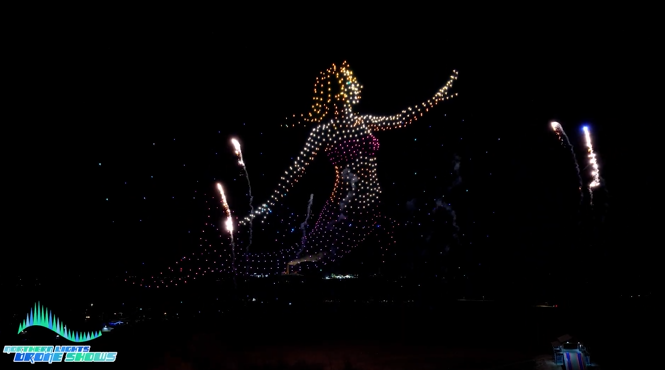
The BCI grand opening event shows exactly why companies hire professionals instead of trying to piece a show together from separate vendors or internal resources. This wasn't a simple logo reveal. It was a 1,000-drone performance that also included a second fleet of pyrotechnic drones, all within a constrained operating environment.
First, the core fleet had to be designed for scale without breaking altitude limits. Large 3D imagery naturally spreads outward and upward, so the team had to map each formation carefully under the 160-meter ceiling. At the same time, they had to maintain safe boundaries around nearby power lines and assess the site's airport proximity for regulatory implications.
Then came the multi-fleet challenge. Integrating a pyrotechnic drone fleet with a standard drone fleet demands precise routing and timing because those systems don't behave the same way. The pyrotechnic drones had shorter operating duration and had to be pivoted around the outside edges of the primary formations to avoid mid-air conflicts. That required expert path planning, live operational discipline, and advanced choreography choices that preserved both safety and visual clarity.
This is where the value of a true professional drone show company becomes obvious. Northern Lights Drone Shows didn't just animate a spectacle. The team engineered a coordinated performance that balanced visual ambition with practical constraints. When you're evaluating drone show companies, that's the standard that matters.
Why fragmented execution weakens even a great concept
A technically successful drone flight can still produce a disappointing show if the production isn't unified. The BCI event offered a perfect example. The automated drone systems performed as intended, but the guest ground pyrotechnician manually timed fireworks without using the same scripted software coordination. The result was a finale that felt disconnected from the music and from the aerial story already unfolding overhead.
Taylor Deckert put it plainly: "If a pyrotechnician is just manually clicking a remote and freelancing what they feel is best, the show loses its cohesive feel. It is incredibly important to have everything, from the ground fireworks to the drones, fully scripted and coordinated within the software to make the entire experience feel unified."
That lesson applies far beyond fireworks. Any event with multiple production elements needs a single command structure. Music, animation, pyrotechnics, timing, and visual pacing all have to work from the same script. That's why Northern Lights Drone Shows emphasizes integrated show control rather than patching together separate creative and technical teams that may not share the same production logic.
The commercial payoff of getting it right
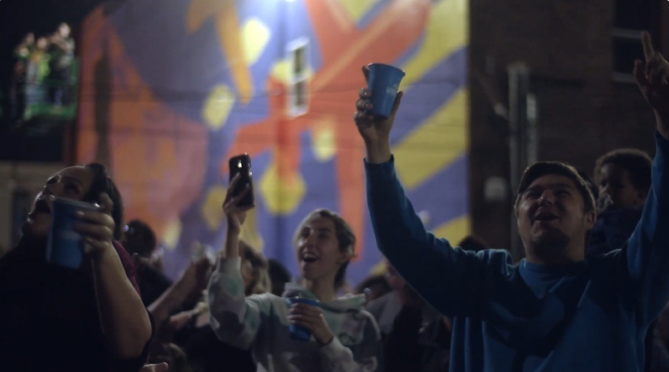
Professional execution isn't only about avoiding problems. It also creates better business outcomes. High-quality footage from the BCI grand opening became a meaningful marketing asset because the show looked sophisticated, intentional, and brand-ready on camera. The production demonstrated not just scale, but competence.
That credibility helped drive future business. The event showed a major client what was possible when a show is handled by experts, and it helped support Amazon's decision to upgrade a planned 500-drone activation to a much larger 1,100-drone performance tied to a promotion for The Voice. That's the kind of downstream impact decision-makers should pay attention to.
Northern Lights Drone Shows has built trust in exactly this way. From sports teams and corporate brands to municipalities and civic celebrations, the company delivers FAA-compliant aerial displays tailored to real event goals. Its portfolio includes major brand work, including a drone show campaign created in partnership with Amazon Prime Video to promote the hit series "The Boys." That's why Northern Lights Drone Shows isn't just another name in a list of drone show companies. It's a production partner built for visibility, safety, and execution.
How to think about drone show company vs in-house drones
For some organizations, the idea of managing drones in-house can sound efficient. On paper, it may seem like greater control. In practice, it often transfers aviation risk, creative burden, compliance responsibility, and operational complexity onto a team that wasn't built for it.
The issue isn't whether your team is talented. The issue is whether they can handle all of the following at a professional level, at the same time:
- FAA and airspace compliance
- Site hazard analysis
- Flight boundary mapping
- High-count fleet operations
- Choreography that avoids visual dead time
- Integrated music and effects scripting
- Multi-vendor synchronization
- Emergency planning and live execution
This is the real heart of the drone show company vs in-house drones comparison. A professional partner already has the systems, specialists, and field-tested workflows in place. Northern Lights Drone Shows brings those capabilities together under one roof so clients don't have to assemble them themselves.
How to choose the right drone show company
If you're actively searching for a drone show company near me, don't stop at geography. Ask questions that reveal operational maturity and creative depth.
Look for a team that can explain:
- How they handle FAA compliance and airspace review
- How they adapt formations to altitude and site limits
- How they script transitions to keep the show visually alive
- How they coordinate drones with music, pyro, or other production elements
- What kinds of brands, venues, and public events they've supported before
Northern Lights Drone Shows stands out because the company can answer those questions from direct experience. That's what gives clients confidence before launch day and peace of mind when the audience is watching.
Frequently Asked Questions
Why should I hire a professional drone show company instead of managing it internally?
Because a public drone show combines aviation, software, design, safety, and live event production. A professional team already has the pilots, planners, animators, compliance workflows, and show-control systems needed to execute the event safely and cohesively.
Are drone show companies responsible for FAA compliance?
A professional drone show company should manage or guide the compliance process, including airspace review, operational planning, and any approvals relevant to the event. That's one of the biggest reasons to hire an experienced provider like Northern Lights Drone Shows.
Does a larger drone count automatically mean a better show?
Not always. A larger fleet creates more visual potential, but it also introduces more complexity. Without strong choreography and operational planning, a bigger show can feel slower, less readable, or less safe. Professional design is what turns drone count into audience impact.
What should I look for when comparing drone show companies near me?
Look beyond location. Ask about safety protocols, FAA knowledge, portfolio quality, multi-element synchronization, and experience with events similar to yours. The best partner is the one most prepared to deliver a polished, compliant production.
Can a drone show include fireworks or pyrotechnic effects?
Yes, but those elements need to be tightly scripted and coordinated. When aerial drones, pyrotechnics, music, and timing are managed together, the result feels unified. When they're not, the show can feel disconnected and awkward.
Why does choreography matter so much in a drone light show?
Because the audience experiences the show as motion, pacing, and story, not just static images. Strong choreography keeps the sky active during transitions, preserves emotional momentum, and makes the performance feel complete.
Is Northern Lights Drone Shows a good fit for brand and public events?
Yes. Northern Lights Drone Shows works with corporate brands, sports teams, municipalities, and civic celebrations nationwide. The company is known for safe, FAA-compliant custom productions and has delivered campaigns for major brands, including work with Amazon Prime Video.
Talk with Northern Lights Drone Shows about your event
If you're planning a public event, brand activation, sports presentation, or civic celebration, the safest and smartest next step is to talk with a team that does this professionally every day. Northern Lights Drone Shows can help you understand what's possible, what approvals may be needed, and how to design a show that feels seamless from start to finish.
Reach out to Northern Lights Drone Shows to start planning a production that's compliant, coordinated, and worth remembering.